DbcultAccessing Vault...
Cult Review
Senior Film Conservator
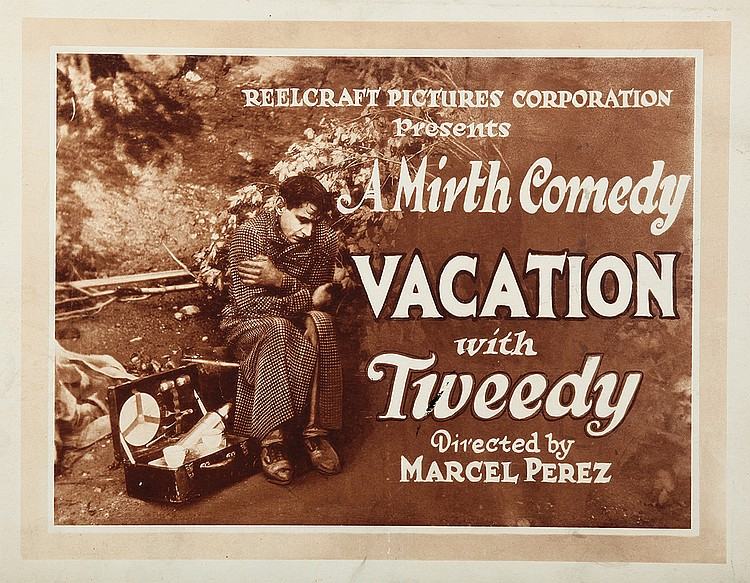
Ah, 'Vacation.' The very title conjures images of tranquil escapes, sun-drenched beaches, or perhaps a serene mountain retreat. Yet, in the hands of the inimitable Marcel Perez and the spirited Dorothy Earle, this 1916 silent gem transforms the simple concept of a holiday into a profound, often hilarious, and surprisingly poignant exploration of human nature, the elusive quest for peace, and the inescapable cacophony of life. It’s a film that, even a century later, resonates with anyone who has ever yearned for an escape only to find that their greatest challenges, and indeed their greatest joys, follow them wherever they go.
The narrative thrust of 'Vacation' is deceptively simple: Monsieur Dubois, portrayed with exquisite comedic timing and a palpable sense of urban weariness by Marcel Perez, is a man on the brink. The relentless thrum of city life, the endless parade of responsibilities, and the sheer impossibility of quietude have pushed him to a breaking point. His solution? A meticulously planned, solitary sojourn to a remote lakeside lodge, a sanctuary he envisions as utterly devoid of human clamor. His dream is not merely a vacation; it is an existential quest for silence, for introspection, for a brief, blissful return to self. Perez’s early scenes, depicting Dubois’s frantic preparations and his almost religious reverence for his travel brochures, are a masterclass in physical comedy, hinting at the absurdity that awaits him.
Upon his arrival, Dubois’s carefully constructed fantasy begins its spectacular collapse. The lodge, far from being the desolate haven he envisioned, is teeming with life, a vibrant microcosm of humanity. Central to this delightful disruption is the character of Madame Dubois, brought to vivid, boisterous life by Dorothy Earle. Earle’s performance is a force of nature; she embodies the quintessential vacationing matriarch – loud, opinionated, endlessly cheerful, and utterly oblivious to Monsieur Dubois’s desperate need for solitude. Her brood, a gaggle of rambunctious children and equally boisterous relatives, forms a constant, swirling vortex of activity around our beleaguered protagonist. The irony is delicious: Dubois seeks to escape the noise of the city, only to find himself ensnared in the even more intimate, inescapable clamor of a family on holiday.
The film’s genius lies in its ability to extract both humor and pathos from this fundamental conflict. Dubois’s attempts to find a quiet corner – behind a newspaper, hidden in a rowboat, even attempting to scale a tree – are consistently thwarted by the joyous, unthinking intrusions of Madame Dubois and her family. One particularly memorable sequence involves Dubois attempting to read a serious book on philosophy, only to have a child’s toy boat repeatedly crash into his face, propelled by enthusiastic splashes. Perez’s facial expressions throughout these trials are priceless, a rapid-fire succession of hope, frustration, despair, and finally, a grudging, exhausted acceptance. It’s a comedic ballet of exasperation, executed with a precision that speaks volumes without a single spoken word.
Marcel Perez, primarily known for his work in Italian cinema before his American career, brings a distinct European sensibility to his character. His Dubois is not merely a slapstick figure; he is a fully realized individual, burdened by the anxieties of modern life, a precursor to the everyman figures that would populate cinema for decades to come. His physicality is remarkable, capable of both broad comedic gestures and subtle, nuanced expressions that convey a rich inner life. Earle, on the other hand, is a vibrant counterpoint. Her Madame Dubois is a whirlwind of maternal energy, her every gesture exuding an unshakeable optimism and an almost aggressive friendliness. The dynamic between them is the beating heart of the film, a testament to the power of well-matched comedic actors. Their interactions elevate what could have been a series of disconnected gags into a cohesive, character-driven narrative.
The supporting cast, though largely unnamed in the historical record, contributes significantly to the film’s vibrant atmosphere. The various vacationers, from the gossiping grandmothers to the flirtatious young couples, form a lively backdrop against which Dubois’s solitary struggles are thrown into sharp relief. The film excels in its depiction of communal life, demonstrating how even in the pursuit of individual leisure, we are constantly intertwined with the lives of others. This thematic exploration of community versus individuality is handled with a light touch, never feeling preachy, but always present.
“Vacation” is more than just a series of comedic misadventures; it’s a profound commentary on the human condition, a gentle reminder that true peace often lies not in the absence of noise, but in our capacity to find harmony within it.
Visually, 'Vacation' is a delight. The cinematography, while typical of the era, makes excellent use of its lakeside setting. The natural beauty of the environment serves as a constant, ironic contrast to Dubois’s inner turmoil. The director (uncredited, as was common for many early silent films, but likely Perez himself given his extensive directorial work) demonstrates a keen eye for framing and composition, often placing Dubois as a small, isolated figure against a bustling backdrop, emphasizing his alienation. The editing is brisk and effective, maintaining a lively pace that keeps the comedic momentum going without ever feeling rushed. Each gag is given room to breathe, allowing the audience to savor Perez’s reactions.

The film’s thematic resonance extends beyond mere comedy. It delves into the universal human desire for respite, the struggle to disconnect from the pressures of modern life, and the often-unforeseen ways in which our expectations clash with reality. Dubois’s journey is, in essence, a lesson in acceptance. He begins by railing against the disruptions, attempting to impose his will on a world determined to be gloriously unpredictable. By the film’s conclusion, while he may not have found the absolute quietude he sought, he has undoubtedly found something arguably more valuable: a renewed, if slightly weary, appreciation for the vibrant, imperfect tapestry of human existence.
To truly appreciate 'Vacation,' it’s helpful to place it within the broader landscape of silent cinema. Its blend of character-driven comedy with a touch of social observation finds parallels in various contemporary works. For instance, the film’s exploration of societal expectations and the individual's place within a larger structure, albeit through a comedic lens, subtly echoes the allegorical ambitions found in a film like Hypocrites. While 'Hypocrites' offers a starker, more confrontational critique of moral posturing, 'Vacation' provides a gentler, more humorous examination of the hypocrisies of seeking absolute solitude in an inherently social world.
The comedic elements, particularly the misunderstandings and the clash of personalities, share a kinship with films like Die Bademaus, another silent-era comedy that revels in the chaotic humor of social situations and the unintended consequences of well-meaning actions. Both films demonstrate a keen understanding of how human foibles and desires for pleasure often lead to a delightful disarray. Perez’s physical comedy, while distinct, also carries the spirit of early European slapstick, a tradition rich with exaggerated reactions and elaborate gags that would be further refined in Hollywood.
Furthermore, the film’s narrative arc, which sees a protagonist grappling with an idealized vision of life that collides with harsh reality, can be seen as a comedic inversion of the more dramatic character studies of the era. Consider a film like Camille, where the protagonist's romantic ideals are shattered by societal constraints and personal tragedy. While 'Vacation' operates on a far lighter plane, Dubois's initial disillusionment and eventual, albeit reluctant, acceptance of his circumstances mirror a similar journey of coming to terms with the world as it is, rather than as one wishes it to be. His 'vacation' becomes a crucible, not of suffering, but of self-discovery through comedic trial.
Even the theme of mistaken identity, a staple of comedic plots, makes a subtle appearance. Dubois, in his desperate attempts to avoid the family, sometimes tries to blend in or pretend to be someone else, leading to minor, amusing mix-ups. This lighthearted approach to identity confusion is a far cry from the more dramatic implications seen in a film like The Impersonation, but it showcases the versatility of such narrative devices across different genres. Here, the 'impersonation' is less about criminal intent and more about a desperate man's plea for anonymity.
'Vacation' is more than just a historical curiosity; it is a vibrant, engaging piece of cinematic art that continues to entertain and provoke thought. Its humor is timeless, rooted in universal human experiences – the desire for peace, the frustration of disruption, and the unexpected joys of connection. Marcel Perez's performance alone is worth the price of admission (or, in today's context, the effort of seeking out a restored print). His ability to convey complex emotions through physical comedy is a testament to the power of silent film acting. Dorothy Earle, too, leaves an indelible mark, her effervescent presence a perfect foil to Perez's growing exasperation.
The film’s lasting message, subtly woven into its comedic fabric, is one of acceptance. Monsieur Dubois's journey is not one of conquering his external environment, but of internal recalibration. He learns, perhaps unwillingly at first, that true peace might not be found in the absence of noise, but in the ability to find a degree of harmony within its presence. He discovers that even in the midst of chaos, there are moments of genuine connection, unexpected laughter, and a profound sense of being alive. This realization, delivered with a gentle smile rather than a grand pronouncement, is what elevates 'Vacation' beyond a mere comedy of errors into a minor masterpiece of silent cinema, a delightful and enduring reminder that sometimes, the best part of a vacation is the journey of self-discovery it unexpectedly provides.
For those who appreciate the nuanced artistry of early cinema, 'Vacation' offers a rich tapestry of comedic brilliance and understated thematic depth. It's a film that reminds us that while we may plan for tranquility, life often has other, more riotous, plans in store, and that perhaps, just perhaps, those unexpected detours are where the real adventure lies. It certainly makes one reconsider the true meaning of a 'holiday,' transforming it from a simple escape into a journey of profound, if comically fraught, self-revelation. So, if you're looking for a cinematic journey that combines laughter with a touch of existential reflection, look no further than this delightful, often overlooked, silent classic.
IMDb —
1919
Community
Log in to comment.