DbcultAccessing Vault...
7.1/10
Senior Film Conservator
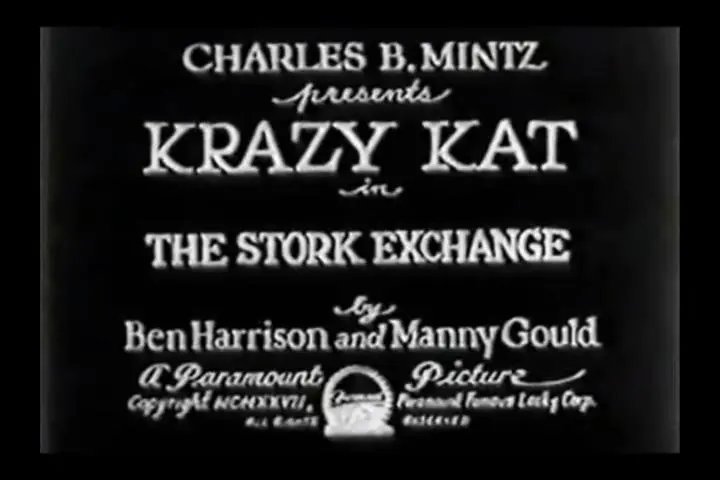
A definitive 7.1/10 rating for a film that redefined the boundaries of cult cinema. The Stork Exchange remains a cornerstone of transgressive art.
Is 'The Stork Exchange' a timeless classic deserving of rediscovery today? Short answer: yes, but with significant caveats. This whimsical silent comedy, while undeniably charming and innovative for its time, presents a viewing experience that demands a certain appreciation for early cinematic conventions and a high tolerance for its unique brand of period humor. It’s a film that works best for dedicated enthusiasts of silent cinema, those with an academic interest in the evolution of comedy, or anyone seeking a genuinely quirky escape from modern blockbusters.
Conversely, if your cinematic palate leans towards contemporary pacing, sophisticated narratives, or dialogue-driven wit, 'The Stork Exchange' will likely feel slow, perhaps even frustratingly simplistic. It is decidedly not for those who struggle to connect with the visual storytelling language of the early 20th century, nor for anyone expecting a profound emotional journey. This film is a historical curio, a comedic sketch writ large, and it embraces that identity wholeheartedly.
From its very premise, 'The Stork Exchange' announces itself as a film unafraid to lean into the absurd. The concept of a bureaucratic office, complete with clerks, ledgers, and a surprisingly complex system, dedicated solely to the 'delivery' of babies, is a stroke of comedic genius. It’s a literal interpretation of a classic myth, filtered through the nascent anxieties of industrialization and efficiency. This foundational idea, credited to the collective imagination of Ben Harrison, George Herriman, and Manny Gould, provides a rich, if somewhat underexplored, landscape for satirical commentary.
The film works because it commits entirely to its central conceit. The Stork Exchange isn't just a backdrop; it's a character in itself, a sprawling, paper-shuffling behemoth that feels both antiquated and strangely prescient in its depiction of impersonal systems. The visual gags stemming from this premise – infants being sorted, weighed, and dispatched like parcels – are genuinely creative, often eliciting a chuckle through their sheer audacity.
This film fails because its ambition occasionally outstrips its execution, particularly in pacing. While the central premise is strong, the narrative often meanders, stretching what could have been a sharp, punchy short into something that occasionally sags under its own weight. The repetitive nature of certain gags, while characteristic of the era, can test modern patience. You should watch it if you appreciate the foundational elements of slapstick and early visual comedy, and are willing to forgive some structural looseness for the sake of its unique charm.
Manny Gould, as the put-upon clerk Arthur Piffle, delivers a performance that is a masterclass in silent film exasperation. His facial expressions, from wide-eyed panic to resigned defeat, are perfectly calibrated for the medium, conveying volumes without a single spoken word. There’s a particular scene where Piffle, buried under a cascade of misfiled baby orders, simply collapses into his chair, a moment of physical comedy that is both hilarious and deeply relatable. It's a testament to Gould's ability to imbue even the most mundane actions with comedic pathos.
Ben Harrison, as the frantic father Bartholomew 'Barty' Bumble, provides the perfect foil. His energy is infectious, a whirlwind of frantic gestures and desperate pleas that propel the plot forward. His physical comedy, particularly in moments of chasing after a runaway pram or attempting to reason with an impassive Stork Exchange official, is reminiscent of the era's best. One standout sequence involves Barty attempting to discreetly swap babies in a crowded waiting room, a scene that relies entirely on Harrison's frantic timing and the audience's anticipation of inevitable discovery.
However, the pacing of 'The Stork Exchange' is its most significant hurdle. While individual gags land with admirable precision, the connective tissue between them can feel stretched. There are moments, particularly in the mid-section, where the plot seems to stall, relying on repeated visual motifs rather than advancing the core conflict. This isn't necessarily a flaw unique to this film, but a common characteristic of silent features that were often designed for a more leisurely viewing experience, perhaps even accompanied by live musical improvisation that could fill narrative gaps.
The film's tone strikes a curious balance, managing to be both lighthearted and subtly satirical. It never veers into overly sentimental territory, nor does it become overtly cynical. Instead, it maintains a consistent, whimsical detachment that allows its comedic elements to flourish without being bogged down by unnecessary drama. It’s an unconventional approach that works surprisingly well, even if it leaves some deeper thematic explorations untouched.
The direction, likely a collaborative effort given the multiple writers and actors credited, demonstrates a clear understanding of visual storytelling. The framing is often wide, allowing the audience to take in the full scope of the chaotic Stork Exchange office, with multiple comedic actions unfolding simultaneously. This deep-focus approach, while not revolutionary, effectively conveys the overwhelming nature of the bureaucracy. There's a particular shot, early on, that establishes the sheer scale of the operation: rows upon rows of clerks, each meticulously handling their infant-related paperwork, creating a visual symphony of silent industry.
The cinematography, while basic by today's standards, is functional and clear. The lighting is generally flat, ensuring that all actions are visible, which was paramount in an era before sophisticated editing techniques could guide the viewer's eye. There are no dramatic shadows or complex camera movements; instead, the focus is squarely on the performances and the physical gags. This simplicity is both a strength and a limitation, allowing for clarity but occasionally lacking in visual dynamism. Compare this to the more experimental visual flair seen in films like Vanina, which explored dramatic lighting and intricate set design around the same period, and 'The Stork Exchange' appears quite conventional.
One surprising observation is the film's subtle commentary on gender roles, even within its comedic framework. The Stork Exchange is almost exclusively staffed by men, handling the 'logistics' of birth, while the mothers are largely unseen or relegated to frantic, background roles. This isn't necessarily a critique, but an interesting reflection of societal norms of the time, filtered through a comedic lens. It's a detail that adds an unexpected layer of historical context to the otherwise straightforward humor.
Yes, 'The Stork Exchange' is worth watching, particularly for those with an interest in early cinema. It offers a unique window into the comedic sensibilities of its era. The film's premise is imaginative and still resonates with a quirky charm. Its performances are strong, showcasing the physical talents of Gould and Harrison. It's a foundational piece of comedic history, lighthearted and genuinely funny in places. However, be prepared for a slower pace and a narrative that prioritizes gags over intricate plot development. It's a delightful oddity, not a profound cinematic statement.
'The Stork Exchange' is a peculiar, delightful relic. It works. But it’s flawed. Its strengths lie in its audacious premise, the energetic performances of Manny Gould and Ben Harrison, and its commitment to a unique brand of whimsical absurdity. It’s a film that genuinely makes you smile, even if you occasionally check the runtime. It stands as a testament to the boundless creativity of early filmmakers who, with limited resources, could spin gold from the simplest, most outlandish ideas.
While it won't resonate with every viewer, especially those uninitiated in the charms of silent cinema, for the discerning cinephile, 'The Stork Exchange' offers a charming, if slightly overlong, diversion. It's a reminder that sometimes, the most profound cinematic experiences don't require sound or color, but merely a good idea and actors willing to throw themselves into the chaos. Consider it a pleasant, if slightly dusty, curio from cinema's nascent years. A definite recommendation for those who appreciate the foundational elements of film comedy, and a charming historical footnote for everyone else. Don't expect a masterpiece, but do expect a good, honest laugh.
IMDb 6.3
1935
Community
Log in to comment.