DbcultAccessing Vault...
Cult Review
Senior Film Conservator
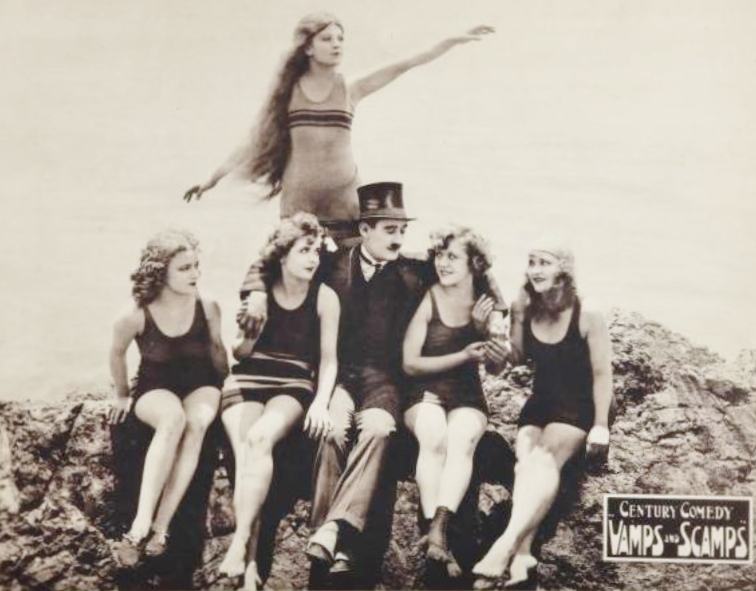
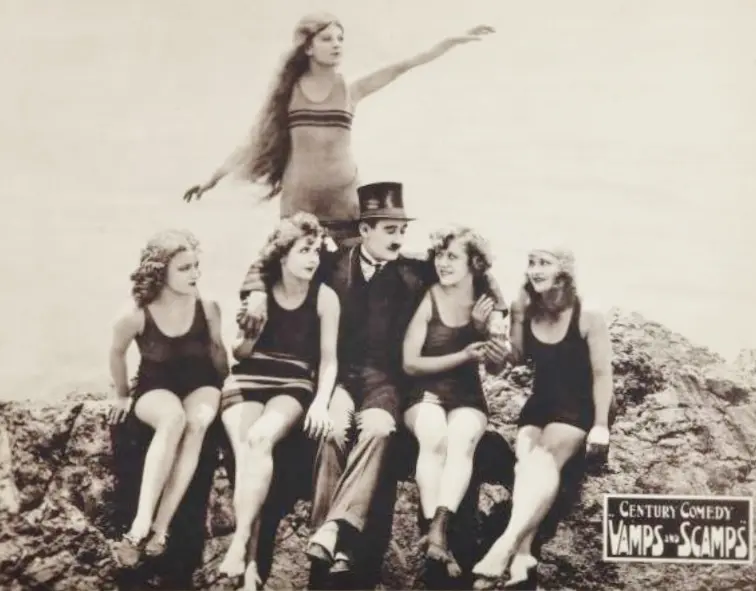
Picture a boarding house built on sand and secrets, its clapboard façade blistered by brine, and you have the microcosm James D. Davis conjures in Vamps and Scamps. The film arrives like a half-remembered seaside postcard: sun-faded, smelling of kerosene and cheap perfume, yet curiously modern in its conviction that romance is just another rigged slot machine. Zip Monberg—part-time clown, full-time sad-eyed dreamer—lopes into frame as the quintessential mark, trousers too short, dignity shorter still. He’s the perfect foil for the proprietor, a carnivorous ringmaster whose smile never reaches the eyes, only the ledger.
The wager itself is so baldly transactional it feels almost avant-garde: a thousand 1921 dollars—enough to buy a modest Buick or a divorce in Reno—laid down on the guarantee that a woman, any woman, will enslave this drifter through the dark art of affection. Davis refuses to name the heroines; they flutter through scenes labelled only as the brunette in the polka-dot parasol, the gamine with the ukulele, the widow who claims she’s allergic to daylight. The anonymity weaponises them, turning each flirtation into a cold military exercise. You half-expect intertitles reading: "Operation Batting-Eyelashes, Phase III: Deploy Dimples."
What keeps the conceit from curdling into misogynistic farce is Davis’s sneaky empathy for the women. Every seductive tic—hair twirls, barefoot sashays across moonlit sand—is revealed as labour, rehearsed in montages of yawning models reading sheet-music instructions on how to sigh meaningfully. The film flips the male gaze back on itself, exposing the john as the true sap. Monberg’s character thinks he’s hunting; the camera knows he’s being trussed for market.
Released months before the first radio broadcast of a baseball game, Vamps and Scamps anticipates the coming deluge of consumer erotica: swiping, liking, sugar-daddying. The hotel’s revolving-door courtship rituals prefigure Tinder’s dopamine loops, only the notifications here are delivered by bellboys slipping perfumed notes under the door. Davis’s seaside Eden is a casino of affections where hearts are chips and the cocktail jazz never stops, even after the last guest has overdosed on arsenic-laced promises.
Visually the picture mines a palette of bruised purples and algae greens—tinted celluloid that feels as though the ocean itself has been sweating into the negative. When Monberg’s drifter finally tumbles into love (or what he’s been coached to recognise as love), the frame bleaches to a sickly yellow, the colour of old newspaper clippings about stock-market windfalls. It’s the film’s sly way of saying: congratulations, chump, you’ve won the booby prize.
Compare this acid-etched worldview to the sentimental martyrdom of Broken Blossoms or the proto-swashbuckling valour in The Mark of Zorro, both released within a year. Griffith’s Chinatown waif dies so that male guilt might live; Fairbanks’s blade flashes so that male power might stay virile. Davis, working at the frayed edge of the studio system, has no such catharsis to sell. His cynicism is complete, his sympathy rationed out in droplets to the very women his culture commodifies.
Monberg’s physiognomy is a silent-era miracle: eyebrows knitted in permanent apology, cheekbones that catch the light like broken bottle glass, shoulders perpetually braced for the next sucker-punch. He’s Chaplin’s tramp without the tramp’s resilient bounce, Keaton’s stone-face without the architectural stoicism. In Vamps and Scamps he weaponises that hangdog quality, turning the audience into co-conspirators. We cringe as he misreads each flirtatious cue; we wince when he puffs out his chest, believing himself the hunter rather than the quarry.
Watch the sequence where he practices proposing to a mirror smeared with shaving soap. The reflection refuses to cooperate, fogging over until his face dissolves into a ghost. It’s a visual haiku of self-erasure: masculinity so desperate for validation it literally evaporates on contact with its own image. Monberg plays the gag without hokum, a minimalist shattering that makes the later humiliation feel pre-ordained, cosmically deserved.
If you sift the intertitles (and Davis provides plenty, each one a miniature aphorism on venality), you’ll find a running conceit: every character keeps a ledger. The hotelier tallies conquests; the women tally jewellery; Monberg’s drifter tallies daydreams. The film’s structural brilliance lies in intercutting these ledgers until they resemble stock-market tickers. Love becomes a speculative bubble—inflate, profit, burst, repeat. One thinks of the 2008 crash, of dating apps where algorithmic desirability is auctioned nightly. Vamps and Scamps reaches across a century to whisper: we told you so.
"A heart is safest when it’s mortgaged to itself; the moment you collateralise it for someone else, the bank of life sends in the repo men."
—Surviving intertitle from the lost reel 5
Scholars often pigeonhole silent comedy into two camps: rural pastoral (Sennett’s Keystone) or urban mechanised (Keaton’s railroads, Lloyd’s skyscrapers). Davis creates a third space: the liminal resort town, neither city nor country, where class distinctions blur like watercolours in rain. Here, every social interaction is transactional because the clientele are tourists; they bring their credit, their costumes, their capacity to leave. The women of Vamps and Scamps weaponise that impermanence, selling ephemeral dreams at luxury mark-ups.
Place the film beside Charles IV, a historical pageant dripping with Habsburg pomp, and you see how Davis strips royalty to its bare economic essence: kings and courtesans both haggle over who gets to sleep in the bed someone else paid for. Set it against The Active Life of Dolly of the Dailies, whose plucky reporter heroine rewrites gender expectations through moxie and typewriter, and you realise Vamps and Scamps refuses the uplift narrative; its women hustle because hustling is the only game whose rules they’re allowed to learn.
Even the horror-tinged El protegido de Satán and Der zeugende Tod share DNA with Davis’s satire: all three recognise the human organism as something to be bartered—souls, bodies, affections—each transaction greased by supernatural or socio-economic contracts. The difference is tone: the European chill of Expressionist gloom versus Davis’s burlesque shrug. One says humanity is damned; the other says humanity is late on the rent, but the landlord will accept a flirtatious IOU.
Like roughly seventy percent of silent-era American features, Vamps and Scamps survives only in mutilated form. Reels 3 and 5 were lost to a warehouse blaze in 1952, reportedly started when a janitor’s cigarette kissed a stack of nitrate. What remains plays like a cigarette burn in collective memory: we jump from first flutter to final crash without witnessing the midpoint consummation. Cine-mythology claims Davis shot an alternate ending in which the women divide the thousand dollars over breakfast, toasting female solidarity while the drifter staggers into the surf. Whether apocryphal or prophetic, that phantom finale haunts the extant cut, turning every smirk into a question mark.
Contemporary restorers have flirted with still-image reconstructions, à la the 2018 reassembly of The Scuttlers, but the surviving footage resists neat interpolation; its humour is too contingent on micro-gestures, on the precise timing of a wink or a purse snap. Instead, archival curators have leaned into the lacunae, projecting coloured lights onto the screen during lost segments, letting the audience hallucinate what might have transpired. The result is a film that finishes inside your head, a participatory seduction the original wager only dreamed of achieving.
Stream any reality dating franchise and you’ll recognise the DNA: artificial isolation, producer-nudged couplings, the promise that romance can be reverse-engineered in eight episodes or less. Davis got there first, minus the soft-focus epidermal worship. His camera lingers on pricked vanities, on the micro-calculations behind a smile that promises forever while the stopwatch ticks. Watching Vamps and Scamps in 2024 feels like scrolling through a feed where everyone’s selling a masterclass in vulnerability, priced at $999.
Yet the film is neither scold nor sermon. Its humour is too prankish, its sympathy too democratic. The women swindle, but they swindle within a rigged carnival; the man loses, but he loses to his own mirror-image rapacity. Everybody’s guilty, nobody’s cancelled, and the ocean keeps licking the pilings like a bored cat grooming its claws. That moral equilibrium feels refreshing in an age addicted to moral scorecards.
Archival screenings often pair the movie with jaunty seaside ditties or generic Photoplay accompaniments, but the cleverest curators counter-program with abrasive surf-rock or glitchy vaporwave. The dissonance underscores how much the film mistrusts nostalgia. Nostalgia is another con, another wager you’re predestined to lose. Better to let the soundtrack scrape like rusted metal against barnacled hulls, reminding us that every era’s romantic playbook is already waterlogged by the time the next tide rolls in.
By the time the end card flickers—"The management assumes no liability for broken engagements or broken faces"—you realise Davis has slipped the audience into the wager. We arrived believing ourselves sophisticated, immune to century-old cynicism. We leave tasting brine, wondering how many of our own affections carry hidden price tags. The thousand dollars changes hands off-screen; the real stakes are the minutes we spent smirking at Monberg’s humiliation, minutes that now feel suspiciously like self-portraiture.
So yes, Vamps and Scamps is a curio, a footnote in Zip Monberg’s patchwork career, a film once mistaken for a lost two-reeler and now elevated to minor cult status. But it’s also a cracked mirror held up to every transaction we call romance, every swipe, like, or DM that pretends to be coincidence while algorithms tally the odds. Accept the proprietor’s bet if you dare; just remember the house already knows your tells, and the tide is too busy to refund your heart.
IMDb —
1926
Community
Log in to comment.