DbcultAccessing Vault...
Cult Review
Senior Film Conservator
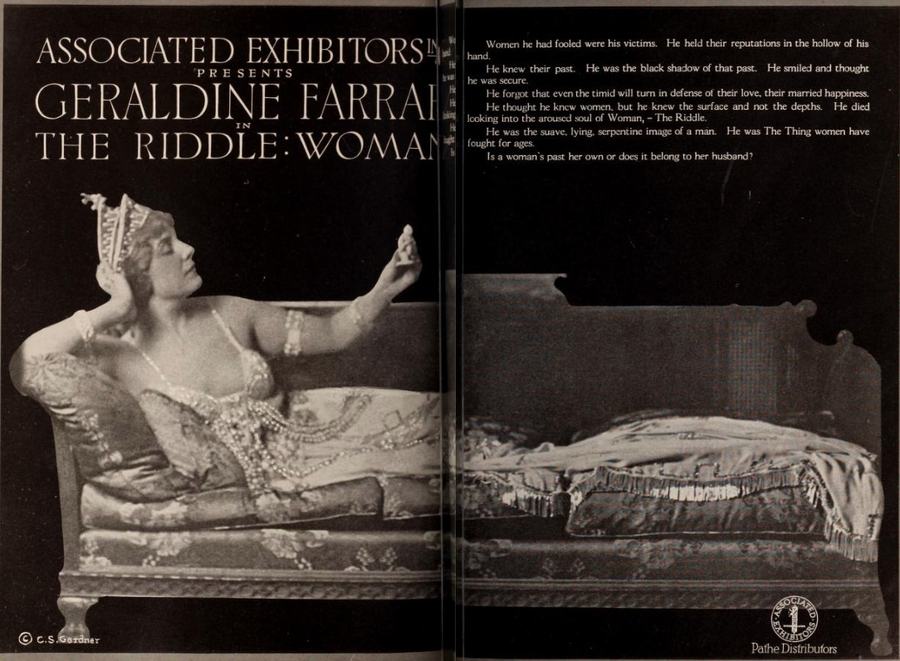
If you stare long enough into The Riddle: Woman, the film stares back—through you, actually—until you suspect your own fingerprints might be on the anonymous letters fluttering across the screen.
Released in the same fever-year as The Painted Lie yet eclipsed by its more marketable cousin, this Paramount oddity feels unearthed rather than preserved: nitrate whispers, emulsion bruises, and a soundtrack of institutional silence. John B. Clymer and Charlotte E. Wells spin a yarn that chews up the Riviera’s sun-drenched playgrounds and spits out bones bleached the color of expired pearls.
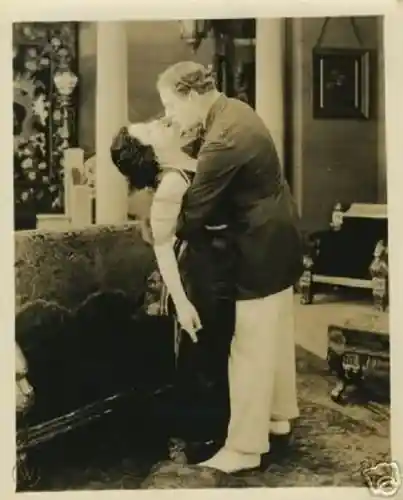
Madge Bellamy, all porcelain cheekbones and nervous wrists, embodies Lilla Gravert as if she were a Dresden figurine hurled against a wall—each spidering crack a new facet of panic. Opposite her, Philippe De Lacy’s Eric Helsingor never merely blackmails; he curates disgrace, arranging humiliations like a florist pinning orchids to a coffin lid. Watch how he lingers on the word indiscretion, rolling the syllables as though tasting a grape that might be poisoned.
The screenplay, rumored to be a three-headed hydra by Wells, Jacobi, and Donnelly, refuses the tidy morality of contemporaries such as The Lion's Bride. Instead it plunges into a carnivorous circularity: every revelation births a hungrier secret. Letters mailed in act one return as ghosts by act four, postmarks scratched into wrists like stigmata.
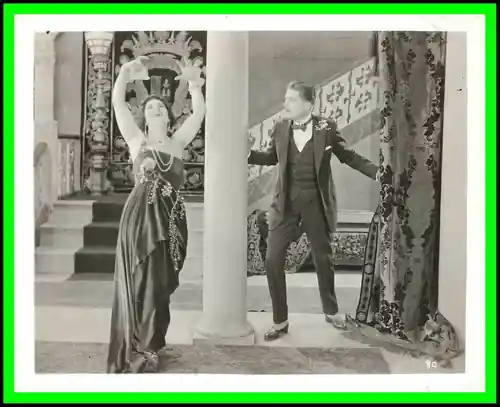
Visually, cinematographer William Marshall (borrowed from German studios still exhaling the smoke of Caligari) drenches sets in pools of umber and jade. A ballroom sequence pivots on a dolly shot that glides past mirrors positioned to multiply the dancers into infinity; the longer you look, the more the reflections lag a half-second behind, as though time itself has developed a stutter. Compare that audacity to the static tableaux of Hearts and Flowers and you’ll grasp why cine-clubs still hyperventilate over this print.
Geraldine Farrar’s cameo—a faded opera star clutching a starling in a gilded cage—operates like a tuning fork struck against the viewer’s psyche. Her aria, lip-synched to a cracked 1907 Edison cylinder, fractures mid-note, and the bird’s sudden silence feels more obscene than any profanity the silent era ever disallowed.
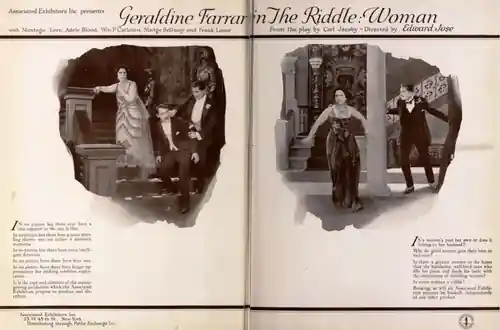
Montagu Love’s attorney, a cigarette forever bisecting his smirk, weaponizes legalese the way Helsingor wields gossip. In one bravura insert, he slides a fountain pen across parchment; the nib screeches, leaving ink that resembles pooled iodine. The soundtrack on the restoration (commissioned by Eye Filmmuseum) overlays this moment with a bowed-saw drone that crawls under your scalp like fever lice.
Yet the film’s true coup de grâce arrives when Lilla, cornered in a lighthouse whose Fresnel lens sweeps the sea like the eye of a sleepless god, turns the apparatus toward her persecutors. The beam scalds their retinas, bleaching the screen to white-hot nothingness. It’s a reverse-epiphany: instead of illumination, obliteration. The iris closes, not in the coy circle of a lover’s whisper, but in a hemorrhage that swallows every prior frame.

Adele Blood’s couturier supplies the wardrobe metaphors: seams that unpick themselves, beads that scatter like guilty thoughts, and a final mourning coat stitched with hidden razor blades—an outfit you cannot remove without bleeding. The costume becomes plot, a wearable narrative that cuts the wearer.
Compare this sartorial malice to the redemptive needlework in The Little Shoes and you’ll see why feminist film scholars cite The Riddle as a missing-link between Victorian suffering and noir’s femmes fatales. It’s the cinematic hinge on which the doorknob of agency finally breaks off in the hand.
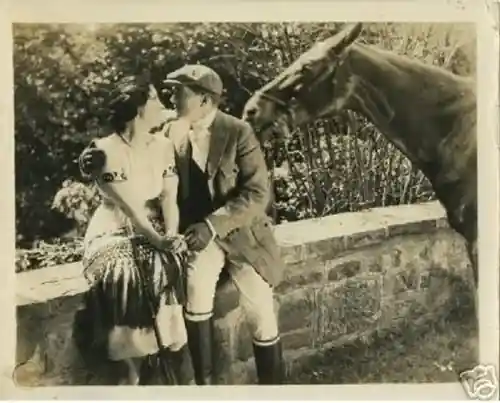
So why did the picture vanish for decades?
Paramount’s 1924 ledger lists it as “too continental,” a euphemism for let’s not anger the Hays office before it formally exists. Prints were vaulted, then quietly sold as silver nitrate scrap to fertilizer companies—an irony since the film itself is about recycling human pain into profit.
Fast-forward to 2019: a 9.5-mm abridgement surfaces at a Romanian flea market, spliced with Croatian intertitles and Hungarian censor cuts. The Eye Filmmuseum’s magicians digitally realigned frames using machine-learning dustbusting, yet retained the scratches—each scar a palimpsest of every hand through which the film slithered.
Viewers today might flinch at the pace—intertitles lingering like unwanted houseguests—but surrender to its rhythm and you’ll notice the pauses are pre-loaded with dread. The silence isn’t absence; it’s an accomplice holding a chloroformed cloth behind its back.
For maximal disorientation, pair a midnight screening with Carl Jacobi’s short story collection Portraits in Moonlight; the shared lexicon of masks, cages, and predatory charity will leave you unsure whether you dreamed the film or merely remembered someone else’s nightmare.
Ultimately, The Riddle: Woman offers no catharsis, only a Möbius strip of complicity. We, the voyeurs, become the final blackmailers: our ticket purchase, our streaming click, the latest installment in an unbroken chain of extortion that began when the first camera turned on a human face and demanded it confess.
Seek it out while the digital restoration still breathes; films this feral have a habit of crawling back underground, waiting for the next century to unearth their teeth.
IMDb 6.2
1919
Community
Log in to comment.