DbcultAccessing Vault...
5.7/10
Senior Film Conservator
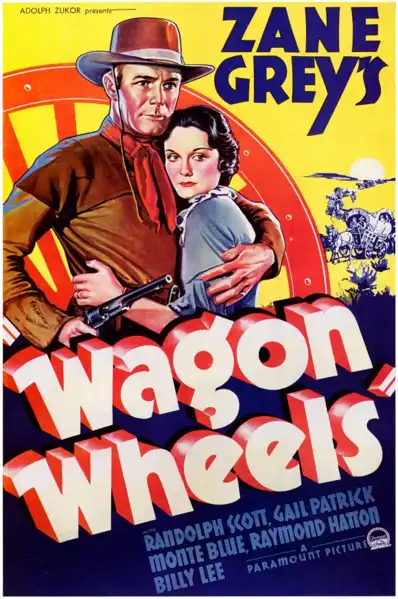
A definitive 5.7/10 rating for a film that redefined the boundaries of cult cinema. Wagon Wheels remains a cornerstone of transgressive art.
If you have seventy minutes to spare and a soft spot for dusty, old-school westerns where the heroes wear spotless white hats, Wagon Wheels is a decent way to waste an afternoon. But if you can't stand obvious stock footage from older silent movies spliced in every ten minutes, you should probably skip this one. 🤠
It is basically a cheap remake of the classic silent film The Covered Wagon. Actually, it is more than a remake—it literally steals huge chunks of action footage directly from it.
You can instantly tell when this happens because the screen suddenly gets super grainy and dark. One second we are looking at a crisp shot of Randolph Scott in 1934, and the next we are watching some scratched-up footage of anonymous stuntmen from 1923 crossing a river.
Speaking of Randolph Scott, the man is just incredibly handsome here. He plays Clint Belmet, a trail scout who is supposed to lead a bunch of settlers to Oregon.
He looks like he has never dirtied his shirt in his entire life, even after supposedly riding through dust storms for weeks. His hair stays perfectly combed through every single crisis. 🧼
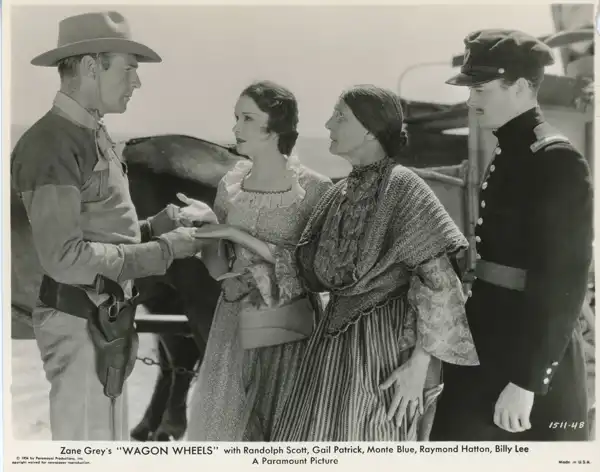
There is a kid in this movie named Sonny, played by Billy Lee. He wears this ridiculously oversized cowboy hat that looks like it is about to swallow his entire head.
I spent most of his scenes just wondering how that hat stayed on. It was way more suspenseful than the actual plot.
At one point, the settlers all start singing the title song, "Wagon Wheels," while walking next to their oxen. It is supposed to be this grand, inspiring moment of pioneer spirit.
Instead, it just feels like the actors are trying to pass the time because the script ran out of pages. The singing goes on just a bit too long.
The big river crossing scene is where things get really funny. The editing is so choppy it almost feels like a modern internet video.
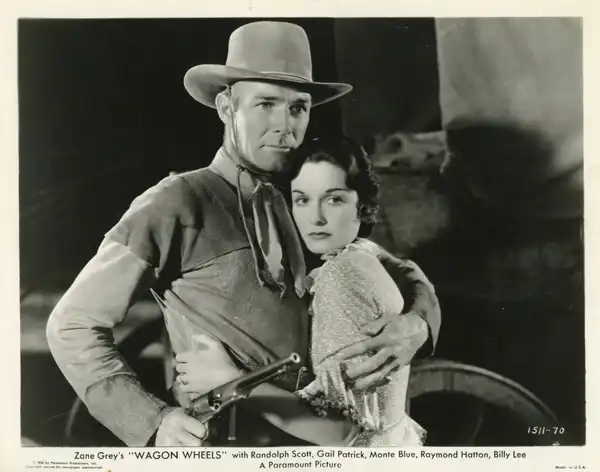
We get a close-up of Gail Patrick looking worried on a studio set. Then we cut to a completely different river with different water texture where a wagon flips over in grainy black-and-white.
You have to admire the sheer cheekiness of the filmmakers. They really thought nobody in 1934 would notice the sky changing colors between shots.
It made me think of how much better the atmosphere is in actual silent masterpieces like The Wind. In that film, the dirt and misery feel totally real, while here it feels like theatrical makeup and studio wind machines.
Still, there is a weird, cozy charm to how cheap this whole thing is. It is the kind of movie you put on while folding laundry.
If you are a film nerd who likes to laugh at old editing tricks, give it a go. Just do not expect anything close to a masterpiece.
IMDb 7.3
1915
Community
Log in to comment.