Is 'Other Women's Husbands' worth watching today? Short answer: yes, but with significant caveats that define its place more as a fascinating historical artifact than a universally engaging drama. This film is a must-see for ardent silent film enthusiasts, scholars of early cinematic portrayals of marriage and infidelity, and those curious about the societal mores of the late 1920s; however, it will likely prove a challenging watch for casual viewers accustomed to modern pacing and narrative conventions.
At its core, it's a compelling, if occasionally uneven, exploration of marital fidelity and the complexities of human desire, offering a unique window into a bygone era's sensibilities. It works. But it’s flawed. The film manages to transcend some of the era's more simplistic moralizing, presenting a narrative that, for its time, was remarkably nuanced in its portrayal of both husband and wife's transgressions.
This film works because of its surprisingly progressive (for its time) exploration of marital complexity and its commitment to character-driven drama over pure melodrama, particularly in its refusal to paint either protagonist as purely villainous.
This film fails because of its occasionally erratic pacing, a few underdeveloped subplots that hint at deeper issues without fully exploring them, and a final act that, while dramatic, feels a touch too neatly resolved, undermining some of the earlier emotional grit.
You should watch it if you appreciate the nuanced performances of the silent era, enjoy narratives that delve into the moral ambiguities of infidelity, and are willing to engage with a film that demands a certain historical empathy from its audience, accepting its period-specific limitations.
Scene from Other Women's Husbands
Cinematic perspective: Exploring the visual vocabulary of Other Women's Husbands (1926) through its definitive frames.
A Glimpse into Marital Morality: The Plot's Enduring Relevance
At first glance, 'Other Women's Husbands' might appear to be a straightforward morality play about infidelity, a common theme in the cinema of the late 1920s. Yet, under the direction of Jack Wagner and the writing team of Frances Marion and Edward T. Lowe Jr., the film delves into something more intricate than simple temptation and repentance. It presents infidelity not as a singular act, but as a symptom of underlying marital disconnect, a void created by absence and filled by fleeting, superficial connections.
The story of Dick and Kay Lambert is a fascinating examination of how quickly domestic bliss can unravel when one partner is away. Dick's immediate gravitation towards Roxana, facilitated by his old friend Jack Harding, isn't portrayed as pure malice, but rather a lapse born of loneliness and perhaps a lack of self-awareness. It's a subtle distinction, but one that adds layers to a narrative that could have easily become a simplistic tale of good versus evil.
What makes the plot particularly engaging is Kay's parallel journey. Her flirtation with Jack Harding, initially a seemingly innocent social interaction, escalates when she finds herself navigating her own emotional landscape in Dick's absence. This symmetrical exploration of marital wandering, where both partners are implicated, elevates the film beyond typical melodramatic fare. It suggests that the responsibility for a marriage's health is shared, and that vulnerabilities can emerge on both sides.
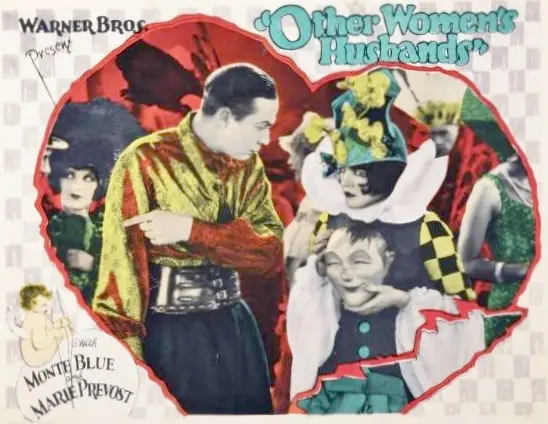
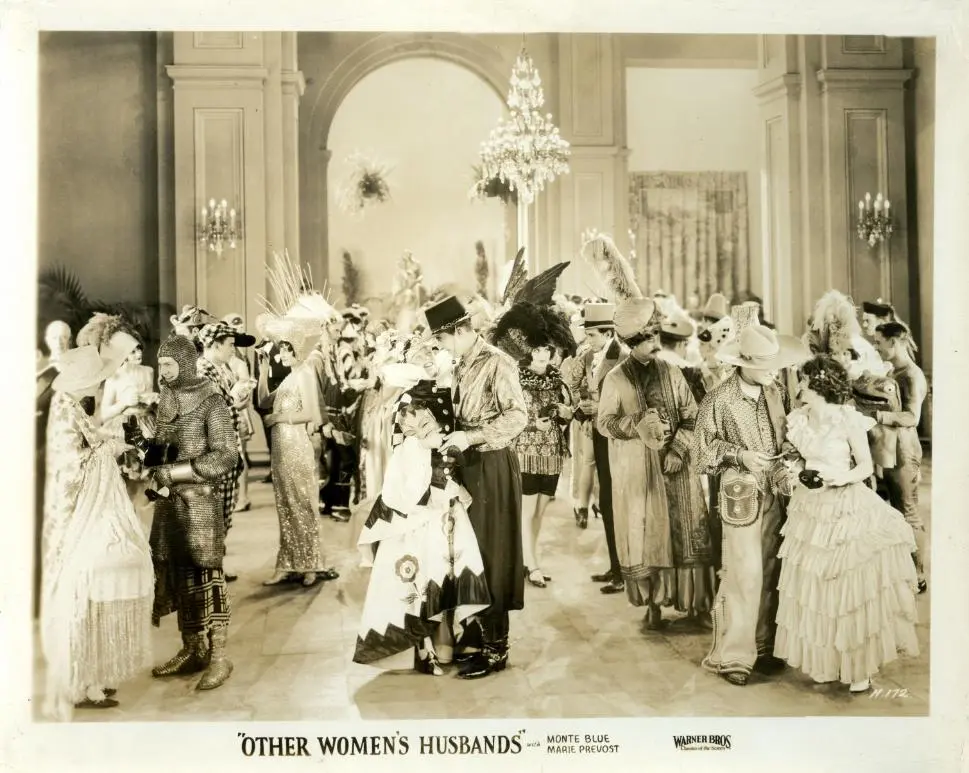
The masked ball sequence is undoubtedly the film's narrative centerpiece, a brilliant contrivance that serves as both a dramatic climax and a profound moment of revelation. Kay, disguised in Roxana's identical costume, receives Dick's impassioned advances, believing her to be his paramour. This moment is not merely a cheap trick; it's a brutal, visceral experience for Kay, forcing her to confront the reality of Dick's betrayal in the most intimate and heartbreaking way possible. It's a scene that, even without dialogue, conveys immense emotional weight.
The subsequent courtroom drama, while a conventional device for the era, becomes a stage for Kay's internal conflict. Her inability to articulate the final separation, despite Dick's clear transgressions, speaks volumes about the enduring bonds of love and perhaps, the societal pressures of the time regarding marriage. It's a surprisingly complex portrayal of forgiveness and the messy reality of human relationships, where love and hurt often coexist.
Scene from Other Women's Husbands
Cinematic perspective: Exploring the visual vocabulary of Other Women's Husbands (1926) through its definitive frames.
Performance and Persona: The Silent Language of Emotion
In silent cinema, the burden of conveying complex emotions falls squarely on the actors' expressions, gestures, and overall screen presence. 'Other Women's Husbands' boasts a cast that, for the most part, rises to this challenge, delivering performances that ground the film's dramatic narrative.
Marjorie Whiteis, as Kay Lambert, is arguably the film's emotional anchor. Her portrayal is a masterclass in silent subtlety. From the initial warmth of a contented wife to the dawning realization of betrayal, her face is a canvas of shifting emotions. Consider her reaction during the masked ball; the way her eyes, even behind the mask, convey a mixture of shock, heartbreak, and a burgeoning resolve. It's a performance that transcends the often-exaggerated stylings of the era, offering a genuinely empathetic character.
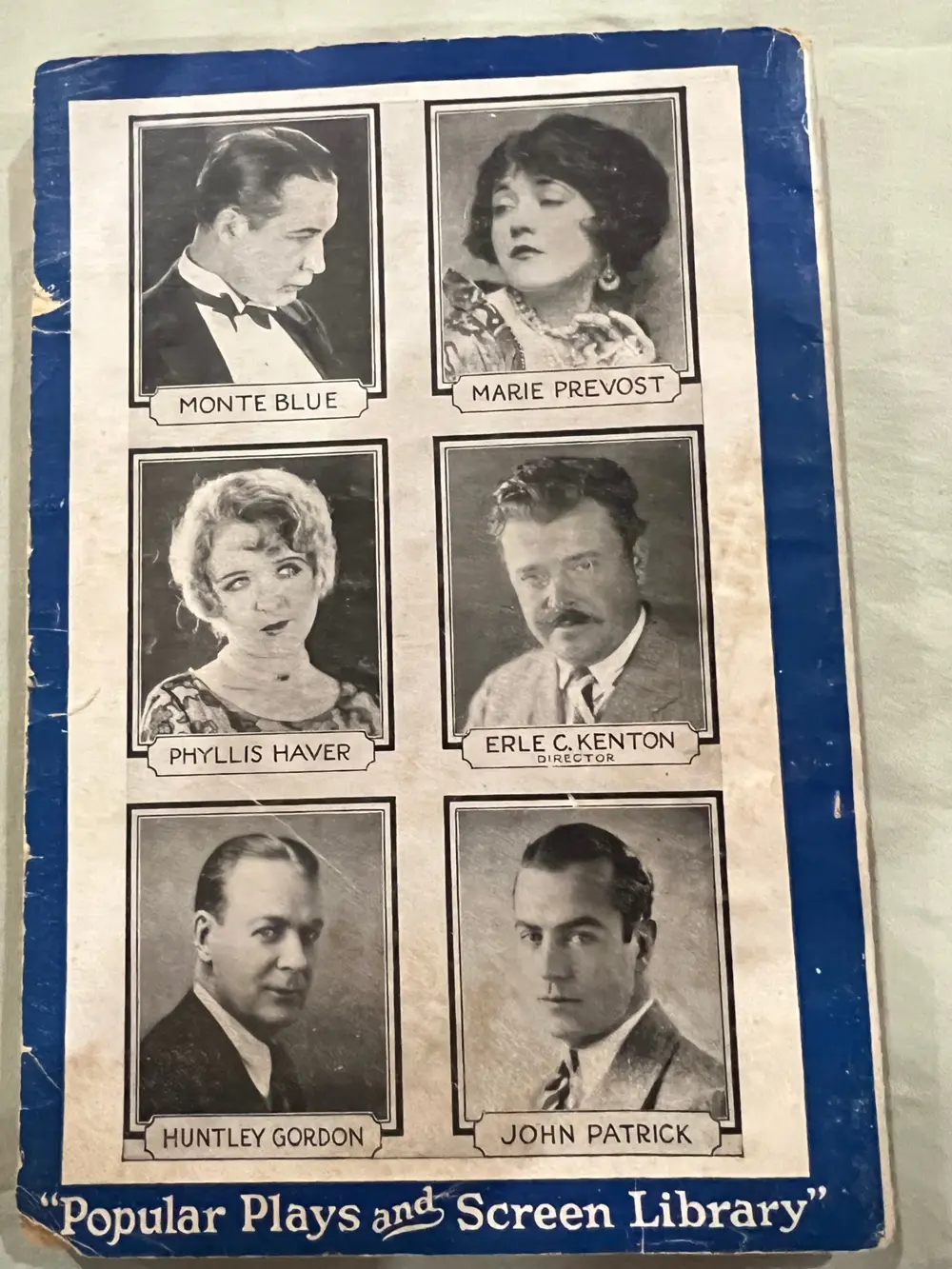
Monte Blue, as Dick Lambert, embodies the flawed protagonist with a convincing blend of charm and weakness. His descent into infidelity isn't painted with broad strokes of villainy, but rather with a palpable sense of internal struggle. One particularly effective moment comes when Dick begins to grow weary of Roxana's 'vulgarity'; Blue's subtle shifts in posture and his increasingly distant gaze effectively communicate his growing disillusionment and longing for the stability he abandoned. It's a nuanced turn that prevents Dick from becoming a one-dimensional cad, allowing the audience to understand, if not condone, his actions.
Phyllis Haver, as Roxana, plays the archetypal 'other woman' with a compelling vivacity. Her performance is more overtly theatrical, capturing the seductive allure and eventual superficiality that Dick finds himself entangled in. Her gestures are larger, her expressions more pronounced, effectively contrasting with Kay's more subdued elegance. This stylistic difference between Haver and Whiteis is a deliberate choice that highlights the opposing forces pulling at Dick.
John Patrick, as Jack Harding, provides a smooth, if somewhat opportunistic, counterpoint. His character’s ease in navigating both Kay's and Dick's social circles, and his subtle machinations, are conveyed through a confident demeanor and knowing glances. While not given the same emotional depth as the central couple, Patrick’s presence is crucial in driving key plot points, particularly the initial flirtation with Kay and the final confrontation with Dick.
Scene from Other Women's Husbands
Cinematic perspective: Exploring the visual vocabulary of Other Women's Husbands (1926) through its definitive frames.
Marie Prevost and Huntley Gordon, though in supporting roles, contribute to the film's texture. Prevost, in particular, adds a certain spark to her scenes, demonstrating the era’s penchant for strong female personalities, even when not central to the main romantic conflict. The ensemble works together to create a believable, if heightened, social world for the Lamberts' drama to unfold within.
The Art of Silent Storytelling: Direction and Cinematography
The visual language of 'Other Women's Husbands' is a testament to the sophisticated storytelling techniques developed during the silent era. Jack Wagner's direction, while perhaps not as groundbreaking as some of his contemporaries, effectively uses the camera to convey mood, character, and narrative progression. The film relies heavily on established cinematic grammar, yet applies it with a keen eye for emotional impact.
The use of close-ups is particularly effective in drawing the audience into the characters' inner worlds. When Kay discovers Dick at the masked ball, the tight framing on her eyes, even through the mask, amplifies her shock and pain. Similarly, Dick's moments of regret are often punctuated by close-ups that reveal his internal turmoil, making his remorse feel genuine rather than performative. This intimate framing is essential for a genre that cannot rely on spoken dialogue.
Cinematography, while not overtly flashy, serves the story well. The lighting choices, for instance, subtly differentiate environments. The Lambert home often feels brightly lit, conveying an initial sense of domestic harmony, while the party scenes and Roxana's apartment sometimes feature more dramatic, chiaroscuro lighting, hinting at the illicit nature of the affair. This visual contrast aids in delineating the moral and emotional spaces of the characters.
Set design and costuming also play a critical role. Roxana's more opulent, perhaps even gaudy, attire and living space starkly contrast with Kay's more refined elegance. This visual shorthand quickly communicates character and social standing, allowing the audience to instinctively grasp the differences between the 'other woman' and the 'wife.' The identical costumes at the masked ball are, of course, a prime example of how costuming can drive the entire narrative of a scene, creating confusion and eventual revelation.
Scene from Other Women's Husbands
Cinematic perspective: Exploring the visual vocabulary of Other Women's Husbands (1926) through its definitive frames.
Compared to other films of its period, such as the more overtly adventurous Frank Gardiner, the King of the Road or the fantastical elements of Der Vampyr, 'Other Women's Husbands' is grounded in a more realistic, albeit melodramatic, social setting. Its strength lies in its ability to extract significant emotional resonance from everyday, albeit heightened, human drama. The visual storytelling here is less about spectacle and more about psychological insight, a valuable trait for a film dealing with such intimate themes.
Pacing and Thematic Resonance
The pacing of 'Other Women's Husbands' is characteristic of late silent-era cinema, alternating between methodical scene-setting and rapid-fire dramatic sequences. The initial setup of Dick and Kay's marriage and Kay's departure feels deliberate, allowing the audience to settle into their world before the disruption begins. This measured start effectively establishes the stakes before the plot accelerates.
However, there are moments where the pacing feels uneven. Some transitional scenes could have been tighter, and certain subplots, particularly those involving peripheral characters, occasionally drag the narrative. This is a common challenge for silent films, where intertitles and visual exposition can sometimes slow down the momentum. Despite this, the film manages to build considerable tension towards its major confrontations, particularly leading up to the masked ball and the courtroom climax.
Thematic resonance is where 'Other Women's Husbands' truly shines. It grapples with questions of fidelity, forgiveness, and the societal expectations placed upon married couples. While the ending, with its almost inevitable reconciliation, might feel a touch too convenient for modern sensibilities, it reflects a prevalent desire for domestic harmony in the era. My strong opinion is that the film's ultimate message of reconciliation, while conventional for its era, feels almost disappointingly neat, glossing over the profound emotional damage that such infidelity would inflict and perhaps undercutting the more progressive themes explored earlier.
An unconventional observation is how the film uses Roxana’s 'vulgarity' not just as a moral judgment, but as a mechanism for Dick’s self-realization. Her perceived coarseness becomes less about her inherent character and more about how she reflects Dick’s own guilt and dissatisfaction with his choices. It's a subtle way of externalizing his internal conflict, making Roxana a mirror rather than just a temptress.
The film also touches upon the agency of women in a patriarchal society. Kay, despite her heartbreak, makes conscious decisions—to seek divorce, to confront Dick. Her declaration of love in court, while leading to reconciliation, is not presented as a weakness but as a powerful, autonomous choice, a testament to her enduring feelings rather than a forced societal compliance. This nuanced portrayal of female strength, even within the confines of a conventional narrative, is a standout element.
What is the central conflict of Other Women's Husbands?
The central conflict of 'Other Women's Husbands' is the unraveling and subsequent attempt at repair of the marriage between Dick and Kay Lambert. It explores the destructive impact of infidelity from both perspectives, culminating in a dramatic struggle between personal betrayal and enduring love. The core tension lies in whether their relationship can withstand the profound breach of trust and the emotional fallout of their respective dalliances.
Key Takeaways
Best for: Silent film aficionados, film historians, and those interested in early cinematic portrayals of complex marital dynamics.
Not for: Viewers seeking fast-paced action, clear-cut moral narratives, or those unfamiliar with the conventions of silent cinema.
Standout element: Marjorie Whiteis's deeply empathetic and nuanced performance as Kay, particularly during the masked ball sequence.
Biggest flaw: The resolution, while dramatically satisfying for its era, feels somewhat rushed and overly neat, potentially diminishing the impact of the earlier emotional turmoil.
Pros and Cons
PROS:
Intriguing and surprisingly nuanced exploration of infidelity for its time.
Strong, expressive performances from the lead cast, especially Marjorie Whiteis.
The masked ball sequence is a narrative and emotional highlight, expertly staged.
Offers valuable insight into societal norms and marital expectations of the late 1920s.
Effective use of silent film techniques, including close-ups and visual storytelling.
CONS:
Pacing can be uneven, with some slower stretches that may test modern patience.
Certain subplots feel underdeveloped, leaving some character motivations ambiguous.
The final reconciliation might feel too convenient or simplistic for some viewers.
As a silent film, it requires a certain level of engagement and historical context from the audience.
Some supporting characters are less compelling than the leads, fading into the background.
Verdict
'Other Women's Husbands' is more than just a relic of the silent era; it's a compelling, if imperfect, marital drama that offers a fascinating window into the moral complexities of its time. While its pacing and some narrative resolutions might feel dated, the film’s central performances, particularly Marjorie Whiteis's portrayal of Kay, elevate it beyond mere historical curiosity. It’s a film that asks pertinent questions about fidelity, forgiveness, and the enduring power of love, even amidst profound betrayal.
For those willing to engage with the unique demands of silent cinema, this film offers rich rewards. It’s a thoughtful exploration of human relationships, one that, despite its age, manages to resonate with surprising depth. It may not be a cinematic masterpiece in the modern sense, but it is undoubtedly a significant and watchable piece of film history that deserves to be seen and discussed. It reminds us that the human heart, in all its complicated glory, has always been the greatest subject for storytelling. It's a worthy addition to any silent film enthusiast's viewing list, a testament to the enduring power of visual narrative.