DbcultAccessing Vault...
Cult Review
Senior Film Conservator
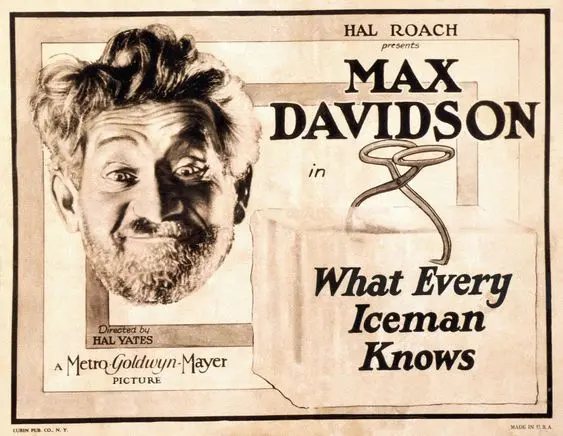
No, 'What Every Iceman Knows' is not worth watching for most modern viewers. This 1927 Hal Roach short is a curio at best, a baffling exercise in early dark comedy that struggles to justify its own premise. It moves with the clunky gait of a film still figuring out its own language, leaving little for the casual observer to latch onto.
This film works because it presents a surprisingly dark premise for its era, hinting at a domestic malice that few comedies would touch so directly. Max Davidson, a character actor known for his exasperated Jewish patriarch roles, brings a certain physical energy to his part. This film fails because its pacing is glacial, the humor doesn't land, and the central cruelty feels more uncomfortable than genuinely funny. You should watch it if you are studying the evolution of screenwriting, early slapstick mechanics, or the specific careers of its cast members, particularly Davidson's early persona.
'What Every Iceman Knows' centers on a wife's desire to be rid of the family dog, hiring the iceman to do the deed. This is the entire engine of the plot, and it’s a strange one for a comedy. The film plays this out with a kind of plodding literalism. Each attempt by the iceman (Eugene Pallette) to dispose of the dog is drawn out, a series of repetitive sight gags that feel less like escalating absurdity and more like a lack of invention. The wife, played by Dot Farley, is a one-note villainess, her conniving expressions growing stale quickly.
The film’s central conceit—a woman actively trying to have her dog killed—is meant to be darkly funny, but it mostly feels misjudged. There’s a certain callousness to it that the film never quite earns. It’s not subversive; it’s just unpleasant. The humor hinges on Max Davidson's character's obliviousness, which wears thin as the same scenario plays out over and over. His frantic, wide-eyed reactions become a predictable default rather than a genuine comedic response to unfolding chaos.
Max Davidson is the anchor here, a performer who excelled at playing the perpetually flustered everyman. His physical comedy is broad, a whirlwind of arm-waving and double-takes. He’s certainly committed to the bit, bouncing off walls and reacting with exaggerated despair to the mundane. Yet, even his considerable energy can't salvage the repetitive structure. His character is less a participant and more a bewildered bystander, making it hard to invest in his plight.
Dot Farley, as the wife, is a caricature. She scowls, she gestures, she makes her intentions clear through pantomime. Her performance feels less like acting and more like a series of instructions. Eugene Pallette, recognizable even in his younger days, is largely stoic as the iceman, his impassive face a stark contrast to Davidson's theatrics. He's tasked with the physical comedy of the 'dog disposal' attempts, but his execution is more workmanlike than inspired. Leo Willis and Sidney Gordon round out the cast in minor roles, adding little beyond background presence.
The film’s pacing is a significant hurdle. Even for a silent short, it feels drawn out. Gags are introduced, then milked for far too long, losing their punch well before the scene concludes. Hal Roach, a titan of early comedy, co-wrote and produced this, but the direction feels uninspired. It’s a series of static shots, functional but devoid of any real visual flair. The camera captures the action, but rarely enhances it.
There's a lack of invention in the staging. Most scenes unfold in a single frame, relying on the actors' physicality to carry the moment. The editing is rudimentary, cutting between actions without building much rhythm or suspense. The overall effect is one of a hastily assembled production, prioritizing getting the gag on screen over refining its delivery. The technical aspects are simply too primitive to elevate the material.
A surprisingly dark comedic premise for its era, offering a glimpse into what was considered humorous at the time.
Max Davidson’s energetic, if repetitive, physical performance.
Short runtime means it's over relatively quickly.
The central plot of attempting to kill a dog is more uncomfortable than funny.
Repetitive gags and sluggish pacing quickly diminish any comedic impact.
Lack of visual sophistication or directorial ingenuity.
Performances outside of Davidson are largely one-dimensional.
'What Every Iceman Knows' is a film that exists. It’s a minor entry in the silent comedy canon, notable primarily for its unusual premise rather than its execution. It fails to generate genuine laughs, instead offering a series of increasingly tiresome attempts at humor built on a foundation of implied animal cruelty. While Max Davidson puts in the effort, the material simply isn't there to support him. For most, this is a skip. Only the most dedicated silent film historians or those specifically researching the careers of its talent will find anything of substantial interest here. It's a curiosity, nothing more.
IMDb 4.2
1931
Community
Log in to comment.