DbcultAccessing Vault...
Cult Review
Senior Film Conservator
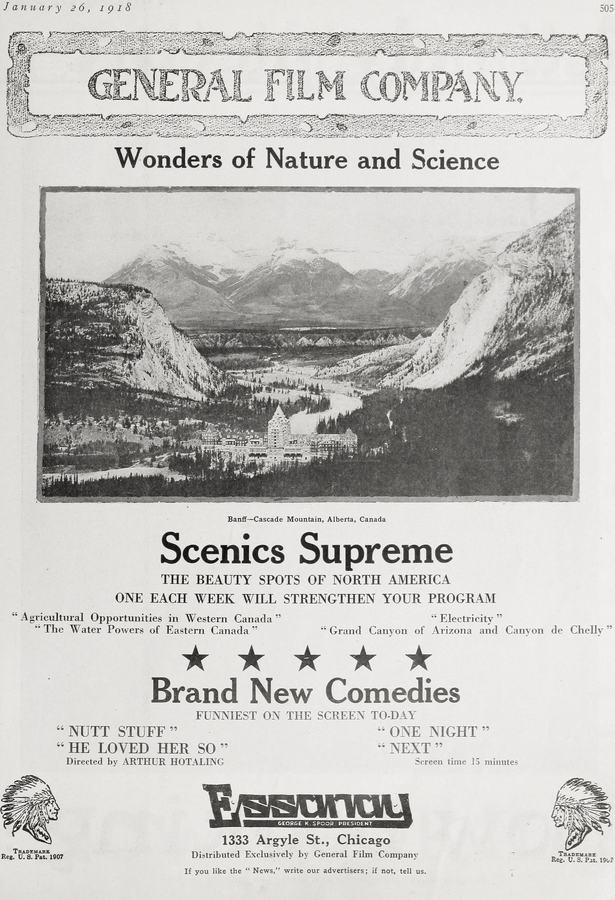
Stepping back into the cinematic past, specifically to the year 1912, offers a fascinating lens through which to view societal norms, burgeoning comedic styles, and the nascent stirrings of female agency. Arthur Hotaling's film, simply titled 'Next', might appear, on the surface, to be a simplistic silent-era farce, but beneath its broad strokes and physical comedy lies a surprisingly rich tapestry of commentary on marital dynamics, economic independence, and the often-unspoken power struggles within the domestic sphere. It's a film that, despite its brevity and straightforward plot, invites a deeper excavation of its cultural context and its implications for understanding the evolving landscape of gender roles at the dawn of the 20th century.
The premise of 'Next' is deceptively simple, yet profoundly resonant with the anxieties of its era. We are introduced to a household governed by a man whose 'worthlessness' is not merely a character trait but a catalytic force. His refusal to 'fire up the furnace' speaks volumes. It's not just about a lack of warmth; it symbolizes a deeper neglect, a parsimonious spirit that extends beyond mere frugality into outright dereliction of spousal duty. In an age where a man's role as provider and protector was paramount, such a depiction would have immediately established him as a figure of ridicule and contempt. This isn't just about a cold house; it's about a cold marriage, a partner who fails to provide even the most basic comforts. The wife, whose physical description as 'weighing a full three hundred pounds' is explicitly stated, becomes the focal point of this domestic crisis. In early cinema, physical attributes, especially those deviating from conventional ideals, were often exaggerated for comedic effect or to signify character traits. Her size, in this context, might initially suggest a certain immobility or dependence, making her subsequent actions all the more surprising and, perhaps, empowering.
Her decision to 'go to work and be independent' is, for 1912, a remarkably bold move, especially for a woman depicted with such physical characteristics. It signifies a refusal to passively accept her husband's shortcomings. This isn't a meek plea for help; it's an assertive declaration of self-reliance. This nascent theme of female economic independence, while often couched in comedic situations, was a subtle but persistent undercurrent in many films of the era. One might draw a faint parallel to the struggles of characters in films like Grafters, which, while focusing on broader social issues, often touched upon the harsh realities of economic survival and the lengths to which individuals would go to secure their livelihoods. The wife's journey in 'Next', however, is intensely personal, driven by immediate domestic necessity rather than grand social upheaval.
The setting for the wife's newfound independence is particularly intriguing: a 'lady barber shop.' This establishment is described as 'reaping a harvest, due to their staff of pretty girls, who coax in the patronage.' This detail is crucial. It positions the shop not merely as a place of employment, but as a site where gender roles are both challenged and reinforced. On one hand, it represents a new avenue for female employment outside the traditional domestic sphere. On the other, the emphasis on 'pretty girls' and their ability to 'coax in the patronage' underscores the persistent commodification of female charm and appearance. It's a space where women are working, but their success is explicitly tied to their attractiveness and their ability to engage in light flirtation with male customers. This duality reflects the complex societal attitudes towards women in the workforce during this period. They could enter new professions, but often these roles were still framed within existing patriarchal expectations of female roles as charming, nurturing, or aesthetically pleasing.
The shop becomes a stage for male desire and female performance. The 'various services the pretty girls render, from shaves to shines and manicures,' are not merely practical; they are intimate, tactile interactions that foster 'many are the flirtations carried on between the customers and the fair employees.' This environment, while seemingly innocuous, subtly pushes against the boundaries of acceptable public interaction between men and women, especially for married men. It’s a space of contained transgression, where social rules are bent but not entirely broken, all for the sake of a good shave and a bit of playful banter. This setup perfectly primes the narrative for the inevitable collision of the domestic and the public spheres.
The dramatic irony of 'Next' is fully realized with the revelation that 'not the least patronizing of these patrons is the worthless husband.' His presence in this very establishment, indulging in the services of 'pretty girls' and engaging in flirtation, while his wife is forced to work due to his indolence, is the narrative's central comedic and moral pivot. His repeated visits – coming back 'for the third time that day for a shave' – highlight his utter lack of self-awareness and his egregious hypocrisy. He is not just seeking a shave; he is seeking the attention and flirtation that the 'pretty girls' provide, precisely what he denies his wife at home. This characterization of the husband as a philandering wastrel serves a dual purpose: it justifies the wife's actions and provides ample comedic fodder for the impending comeuppance.
The cinematic technique here, though rudimentary by modern standards, relies heavily on visual storytelling and the audience's immediate recognition of archetypes. The 'worthless husband' is a stock character in many early comedies, often serving as a foil for more virtuous or industrious figures. We see echoes of similar marital discord, albeit with different narrative resolutions, in films such as The Wooing of Princess Pat, where romantic entanglements and domestic misunderstandings often formed the crux of the plot. However, 'Next' foregrounds the economic dimension of this marital strife, making the husband's flirtation not just a moral failing but a direct consequence of his financial irresponsibility.
The narrative builds to its inevitable, satisfying climax. 'By that time his wife is established as one of the tonsorial artists.' This detail is crucial; it means she is no longer a mere applicant but an integrated member of the shop's staff, granting her a certain authority and agency within this new environment. The moment she 'sees him in the chair' is the point of no return. The visual recognition, without a single spoken word, conveys the shock, anger, and betrayal she must feel. The proprietress's confirmation of his flirtatious behavior provides the final justification, escalating the situation from a personal discovery to a public indictment.
What follows is a meticulously orchestrated act of comedic retribution. She 'orders him tied down and then smears his whole face and head with lather.' This isn't just about physical discomfort; it's about humiliation and a symbolic stripping away of his masculine vanity. The lather, typically used for a clean shave, is here weaponized, turning him into a grotesque, clownish figure. It's a reversal of roles: the barber, usually serving the customer, now punishes him. The act of tying him down further emphasizes his helplessness and her temporary but absolute control. This public shaming serves as a powerful visual commentary on the consequences of infidelity and negligence.
The ultimate punishment, however, transcends mere humiliation: 'After that punishment is inflicted, she turns him over her knee and spanks him.' This act, deeply rooted in the imagery of parental discipline, is profoundly symbolic. It infantilizes the husband, reducing him to the status of a naughty child being corrected by a stern parent. It reestablishes the wife's authority, not just as a wronged spouse, but as a figure capable of enforcing order and justice within their domestic (and now public) sphere. This physical comedy, while perhaps jarring to modern sensibilities, would have resonated with audiences of the era as a clear, decisive, and ultimately satisfying resolution to the husband's transgressions. It's a visceral, no-holds-barred assertion of power, a definitive statement that his 'worthlessness' will no longer be tolerated.
'Next', for all its comedic intent, touches upon several enduring themes. Firstly, it's a commentary on marital power dynamics. The film explicitly contrasts the husband's laziness and infidelity with the wife's industry and eventual assertiveness. Her journey from domestic victim to empowered avenger offers a proto-feminist glimmer, albeit one framed within the confines of a slapstick comedy. Her physical size, initially perhaps a source of comedic potential or a symbol of domesticity, transforms into a physical manifestation of her newfound strength and resolve.
Secondly, the film explores the theme of economic independence and its impact on personal agency. The wife's decision to work is not just about earning money; it's about reclaiming dignity and exerting control over her own life. This theme, nascent in 1912, would become increasingly prevalent in subsequent decades, reflecting broader societal shifts as women entered the workforce in greater numbers. While not as overtly dramatic as, say, the intense social commentary found in The Great Problem, 'Next' still offers a glimpse into the individual struggles that underpinned these larger societal changes.
Finally, comedic justice is at the heart of the film. The husband's transgressions are met with a swift, public, and humiliating punishment that aims to restore balance to the domestic order. The humor derives from the audience's satisfaction in seeing a morally reprehensible character get his comeuppance, especially when delivered by the very person he wronged. This form of justice, delivered through slapstick and exaggerated consequences, was a hallmark of early silent comedies, providing audiences with a cathartic release and a clear moral message.
As a silent film from 1912, 'Next' relies entirely on visual storytelling, exaggerated gestures, and clear character types to convey its narrative. The performance of Arthur Hotaling, likely in the role of the hapless husband, would have been key to establishing his 'worthless' nature and his susceptibility to temptation. Silent film acting, often characterized by its theatricality, allowed for direct communication of emotions and intentions without the aid of dialogue. The pacing, though simple, would have effectively built tension towards the comedic climax, ensuring that the audience felt the full impact of the wife's retribution.
The film serves as a valuable historical artifact, providing insights into the popular entertainment of its time. It reflects a period when cinema was still finding its voice, experimenting with narrative structures and comedic tropes. While not a masterpiece of its era in the vein of a Hearts of the World, which aimed for grander dramatic scope, 'Next' nonetheless offers a snapshot of everyday anxieties and the ways in which they were translated into accessible, entertaining narratives for a mass audience. It reminds us that even the simplest stories can carry significant cultural weight and offer profound insights into the social fabric of their time.
The film's exploration of gender roles, particularly the wife's journey to independence and her ultimate assertion of power, resonates even today. While the comedic elements are firmly rooted in the slapstick tradition of early cinema, the underlying message about accountability and self-reliance remains potent. It's a testament to the enduring power of storytelling, even in its most rudimentary forms, to capture universal human experiences and anxieties. 'Next' stands as a charming, if somewhat primitive, example of how early filmmakers tackled complex social issues through the accessible medium of comedy, leaving us with a memorable, albeit physically painful, lesson in marital fidelity and the consequences of a truly 'worthless' disposition.
In conclusion, 'Next' is more than just a fleeting moment of early cinematic amusement. It's a compact, yet surprisingly layered, commentary on the evolving dynamics between men and women, the burgeoning concept of female autonomy, and the timeless appeal of seeing a scoundrel receive his just deserts. Its historical significance lies not in its grand cinematic innovations, but in its ability to encapsulate the social anxieties and humorous resolutions that captivated audiences over a century ago. A fascinating relic, indeed.
IMDb —
1934
Community
Log in to comment.