DbcultAccessing Vault...
7.2/10
Senior Film Conservator
A definitive 7.2/10 rating for a film that redefined the boundaries of cult cinema. What Every Woman Wants remains a cornerstone of transgressive art.
The year 1919, a pivotal moment in cinematic history, saw the release of “What Every Woman Wants,” a silent drama that, even a century later, continues to resonate with surprising depth. Directed by Wilfred Lucas, though William Parker penned its intricate narrative, this film delves into the tumultuous journey of Gloria Graham, a character whose initial worldview is startlingly superficial yet ultimately undergoes a profound metamorphosis. In an era grappling with the aftermath of a global conflict and shifting societal norms, Gloria’s tale offers a fascinating lens through which to examine the burgeoning aspirations and inherent vulnerabilities of women. This isn't merely a period piece; it’s a timeless exploration of ambition, the deceptive allure of material wealth, and the often-brutal hand of fate.
Gloria, portrayed with compelling nuance by Barbara Tennant, begins her narrative arc as a stenographer—a profession offering a semblance of independence, yet still firmly entrenched in the patriarchal structures of the early 20th century. Her ambition, however, transcends the confines of her modest desk. She subscribes wholeheartedly to a philosophy as old as civilization itself, but perhaps never more pronounced than in the burgeoning consumer culture of the 1910s: that “clothes make the woman.” For Gloria, outward appearance isn't merely a matter of personal style; it's the very bedrock of success, a non-negotiable prerequisite for ascending the social and professional ladders. This conviction drives her to accumulate substantial debts, a precarious gamble on the power of sartorial splendor to unlock a brighter future. Her belief system, while seemingly shallow, underscores a deeper societal pressure, a silent expectation that women must present a perfect facade to navigate a world that often judged them by their external polish rather than their intrinsic worth. This thematic thread, focusing on the deceptive nature of appearances, can be seen echoed in later cinematic explorations of social climbing and the pursuit of superficial validation, albeit with more modern sensibilities.
The burgeoning romance between Gloria and Philip Belden, portrayed by Forrest Stanley, offers a brief, tender respite from her material obsessions. Philip represents a different kind of aspiration, one rooted in genuine affection and perhaps a more traditional, stable future. Their courtship, however, is brutally interrupted by the cataclysmic shadow of World War I. The news of Philip’s supposed death on the battlefields of France, a common and devastating occurrence of the period, shatters Gloria’s world. The immediacy and widespread impact of such announcements are powerfully evoked, echoing the collective grief depicted in actual wartime documentaries like Allies' Official War Review, No. 7, which brought the harsh realities of the front lines to civilian audiences. For Gloria, this loss isn't just emotional; it’s an existential crisis, stripping away her romantic future and leaving her adrift in a sea of uncertainty.
In the wake of this profound personal tragedy, Gloria makes a decision born not of love, but of stark pragmatism. She marries her employer, Horace Lennon (Wilfred Lucas), a man of significant financial standing. This union is a calculated move, a desperate attempt to secure her future and escape the crushing weight of her debts. It’s a marriage of convenience, a common trope in literature and film, particularly when exploring the limited options available to women in an era preceding widespread economic independence. Lennon, a character whose affluence is matched only by his moral ambiguity, represents the antithesis of Philip. His wealth offers a perceived sanctuary, but it comes at the cost of genuine connection and emotional fulfillment. This stark contrast between two potential paths for Gloria—one of love and one of security—forms the narrative's central tension, forcing the audience to ponder the true cost of societal expectations and personal compromise. The film subtly critiques the societal structures that often compelled women into such transactional relationships, highlighting the inherent compromises embedded within the pursuit of material stability over emotional authenticity.
The honeymoon period, if it could even be called that, quickly dissipates, revealing the stark realities of Gloria’s new life. Horace Lennon, far from being the benevolent provider, proves to be a faithless and emotionally distant husband. The opulent lifestyle she had so desperately sought quickly transforms into a gilded cage. The “success” she believed good clothes and a wealthy husband would bring remains elusive; instead, she finds herself isolated, unfulfilled, and deeply unhappy. This segment of the film masterfully illustrates the hollowness of materialism, a theme that resonates powerfully even today. Gloria's initial premise—that outward appearances dictate success—is systematically dismantled by her lived experience. The expensive gowns and lavish surroundings cannot mask the emotional void or the profound disappointment in her husband's character.
This disillusionment is crucial to Gloria’s character development. It forces her to confront the limitations of her earlier, superficial worldview. Her journey from a woman obsessed with external validation to one grappling with the complexities of human relationships and intrinsic worth is the film’s emotional core. The narrative effectively demonstrates that true contentment cannot be purchased or donned like a new outfit; it must be forged through genuine connection, respect, and personal integrity. The film doesn't shy away from depicting the oppressive nature of a loveless marriage, where financial security comes at the heavy price of emotional freedom. This exploration of marital discord and the search for authentic happiness can be seen in other silent era dramas like His Daughter's Second Husband, which also delves into the complexities and often hidden sorrows within domestic arrangements. Gloria’s experience serves as a cautionary tale, a poignant reminder that genuine success is measured not by the depth of one's pockets, but by the richness of one's soul.
Just as Gloria grapples with the profound emptiness of her life with Horace, the narrative takes a breathtaking, almost unbelievable turn—a plot twist that would become a staple of dramatic storytelling for decades to come. The news of Philip Belden’s death, which had plunged Gloria into despair and led her into the arms of Horace, proves to be unequivocally false. Philip, not lost to the ravages of war, but rather having endured the unimaginable horrors of a German prison camp, returns. His reappearance, a literal ghost from the past, at Gloria's home, is a moment of electrifying tension and emotional upheaval. The sheer audacity of this narrative device, while potentially melodramatic by modern standards, was a powerful engine for dramatic conflict in silent cinema.
This sudden resurrection of Philip throws Gloria’s meticulously constructed, albeit unhappy, life into utter chaos. It forces her to confront the choices she made under duress and the profound implications of her marriage to Horace. The film expertly captures the shock, confusion, and a burgeoning sense of hope that must engulf Gloria. Philip's return isn't just a personal revelation for her; it's a dramatic re-evaluation of fate itself. Was her marriage to Horace an unfortunate necessity, or a tragic mistake? The audience is left to ponder the agonizing dilemma Gloria faces: the man she loved, presumed dead, is now alive, but she is bound by marital vows to a man she despises. This kind of dramatic irony and the sudden reversal of fortune were potent tools for silent filmmakers, designed to elicit maximum emotional response from an audience accustomed to heightened theatricality. The lingering trauma of Philip's imprisonment, though largely unspoken through dialogue, is conveyed through his demeanor and the silent weight of his past, adding another layer of complexity to his unexpected return.
The fragile peace of Gloria’s household is violently shattered by Philip’s return. The confrontation that ensues, whether implied or explicitly depicted, culminates in a shocking accident. Horace Lennon, the faithless husband, meets an untimely end, shot inadvertently by Gloria’s maid. This sudden, tragic demise of Horace adds another layer of profound complexity to an already intricate narrative. It’s a moment of sheer dramatic intensity, designed to propel the plot forward while simultaneously raising questions of culpability, justice, and the unforeseen consequences of human actions. The “accidental” nature of the shooting is key, preventing Gloria from being a direct perpetrator, yet placing her squarely in the center of a legal maelstrom.
Gloria is swiftly arrested, the specter of a murder charge looming ominously over her. Her journey through the legal system, a tense and arduous process, forms a significant portion of the film's latter half. This segment explores themes of societal judgment, the burden of proof, and the often-unjust nature of the justice system. The audience is invited to empathize with Gloria as she navigates this harrowing ordeal, her past choices and present circumstances under intense scrutiny. The film, through this trial, subtly critiques the societal tendency to condemn women who deviate from prescribed norms, especially those involved in scandalous domestic affairs. Her eventual acquittal, a hard-won victory, isn't just a legal triumph; it's a moral vindication, clearing her name and paving the way for a new beginning. This dramatic arc, involving wrongful accusation and eventual exoneration, finds parallels in other early cinematic narratives exploring themes of justice and redemption, such as A Marked Man, where characters also contend with the severe implications of legal entanglements and the fight to clear one's name. The resolution of the trial allows Gloria to shed the burdens of her past and finally embrace the possibility of a future free from moral compromise and societal condemnation.
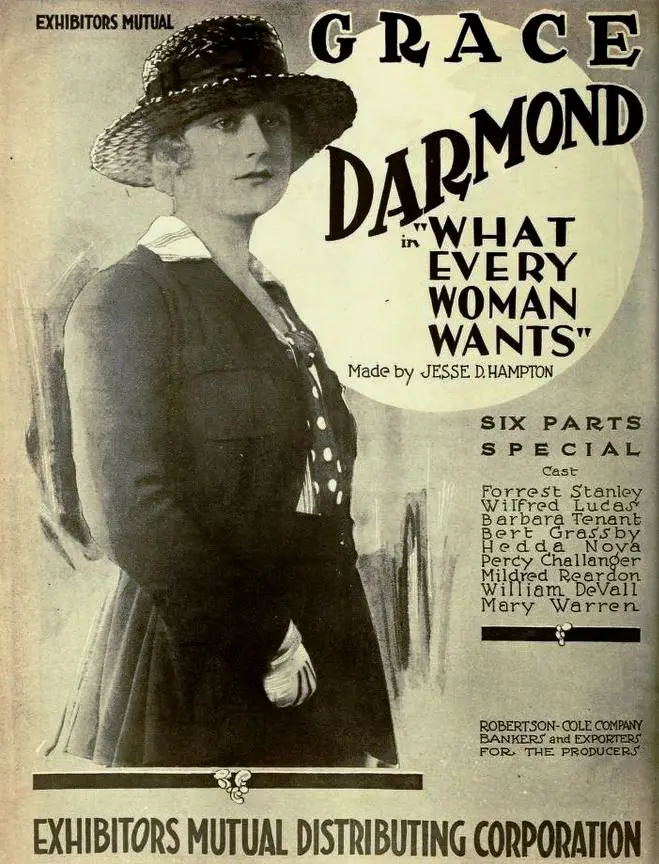
With the legal battles behind her, Gloria is finally free. The acquittal marks not just the end of her legal woes, but the true beginning of her emotional liberation. The narrative culminates in the poignant, long-overdue reunion with Philip. This final act is a testament to enduring love, resilience, and the triumph of genuine affection over material pursuits and societal pressures. Their reunion isn't merely a happy ending; it’s a profound affirmation of the film's core message: that true happiness and fulfillment are found not in external trappings, but in authentic human connection and love. Gloria’s journey, from a young woman obsessed with superficial success to one who has endured profound loss, betrayal, and legal battles, culminates in a realization that “what every woman wants” is far more profound than wealth or status. It is love, integrity, and genuine companionship.
The film, in its conclusion, offers a powerful commentary on the values that truly matter. Gloria’s initial belief that clothes and wealth would bring her success is utterly debunked by her experiences. The suffering she endures, the compromises she makes, and the ultimate vindication she achieves, all serve to redefine her understanding of success. It’s a journey from superficiality to substance, from illusion to reality. This thematic resolution, championing inner worth over outward show, resonates deeply and provides a satisfying emotional closure to a complex narrative. It encourages viewers to look beyond the surface, to question societal dictates, and to seek genuine happiness in human bonds. The film leaves the audience with a sense of hope and the enduring power of love to overcome even the most formidable obstacles, solidifying its place as a compelling drama of its era.
The success of “What Every Woman Wants” hinges significantly on the caliber of its performances, a crucial element in silent cinema where emotion and narrative must be conveyed without spoken dialogue. Barbara Tennant, as Gloria Graham, delivers a performance of remarkable depth and expressiveness. Her portrayal masterfully navigates Gloria’s transformation from a vain, somewhat naive stenographer to a woman scarred by tragedy, disillusioned by marriage, and ultimately redeemed by love and resilience. Tennant utilizes the exaggerated yet nuanced gestures and facial expressions characteristic of the era, but she imbues them with a genuine emotional core that transcends mere theatricality. Her eyes, in particular, convey a spectrum of feelings – from youthful ambition to profound grief, from bitter disappointment to a quiet, hard-won serenity. She makes Gloria’s journey believable, allowing the audience to empathize with her flawed choices and celebrate her eventual triumph.
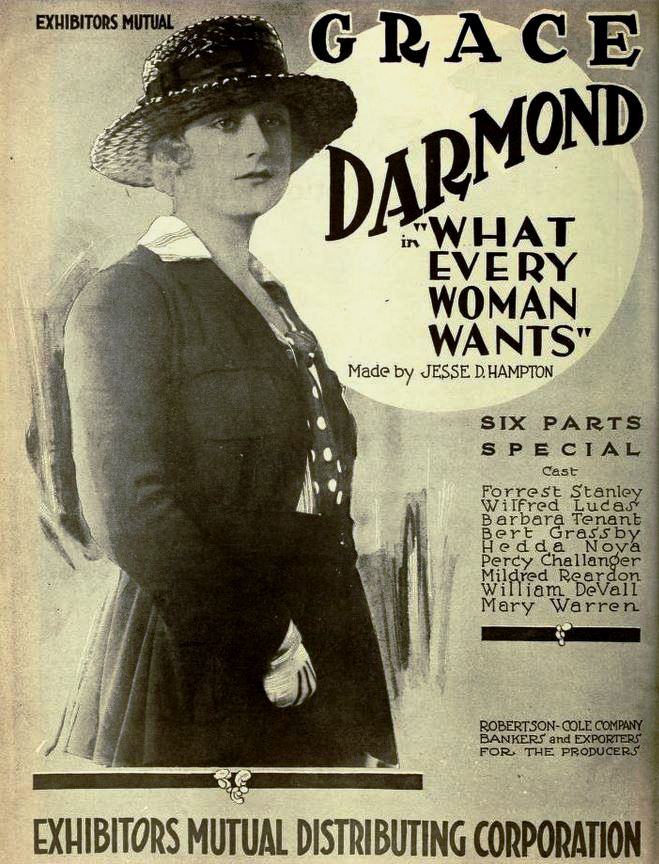
Forrest Stanley, as the steadfast Philip Belden, provides a compelling contrast to Tennant’s more volatile performance. His portrayal is one of quiet strength and unwavering devotion, a romantic ideal against the backdrop of war and betrayal. Wilfred Lucas, who also directed the film, effectively embodies the morally ambiguous Horace Lennon. His character’s faithlessness is communicated through subtle shifts in posture and gaze, painting a portrait of a man whose wealth cannot compensate for his lack of character. The ensemble cast, including Percy Challenger and Grace Darmond in supporting roles, contributes to the film’s overall dramatic texture, ensuring that even minor characters serve to propel the narrative or deepen its thematic resonance.
Wilfred Lucas’s direction, while perhaps not as revolutionary as some of his contemporaries, is nonetheless effective in crafting a coherent and emotionally engaging narrative. He understands the visual language of silent film, employing close-ups to emphasize emotional states and wider shots to establish setting and mood. The pacing is generally well-judged, allowing moments of dramatic tension to build naturally while maintaining a steady flow. William Parker’s screenplay, with its audacious plot twists and exploration of complex moral dilemmas, provides a robust framework for Lucas’s visual storytelling. The film’s ability to sustain audience engagement through melodrama and genuine character development is a testament to their collaborative efforts.
Released in 1919, “What Every Woman Wants” stands as a fascinating artifact of early American cinema, a period marked by rapid innovation and the consolidation of Hollywood as a global entertainment powerhouse. The film’s thematic concerns — the impact of World War I, changing roles for women, and the eternal struggle between materialism and true happiness — were deeply relevant to audiences emerging from a tumultuous decade. The war, which had just concluded, left an indelible mark on the collective psyche, and films like this, which explored its human cost and unexpected consequences, resonated powerfully. The return of Philip from a German prison camp, for instance, would have struck a particularly poignant chord with viewers familiar with the plight of soldiers and their families during that era.
The film's exploration of female ambition and the pursuit of success, however misguided Gloria's initial approach, also speaks to the broader societal shifts occurring in the early 20th century. Women were gaining greater independence, entering the workforce in increasing numbers, and challenging traditional gender roles. While Gloria's initial focus on “clothes making the woman” might seem superficial, it reflects a genuine societal pressure and a nascent understanding of personal branding, even before the term existed. This theme finds echoes in other films of the period that explored the lives of independent or ambitious women, such as Pearls and Girls, which similarly delves into the allure and pitfalls of material wealth for female protagonists.
Moreover, the film’s dramatic structure, with its reliance on significant plot twists and heightened emotional stakes, is characteristic of silent era melodrama. While modern audiences might find some elements overly dramatic, it’s essential to appreciate these conventions within their historical context. Silent films often relied on clear moral dichotomies and impactful narrative turns to convey complex ideas without the benefit of spoken dialogue. The accidental shooting, the wrongful arrest, and the eventual acquittal are all classic melodramatic devices designed to maximize audience engagement and emotional investment. The film’s enduring appeal lies in its ability to transcend these conventions, offering a surprisingly nuanced character study amidst the dramatic flair. It serves as a valuable historical document, providing insights into the social anxieties, moral debates, and storytelling techniques prevalent in post-WWI American cinema.
“What Every Woman Wants” is more than just a historical curiosity; it is a compelling narrative that, despite its century-old vintage, still offers a potent commentary on human desires and societal pressures. It is a cinematic journey that takes its protagonist, Gloria Graham, through the crucible of war, the disillusionment of a loveless marriage, and the trauma of legal peril, only to emerge with a profound understanding of what truly matters. The film’s initial premise, that success is merely a matter of outward presentation, is meticulously deconstructed, revealing the inherent emptiness of such a philosophy. Instead, it champions the enduring power of love, integrity, and authentic connection as the true measures of a fulfilling life.
Barbara Tennant’s expressive performance anchors the film, imbuing Gloria with a humanity that allows her to transcend the archetypes of silent film melodrama. Her evolution from a superficial social climber to a resilient woman of substance is both believable and inspiring. Wilfred Lucas’s direction, coupled with William Parker’s intricate screenplay, ensures a narrative that is both dramatically engaging and thematically rich. The film’s ability to weave together themes of war, romance, ambition, and justice into a cohesive and impactful story is a testament to the artistry of early filmmakers.
Ultimately, “What Every Woman Wants” serves as a poignant reminder that while the trappings of success may change with the times, the fundamental human yearning for love, acceptance, and genuine happiness remains constant. It’s a powerful exploration of the choices we make, the consequences we face, and the enduring hope for redemption and reunion. For cinephiles and historians alike, it offers a window into the narrative sophistication and emotional resonance that silent cinema was capable of achieving, proving that some stories, and the lessons they impart, are truly timeless. The film, in its quiet strength, asks us to look beyond the immediate and consider the deeper currents of human aspiration, making it a valuable entry in the annals of early cinematic drama.

IMDb 5
1929
Community
Log in to comment.