DbcultAccessing Vault...
Cult Review
Senior Film Conservator
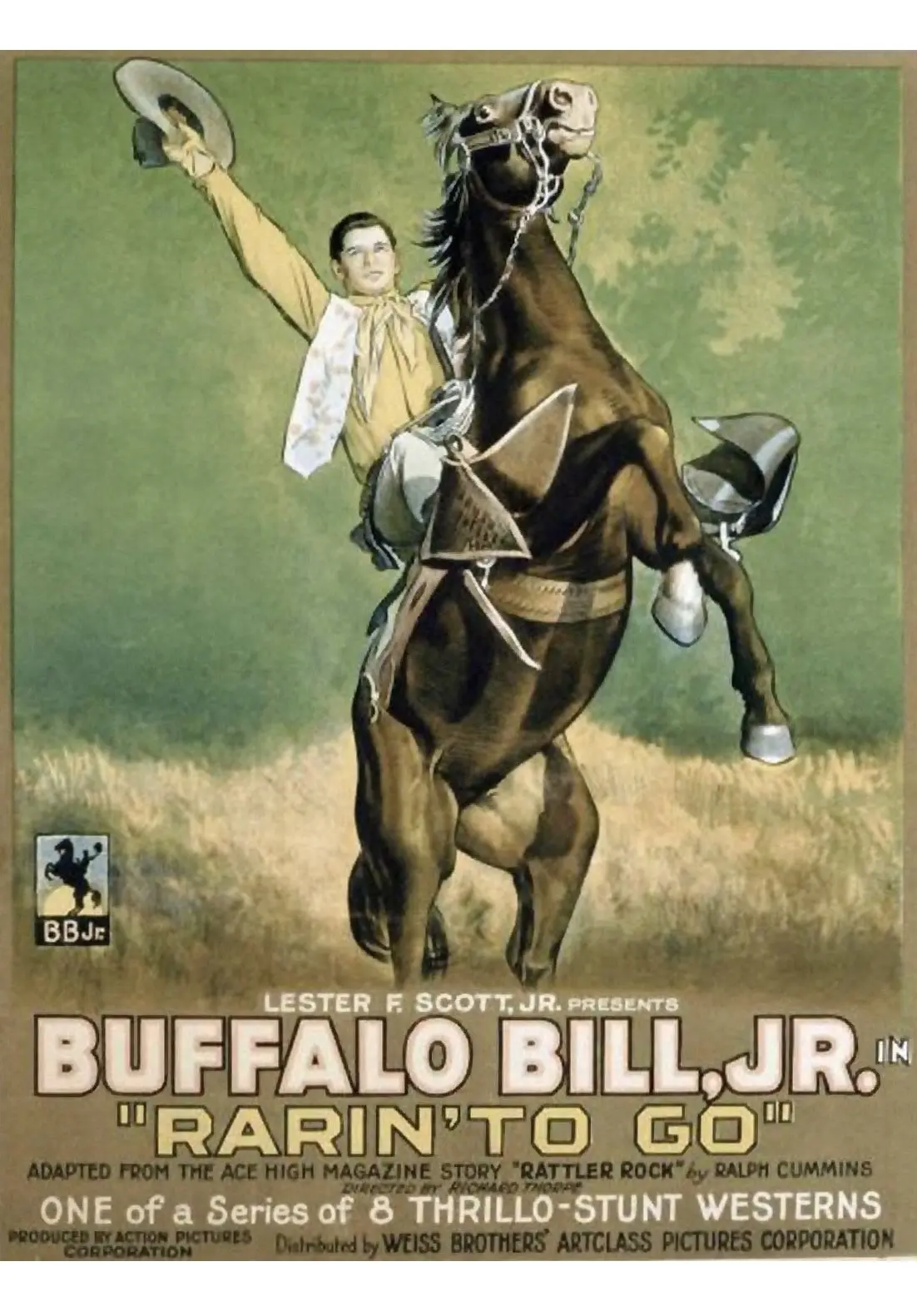
In the realm of silent cinema, where the art of storytelling transcends linguistic barriers, 'Rarin' to Go' emerges as a seminal work, replete with themes of resilience, camaraderie, and the indomitable human spirit. Penned by the visionary Ralph Cummins, this 1926 masterpiece weaves a complex tapestry of intrigue, romance, and adventure, set against the picturesque backdrop of rural America.
The film's protagonist, Bill Dillon, portrayed with remarkable nuance by Jay Wilsey, is a paragon of unyielding determination. His journey begins with an audacious attempt to secure employment at the Harper ranch, only to be met with rejection. Undeterred, Dillon finds solace in the employ of the Taylors, where his affable nature quickly garners him an indispensable place within the community.
It is here, amidst the rustic charm of the Taylor's ranch, that Dillon forges an indelible bond with Dorothy Harper, played with captivating charm by Dorothy Wood. Their budding relationship serves as the emotional linchpin of the film, providing a poignant counterpoint to the escalating tensions and perilous events that unfold.
Central to the narrative is the Taylors' beleaguered irrigation project, which becomes a metaphor for the trials and tribulations faced by the community. Through Dillon's ingenuity and unwavering dedication, the project is salvaged, further cementing his status as a pillar of the community.
However, the tranquility of the Taylors' ranch is short-lived, as a nefarious plot to pilfer the payroll threatens to destabilize the very fabric of the community. Dillon, with his acute sense of justice, becomes the unlikely hero, navigating a complex web of deceit and danger. His existence is imperiled by the menacing foreman, Hawk Morton, whose ruthless demeanor serves as a stark foil to Dillon's altruism.
The film's climax, wherein Dillon orchestrates a daring rescue to save the imperiled payroll and liberate Dorothy and her father from peril, is a masterclass in cinematic storytelling. This thrilling sequence, replete with suspense and drama, serves as a testament to the enduring appeal of silent cinema, where the art of visual storytelling reigns supreme.
Upon reflection, 'Rarin' to Go' bears thematic resemblances to 'It Happened to Adele', wherein the protagonists navigate complex webs of deceit and deception. Similarly, the film's emphasis on community and resilience echoes the sentiments of 'Big Happiness', a film that explores the human condition in the face of adversity.
In conclusion, 'Rarin' to Go' is a cinematic treasure, offering a captivating blend of action, romance, and drama. This 1926 masterpiece, though often overlooked, remains a testament to the enduring power of silent cinema, where the art of storytelling continues to captivate audiences worldwide.
The supporting cast, including L.J. O'Connor, Karleen Day, and James T. Kelley, deliver memorable performances that add depth and complexity to the narrative. The cinematography, a blend of rustic charm and cinematic innovation, serves as a fitting backdrop to the film's themes of resilience and community.
In the pantheon of silent cinema, 'Rarin' to Go' occupies a unique position, one that warrants critical reevaluation and historical recognition. As a work of cinematic art, it continues to enthrall audiences with its timeless themes, memorable characters, and enduring narrative.
IMDb —
1920
Community
Log in to comment.