DbcultAccessing Vault...
Cult Review
Senior Film Conservator
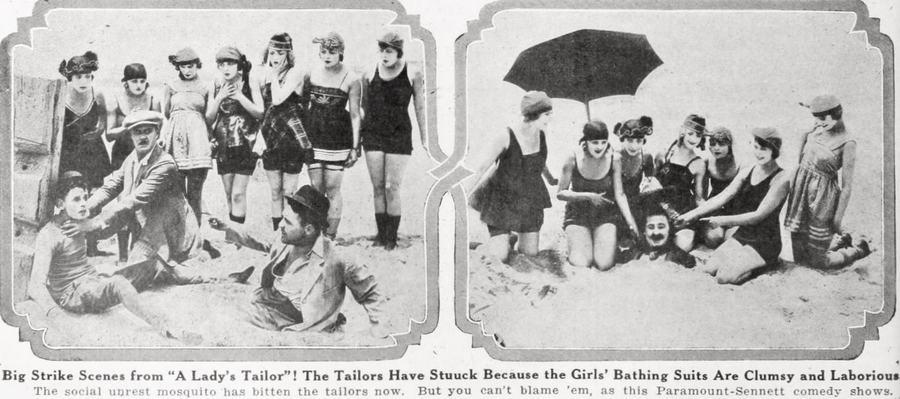
The year 1919 stood as a watershed moment for the cinematic medium, a period where the primitive flickers of the nickelodeon era were rapidly evolving into the sophisticated visual grammar of the Roaring Twenties. Amidst this cultural recalibration, Mack Sennett—the undisputed 'King of Comedy'—delivered a sharp-witted broadside against the affectations of high society with A Lady's Tailor. This film is not merely a collection of pratfalls; it is a meticulously choreographed lampooning of the fashion world, specifically targeting the popular stage play and subsequent film Lombardi, Ltd. While contemporary audiences were flocking to see the harrowing realism of Auction of Souls or the ethereal romance of The Siren, Sennett recognized that the public was equally hungry for a dismantling of the elite's self-importance.
At the epicenter of this whirlwind is Ford Sterling, an actor whose physical vocabulary was so expansive it often threatened to burst the very frame of the film. Sterling’s portrayal of the tailor is a masterclass in histrionic frustration. Unlike the more reserved comedic styles seen in The Gentle Intruder, Sterling operates at a frequency of pure, unadulterated neurosis. Every measurement taken, every fabric draped, and every social slight received is met with a paroxysm of expressive gestures. He embodies the 'artist' as a casualty of his own ego, a theme that resonates deeply when compared to the more grounded struggles of characters in films like Easy Money.
The brilliance of Sterling’s performance lies in its specificity. He does not just play a tailor; he plays a man who believes he is the architect of the human soul, using chiffon and velvet as his primary building materials. This delusional grandeur is the engine that drives the film’s narrative momentum. When he interacts with the elite clientele, the friction between his artisanal pride and their vacuous consumerism creates a comedic tension that is as relevant today as it was a century ago. It reminds one of the social dynamics explored in Little Miss Hoover, though Sennett opts for a much more aggressive, kinetic approach to the subject matter.
No Sennett production of this era would be complete without the presence of Ben Turpin. Turpin, with his trademark ocular misalignment, provides a surreal counterpoint to Sterling’s frantic energy. While Sterling is the storm, Turpin is the bizarre, unmovable object at its center. His ability to evoke laughter through mere presence—a quality also glimpsed in the ensemble work of All Kinds of a Girl—is utilized here to maximize the spatial confusion of the tailor’s workshop. The way Turpin navigates the set, seemingly looking in two directions at once while attempting to assist in the creation of haute couture, adds a layer of visual dissonance that elevates the slapstick to the level of avant-garde art.
The geometry of the gags in A Lady's Tailor is deceptively complex. One must consider the logistical nightmare of coordinating a dozen actors in a confined studio space, all while maintaining the illusion of a functioning business. The film’s editing, likely overseen by Sennett’s keen eye for timing, ensures that each punchline lands with the force of a percussion instrument. It lacks the pastoral stillness of Höhenluft, replacing it instead with a rhythmic, industrial efficiency that mirrors the assembly lines of the burgeoning American economy.
The inclusion of the Sennett Bathing Beauties—including Phyllis Haver, Mildred June, and Kathryn McGuire—serves a dual purpose. On the surface, they provide the aesthetic allure that was a hallmark of the studio’s marketing strategy. However, within the context of A Lady's Tailor, they represent the shifting tides of femininity. They are not merely passive models; they are active participants in the chaos, their movements choreographed with a precision that rivals the most demanding dance sequences. This portrayal of the 'modern woman' can be contrasted with the more traditional, often tragic, depictions found in international imports like Maria Rosa or the Danish drama For sin Dreng.
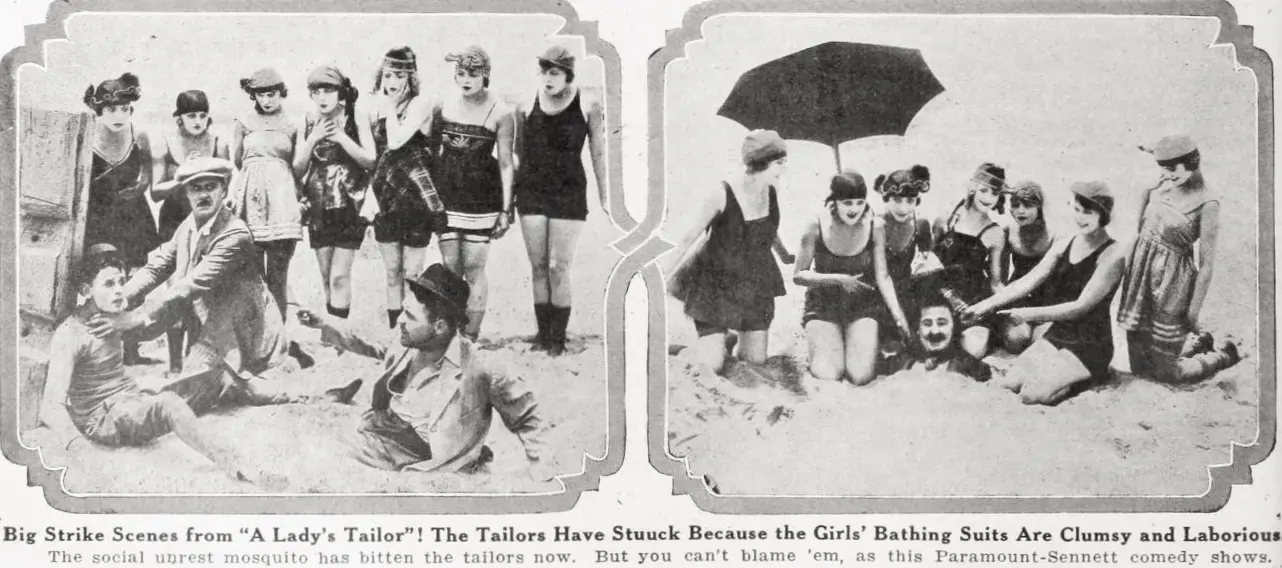
Furthermore, the film’s obsession with clothing as a marker of status invites comparison to The Purple Dress. While the latter treats the garment as a symbol of aspiration and sacrifice, A Lady's Tailor treats it as a prop for destruction. There is a subversive joy in seeing expensive fabrics being shredded, stained, and caught in doors. It is a literal tearing down of the facade of wealth. This thematic thread of class deconstruction is also present, albeit in a far more somber tone, in films like The Marriage Price.
Technically, the film is a marvel of early 20th-century cinematography. The lighting in the tailor shop is surprisingly nuanced, creating depths that allow for background gags to play out simultaneously with the primary action. This 'deep focus' avant la lettre ensures that the viewer’s eye is constantly moving, searching for the next bit of business. It is a far cry from the static, stage-bound feel of many contemporary dramas like The Joan of Arc of Loos or the theatrical stiffness of The Monk and the Woman. Sennett’s camera is a participant in the comedy, not just a witness to it.
The pacing of A Lady's Tailor is relentless. In an era where films were often padding their runtimes with unnecessary intertitles and slow-moving transitions—as seen in the somewhat ponderous Nabat—Sennett’s work feels shockingly modern. The film respects the audience's intelligence and their ability to process visual information at a rapid clip. This is the same energy that made Nell of the Circus a hit, though Sennett applies it with a more cynical, satirical edge.
To view A Lady's Tailor today is to witness the birth of a specific comedic lineage. It is the ancestor of every 'industry' parody that followed, from the Hollywood-skewering silents of the late 20s to the modern workplace sitcom. By taking a high-brow subject like the world of Lombardi, Ltd. and dragging it through the mud of slapstick, Sennett democratized the theater. He told his audience that the 'artist' is just as prone to slipping on a banana peel as the common man, and that the 'masterpiece' is often just a few stitches away from falling apart.
The ensemble cast, featuring stalwarts like Billy Bevan and Bert Roach, creates a sense of a lived-in, albeit insane, world. Their interactions feel improvised yet are clearly the result of rigorous rehearsal. This blend of spontaneity and structure is what separates a Mack Sennett classic from the myriad of imitators that flooded the market in 1919. While other films of the year were attempting to define the new moral landscape of the post-war world, A Lady's Tailor was content to simply point out how ridiculous that landscape looked when viewed through the window of a dress shop.
Ultimately, the film stands as a testament to the power of the parody. It doesn't just mock its source material; it interrogates the very idea of professionalism and prestige. In the hands of Ford Sterling and Ben Turpin, a simple tape measure becomes a weapon of mass destruction, and a fitting room becomes a microcosm of human folly. It is a vibrant, chaotic, and essential piece of silent cinema history that continues to reward those who look closely enough to see the stitching.
IMDb 5.5
1935
Community
Log in to comment.