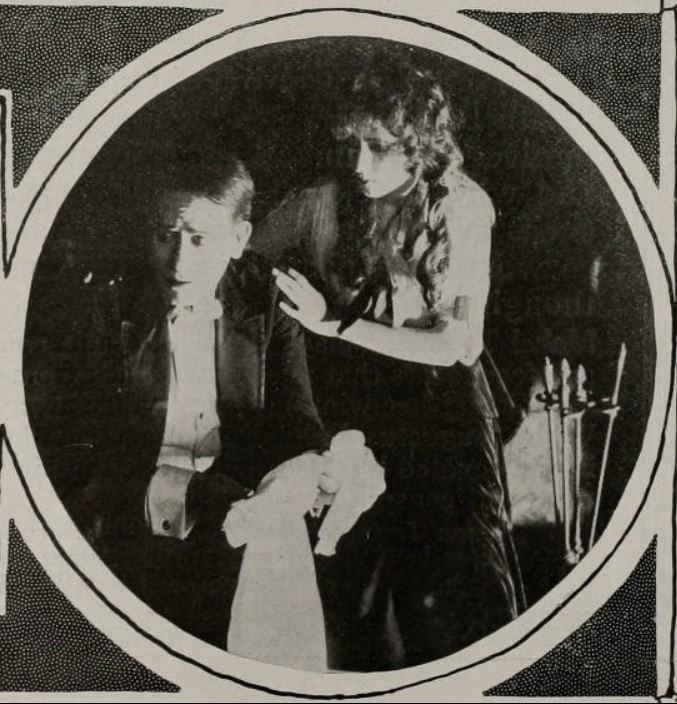
The nickelodeon curtain lifts like a bruised eyelid, and already When It Strikes Home brandishes its thesis: legitimacy is a coin minted by men, but motherhood is a blood-written scripture no annulment can erase. Harris—songwriter turned cinematic soothsayer—understands that melodrama ages into mythology if the lighting is cruel enough. Hence the prologue’s chiaroscuro: a single streetlamp pools sulfur onto the child-sized bundle being loaded into the ambulance while Harris’s off-screen narrator intones the death of innocence with the casual languor of a man ordering coffee. The effect is not unlike being kissed and slapped simultaneously.
Intemperate Vows & the Hangover of Class
Cut to a penthouse bacchanal where Gatsby-esque youths swill brandy from teacups to hoodwink Prohibition’s rehearsal. Richard Hartley—lacquered in the entitled boredom that only old money can cultivate—signs his life away on a marriage certificate while Vera, eyes glittering like mica, executes a high-kick that would make even the champagne coupes blush. The handheld camera (yes, 1915 and already restless) sways as if itself drunk, implicating us in the mockery of sacrament. Annulment arrives swift as a guillotine: a legal document brandished by patrician gloves, reducing Vera to a “dancing girl” once more. The film here stages patriarchal power with zero subtlety yet maximal efficacy—every cigar puff feels like a cannonade.
Exile, Cradle, Silence
Richard’s banishment to Europe is rendered via a cardboard ocean liner gliding across a painted Atlantic—an artifice so guileless it loops back into poetry. Meanwhile Vera, belly rounding under threadbare gingham, gives birth in a boarding-house whose wallpaper peels like old scabs. She abandons the infant on a church vestibule, and Harris withholds judgment: the cut is abrupt, the lighting lunar, the emotion a shard under fingernails. Compare this to the foundling sequence in Life’s Shop Window where maternal angst is lit like a Christmas card; Harris opts for guttering candle, not halo.
The Mirror Stage of Victor Hartley
Twenty narrative years compress into a single iris-in, and suddenly we are under the white tyranny of hospital fluorescents. Victor—adopted, oblivious—strides through wards with the messianic vigor common to cinema doctors. His engagement to Muriel Worth, peaches-and-cream heiress, reeks of narrative déjà vu: another cross-class romance poised to repeat patriarchal error. Yet the film slyly inverts the power axis—Victor’s legitimacy is now scrutinized not by snobs but by a gossip’s anonymous letter, a proto-cancel-culture strike that feels eerily Twitter-esque. The camera lingers on Victor’s gloved fingers tightening around a sterilized scalpel: will blood tell, or will profession triumph over parentage?
Vera’s Return: The Maternal Revenant
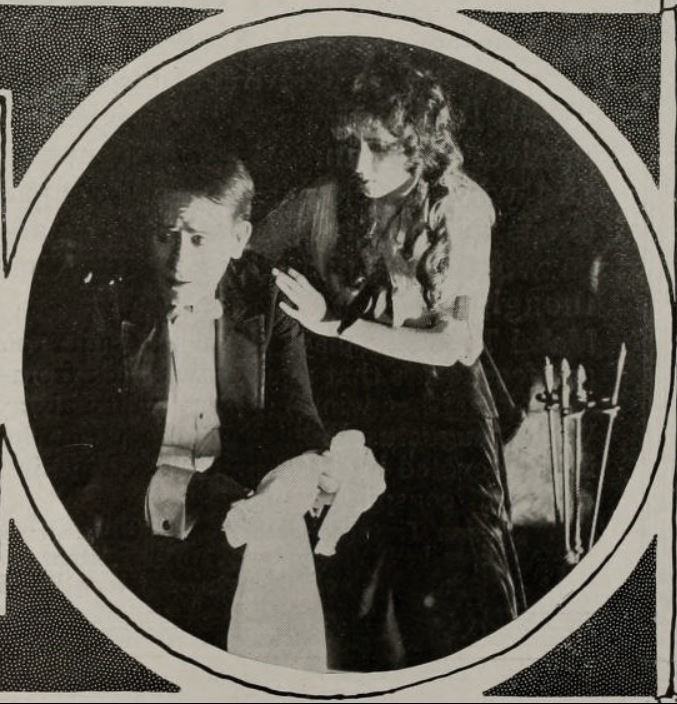
Enter Vera in nurse’s starch, her face a battlefield where residual greasepaint skirmishes with penitence. She is both Clytemnestra and Hecuba, haunting the corridors where her son saves lives he doesn’t know share his marrow. Claire Mersereau plays her with the exhausted grace of a woman who has read her own obituary; every glance at Victor contains multitudes—pride, terror, self-annihilation. The film’s most lacerating moment arrives when she kneels to tie his surgical mask, an intimacy hidden in plain sight, the maternal made subterranean. Try finding that in the aquatic pageantry of Neptune’s Daughter.
The Clubman’s Blackball & the Ethics of Disclosure
A monochrome tribunal of walrus-mustached governors sits in mahogany shadow, prepared to deny Victor club membership on grounds of “tainted seed.” The scene is lit like a Rembrandt—faces swallowed by collars, light razoring down on the silver inkwell. Vera, summoned as character witness, must decide: save her son’s social future by outing herself, or preserve his ignorance and watch him be crucified for sins not his. She speaks, but the film withholds her monologue via intertitle lacunae; we see only men’s brows softening from granite to pumice. The elision is genius—silence becomes her scream.
Richard’s Reckoning & the Final Embrace
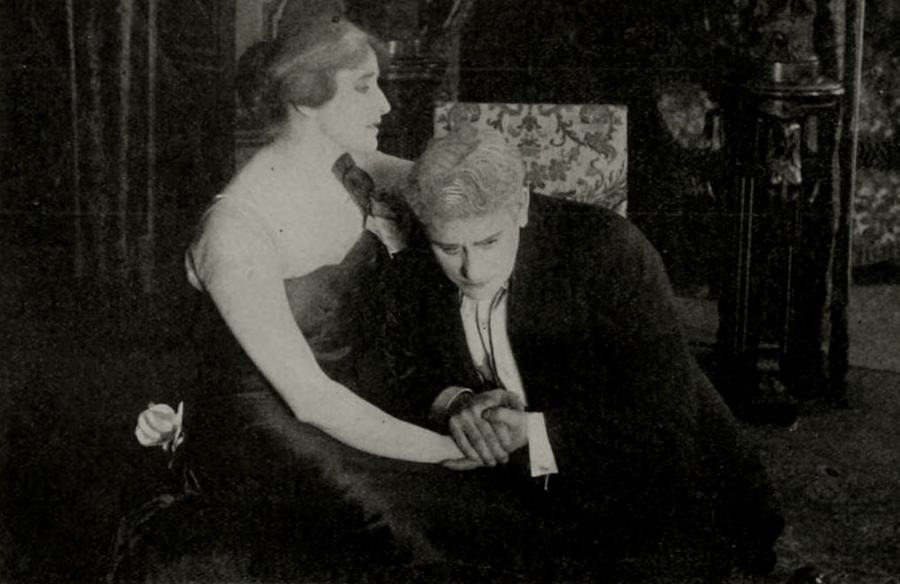
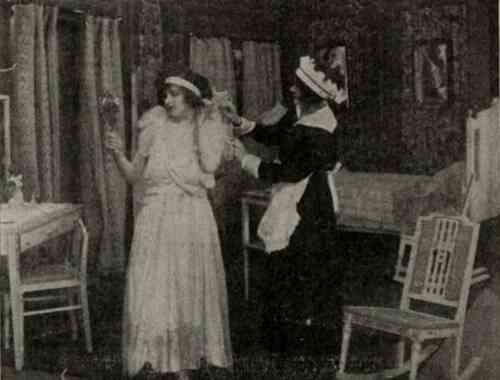
Richard, widowed and furrowed, learns the truth in a parlour aglow with gas-fire embers. The camera dollies-in until his face fills the frame—every pore a crater of regret. Edwin August plays the moment with minimal histrionics: a blink, a swallow, and then the decisive march to the ward where Vera changes dressings. Their reunion is shot in a two-shot through a rain-spattered window, the world outside blurred into watercolor. Marriage—once farce—now becomes elegy, a concession that only shared shame can approximate absolution. The iris closes on their clasped hands, wedding rings glinting like handcuffs made of light.
Style & Subtext: Aesthetic Contradictions
Harris’s direction toggles between tableaux indebted to Strejken’s socialist realism and the florid interior melodrama of The Midnight Wedding. Exterior shots are fog-bathed, evoking Scandinavian gloom; interiors explode with rococo clutter—an ideological clash between poverty’s chill and wealth’s suffocating brocade. The tinting strategy is strategic: amber for the bacchanal, sickly green for the hospital, lavender for the final wedding—each shade a mood-altering drug slipped into the viewer’s visual cocktail.
Performances: Between Mime and Modernity
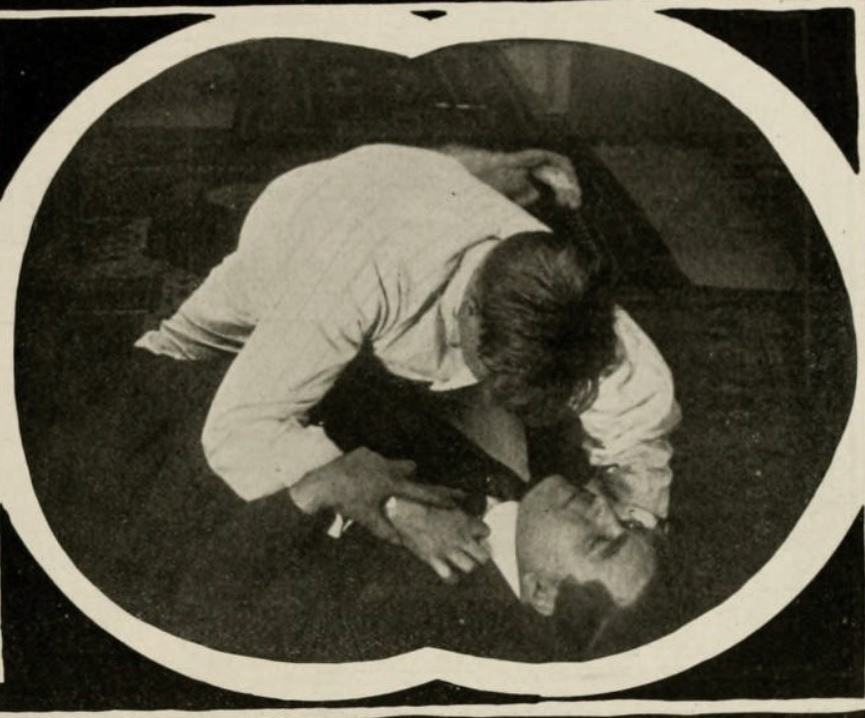
Silent-era acting often ages like milk, yet here the cast underplays with proto-method restraint. Harry Knowles’s Victor suggests a young Barrymore minus the staginess; his shoulders carry the bewildered stoicism of someone who suspects the universe is gaslighting him. Claire Mersereau’s micro-gestures—a nostril flare, a knuckle whitening—communicate oceans more than the sometimes cloying intertitles. Only in the club tribunal scene does rhetoric balloon, but by then we are too emotionally indentured to quibble.
Contemporary Resonances: Illegitimacy, Cancel Culture, Medical Heroism
Modern viewers will flinch at how effortlessly reputation becomes currency, how lineage trumps achievement—Victor’s Hippocratic oath weighs less than the surname on his forged birth papers. The film anticipates our own culture’s public shaming cycles, the Twitter tribunal substituted by a smoke-clouded drawing room. Likewise, the hospital sequences—filmed during the 1915 polio surge—carry pandemic echoes; masks, isolation, the valorization of overworked physicians. One can almost hear the ventilator’s future hiss between the flickers.
Comparative Canon: From Scandinavian Piety to Hollywood Hedonism
Stacked against Miraklet’s Catholic guilt or Scandal’s tabloid sensationalism, Harris’s film carves a middle path: secular, urban, unafraid of money’s ugliness. Where Father and the Boys domesticates patriarchy into slapstick, When It Strikes Home lets patriarchy wound and then salves the lesion in the same breath. Its DNA reappears in 1930s maternal melodramas like Stella Dallas, but here the mother neither dies nor relinquishes; she infiltrates, persists, wins.
Flaws, Nitrate Burns, and the Archive’s Mercy
Reel three survives only in 2K restoration, leaving a jump so abrupt you can feel the splice like a missing tooth. Some intertitles are re-translated from German secondary sources, resulting in the occasional syntactic hiccup (“You are the son of a not good man”). And the comic-relief janitor, a vestigial appendage, stomps in with vaudevillian gusto whenever tension crests—he’s the film’s hiccup, its unwanted laugh track. Yet these scars testify to survival; better a lopsided artifact than ash in an archive fire.
Final Verdict: A Lachrymose Grenade That Still Explodes
Does the film sermonize? Occasionally. Does it resolve with bourgeois comfort? Absolutely. Yet the journey detonates enough taboos—drunken marriage, child abandonment, class-based eugenics—to render the closing-curtain matrimony bittersweet rather than saccharine. Harris has the instincts of a carnival barker and the soul of a penitent; he’ll sell you tears but leave you pondering the price of respectability. In an age when streaming platforms flatten history into algorithmic gruel, encountering this artifact in any state is like finding a hand-cranked music box that still hums a tune capable of cleaving your chest in two.
Watch it for the pre-code candor, for the maternal chiaroscuro, for the way 1915 suddenly feels five minutes ago. Just don’t expect lullaby—expect the clang of dynasty hitting marble, the hush of a mother’s breath held for twenty years, and the soft, impossible click of forgiveness finally catching in the sprocket.