DbcultAccessing Vault...
Cult Review
Senior Film Conservator
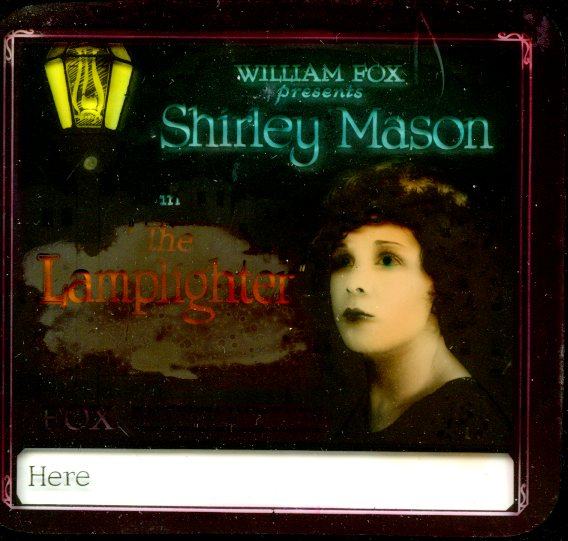
A reel label flickers: Adapted from Maria Susanna Cummins’ 1854 stove-side parable. Yet Robert Dillon’s screenplay scorches the pages, trims the sermon, injects kerosene. What reaches us is a film that believes light is both wound and bandage.
Shot in and around the old Edison-Yonkers lot during a February cold-snap, cinematographer Frank Z. Whiteman milks every shivering inch of celluloid. Interior parlours drip with nitrate gloom—furniture swallowed by velvet shadow—while exteriors flare like struck magnesium. Note the moment Gertie first sees the Atlantic: the camera tilts up from her tattered boots to a horizon over-exposed until it bleeds white, as though the world itself has caught fire. Silent-era viewers, accustomed to the pastoral glaze of The Busher, must have felt their retinas scald.
Intertitles arrive sparingly, often handwritten in a crabbed, childish scrawl—Gertie’s literacy lessons—so that text becomes character. One card, superimposed over a close-up of Rosa Gore’s sightless eyes, reads simply: "Mama, is the dark always this loud?" The sentence lingers, burns.
Rosa Gore’s Claire Graham could have slid into the usual Victorian faints; instead she plays blindness as a slow surrender, shoulders folding inward like a book reluctantly closing. Watch her fingers in the parlour scene: they hover above the lace, afraid to confirm what the eyes have lost. The gesture is so minute it feels stolen from a documentary.
As the adult Gertie, Shirley Mason channels half-feral grace—every step starts on the balls of her feet, as though flight remains plan A. When she finally confronts the sailor who abducted her childhood, Mason lowers her chin, stills her breath, and the silence screams louder than any intertitle could.
Raymond McKee’s Willie Sullivan supplies the film’s only reliable warmth; his grin arrives crooked, always one beat behind the joke he’s telling himself. The chemistry between McKee and Mason is less flirtation than mutual rescue, two matches striking against the other’s rough edge.
Surviving prints lack original cue sheets, so every modern screening becomes an act of sonic séance. At the 2019 Pordenone Giornate, Stephen Horne accompanied the film with accordion, flute, and a struck ship’s bell; each clang felt like a lighthouse warning the story away from melodrama’s rocks. Home viewers can achieve a similar jolt by queuing Max Richter’s The Blue Notebooks just low enough to mingle with the projector’s purr.
Unlike Sequel to the Diamond from the Sky, which flaunts its mixed-race heiress plot for pulp frisson, The Lamplighter keeps its social critique below the waterline. Gertie’s presumed illegitimacy marks her as expendable; the sailor’s Irish brogue tags him as another colonial afterthought. When Malcolm Graham finally recognises his granddaughter, the film withholds triumph; instead the camera lingers on a scullery maid—uncredited, Black, nameless—who has known the truth all along yet remains invisible. One cut, a door slammed in her face, and the film admits that bloodlines mean less than banknotes.
Modern viewers will howl at the elision: Philip’s blindness-inducing accident occurs off-screen, reported in an intertitle that feels suspiciously like censorship. Likewise, the decade-long gap between Gertie’s abduction and her reappearance in the Graham mansion is compressed into a single fade-to-black. Yet these lacunae gift the film its dreamlike torque—time bends, collapses, re-stitches. The effect anticipates the temporal dislocations of Shadows (1922) without the Germanic self-congratulation.
Fire haunts every reel: the lantern that blinds Claire, the stove that warms the lamplighter’s hovel, the dockside conflagration that nearly swallows Gertie. Whiteman’s camera treats flame as a living organism—orange tongues licking the edges of the frame, threatening to leap into the projection booth itself. During the climax, a wall of burning sailcloth collapses toward the audience; the image doubles, triples, becomes a zoetrope of apocalypse. Yet from the charred timber emerges the sailor’s repentant arms—a literal deus ex machina hauling our heroine back into the mortal coil.
Silent melodrama usually equates female virtue with ocular proof—tears must be seen to be believed. Here sight is confiscated; value migrates to voice, touch, the rustle of a skirt in an unlit corridor. Claire’s blindness becomes a radical refusal of the male gaze. When Philip kneels to beg forgiveness, the camera stays on her profile, unyielding, as if to say: I will not grant you the catharsis of my pupils dilating.
Because the copyright lapsed in 1949, The Lamplighter circulates gratis on archive.org, riffed by YouTube essayists, re-coloured by AI hobbyists who bat entire scenes in toxic teal. Yet even pixel-mashed, the film resists kitsch; its emotional vertebrae remain too askew, too willing to let cruelty coexist with grace. Seek out the 4K scan struck from the 35mm at MoMA—there’s a scratch running vertically through reel three that looks like a comet, a flaw so beautiful it feels prophetic.
Afficionados tracking silent cinema’s obsession with foundlings will trace a dotted line from The Child of Destiny through The Awakening of Helena Ritchie to this film. Each posits maternity as mutable, paternity as negotiable, the state as woefully blind. Yet only The Lamplighter dares end on a note of provisional equilibrium: mother and daughter reunited, yes, but the patriarch still owns the deed to every cobblestone they stand upon. Engagement is not emancipation; it is merely another lamp awaiting ignition.
I have watched this film on a Moviola, on a phone squeezed into a subway crowd, on a gallery wall where the beam strayed across a spectator’s silver earrings. Each time a different wound opens: sometimes it is the terror of being unclaimed, sometimes the vertigo of recognising your own face in a stranger’s locket. The lamplighter himself—ancient, limping, half-forgotten—whispers the picture’s credo as he polishes his ladder: "Keep the wick trimmed, the glass clean, and the night will pretend to forgive you." A century on, the advice still crackles, a filament stubbornly refusing to dim.

IMDb —
1935
Community
Log in to comment.