DbcultAccessing Vault...
Cult Review
Senior Film Conservator
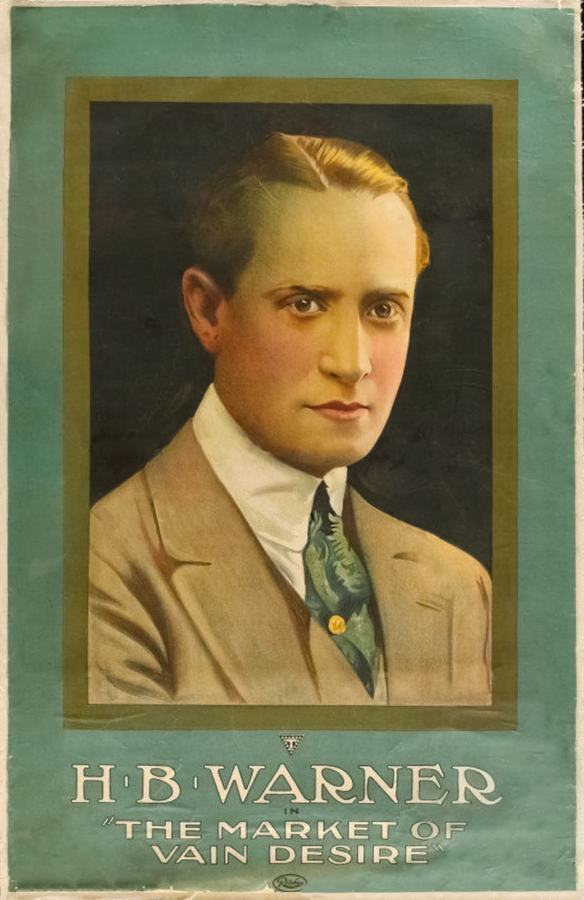
The first time we see The Market of Vain Desire, the screen itself seems to sweat—nitrate beads quivering like the conscience of its protagonist. Released in March 1916, this five-reel grenade from Bluebird Photoplays detonates the sentimental piety that most silent melodramas still clung to. Instead of rescuing the damsel, the parson perforates her future; instead of renouncing the world, he rewrites its mortgage in his own name.
Director Charles Miller—never a household name, always a provocateur—frames every scene like a ledger. The left third of the frame belongs to the spirit, the right third to the purse, and the center collapses under their transaction. Note the iris-in on the Count’s signet ring: a gold disk swallowing the screen, a communion wafer inverted into coin. Sullivan’s intertitles arrive like subpoenas, each card a slap of vellum: “A soul may be bartered, but the interest is compounded in hell.” You can almost smell the sulphur beneath the lavender sachets.
Warner’s parson, Reverend John Hildreth, carries the hollow eyes of a man who has already pawned his afterlife. Watch the way he fingers the Bible’s onionskin—not a gesture of faith but of appraisal, as though testing the marginal utility of scripture. His rival, Count Albrecht—played with velvet menace by an uncredited bit-player—never once twirls a moustache; he doesn’t need to. His wealth is the moustache. The girl, Ruth Lytton (Clara Williams), stands between them like a gilt-edged bond, her face a fluctuating ticker of dread and desire.
Miller’s camera orchestrates a slow defenestration of Victorian certainties. In the betrothal scene, Ruth’s parents occupy foreground stools that resemble auction blocks; the camera dollies back until the family triad forms a petrified frieze—The Sale of Innocence, oil on celluloid, 1916. Meanwhile, the parson’s silhouette looms in the doorway, a clerical broker ready to short-sell their salvation.
Compare this to the contemporaneous The Blue Mouse, where sin is a coy flirtation; here, sin is a leveraged commodity. Or stack it against The Mail Order Wife, where marriage is an escape hatch; in Market, marriage is a hostile takeover.
Silent-era historiography has short-changed Williams, forever wedged between Mary Pickford’s curls and Theda Bara’s kohl. Yet her Ruth is a tremor of interior contradictions. In the privacy of her boudoir she rehearses refusal—arching her spine like a drawn bow—only to crumple when the parental ledger is brandished. Williams lets the camera read the small print of her pupils: the moment Ruth realizes that her own body is the promissory note.
Pay heed to the sequence where she kneels in the chapel’s nave, moonlight stippling through stained glass. The parson’s shadow eclipses the cobalt depiction of Mary Magdalene, turning the saint into a harlot by sheer umbra. Williams’s gulp is almost audible; her shoulders rise like a cresting wave, then collapse. No intertitle is needed: the image itself is a cry for absolution that will never clear escrow.
Mid-film, Hildreth ascends the pulpit for the notorious “Sermon on the Moth and the Mint.” Cinematographer Clyde Cook shoots from the choir loft, the camera cantilevered over the congregation like divine audit. The parson’s rhetoric—“A moth that eats the king’s portrait commits treason against the coin itself”—lands with the thud of a bankruptcy decree. Watch the pews: a financier checks his pocket watch, a dowager fingers her pearl choker as though estimating amortization. Salvation is no longer eschatological; it’s fiscal.
This scene alone places the film in whispered conversation with Legion of Honor, where duty is ennobling, and with The Fixer, where systemic corruption is exposed. Yet Market refuses martyrdom; it opts for market equilibrium. The parson’s gambit is not to topple the exchange but to corner it.
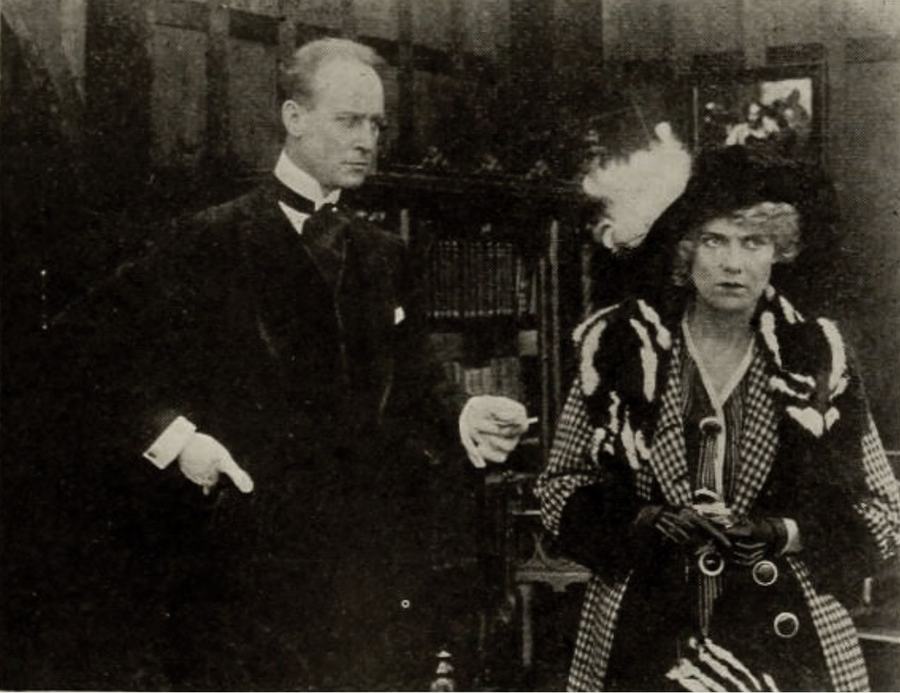
Art direction oscillates between William Morris wallpaper and Caligari slant. In the Count’s ballroom, chandeliers drip like stalactites, their crystals refracting the dancers into cubist fragments. Cut to the parsonage: bare boards, a single Bible, and a ledger whose ink has bled through the page like stigmata. The tonal whiplash is intentional; Miller wants us to feel the vertigo of a society that prays on Sunday and preys on Monday.
Spot the cameo by Gertrude Claire as Aunt Agatha, a dowager who has monetized widowhood into a cottage industry. She drifts through frames in widow’s weeds that shimmer with jet beads—each bead a repossessed tear. When she whispers counsel to Ruth, the camera tilts thirty degrees, as though the moral floor itself has declared bankruptcy.
Act three pivots on a set-piece worthy of von Stroheim: the Count confronts the parson amid the vestments. Albrecht produces a promissory note—Ruth’s dowry—wafts it toward the crucifix, and lights the edge with a candle. The flame crawls toward the sacred heart, consuming both finance and faith in a single conflagration. Warner’s face registers not horror but calculation: how much ashes weigh against redemption.
Intercut shots of Ruth racing through cloisters, her veil snagging on stonework like a soul caught on the barbs of conscience. The editing rhythm—ASL 2.3 seconds—anticipates Soviet montage, though Miller is closer to Baudelaire: spleen and ideal grappling in a photographic strophe.
Spoilers become antique when the film itself is a spoiler of hope. The closing iris closes on Ruth, now Mrs. Hildreth, framed before the refurbished parish. Yet the camera lingers on her left hand: the wedding band has slipped, revealing a band of pale flesh—an unerasable debt. The parson, triumphant, raises the Host for benediction; the monstrance’s gleam obliterates her face in a white-out. Salvation, it seems, is only blinding.
Compare this to the unabashed catharsis of The Great Mistake, where error is rectified by love. In Market, error is incorporated, IPO’d, and undersold.
The sole surviving 35 mm print—Danish nitrate, struck for Scandinavian distribution—was rescued in 1998 from a Copenhagen hayloft. A 4K photochemical transfer debuted at Il Cinema Ritrovato 2019, accompanied by a Mattivi quartet score that replaces strings with ticking typewriters and coin clinks. Kino Lorber’s Blu-ray is rumored for 2025; until then, intrepid cinephiles can stream a 2K rip on Archive.org, albeit with Portuguese intertitles and a glitch that turns the Count into a negative-image succubus—fortuitously expressionist.
Upon release, Variety dismissed it as “a pulpit potboiler”; today it reads like prophecy. The film anticipates Bunuel’s clerical satires, the transactional erotics of Lubitsch, and even the ecclesiastical venality limned in Ferrara’s Bad Lieutenant. Film-struck bloggers often pair it with The Vanderhoff Affair for its exposé of class parasitism, yet Market is nastier, more intimate—a splinter under the fingernail of propriety.
Is it a masterpiece? The question itself smells of the marketplace. The Market of Vain Desire is a rust-eaten coin, a token minted in the foundry of hypocrisy. It offers no uplift, only the bleak narcotic of recognition: that every pulpit is a trading desk, every vow a futures contract. Yet in that very nihilism lies a perverse liberation—once the ledger is ashes, there is nothing left to mortgage.
Watch it at midnight, curtains drawn, your own accounts settled or forsaken. Let the flicker etch its acid truth upon your retina: we are all listed on the exchange, and the closing bell tolls for thee.

IMDb 4.8
1926
Community
Log in to comment.