DbcultAccessing Vault...
Cult Review
Senior Film Conservator
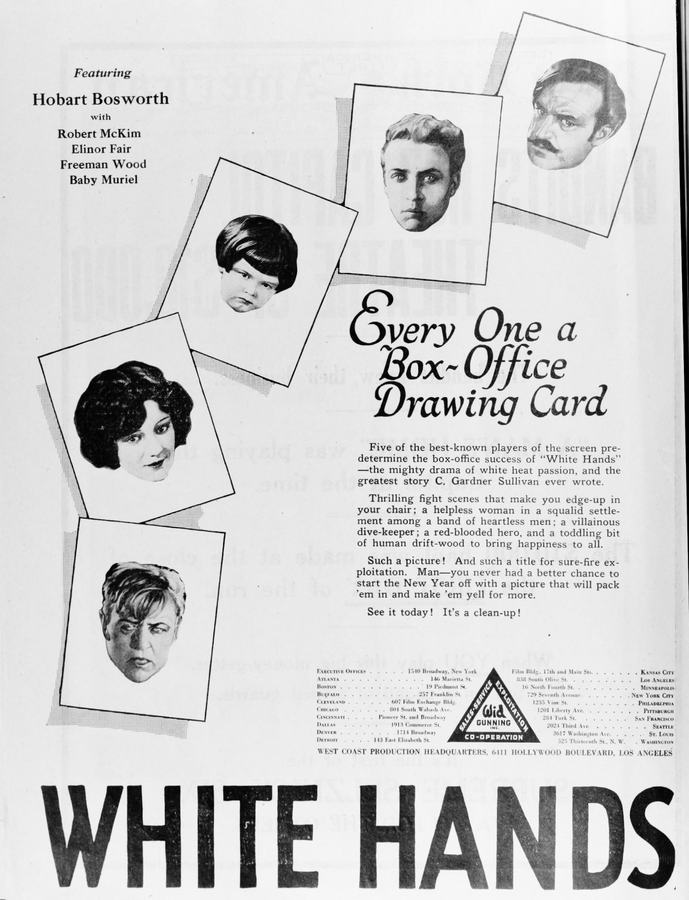
To speak of White Hands, the 1922 cinematic offering, is to delve into a narrative that, despite its silent nature, reverberates with an emotional cacophony. It’s a film that, even a century after its premiere, holds up a mirror to the enduring human struggle between depravity and decency, between the crushing weight of past transgressions and the liberating potential of profound, unexpected grace. In an era often characterized by overt melodrama, White Hands carves a more nuanced path, exploring the subtle tremors of the soul with a deftness that belies the technological limitations of its time. It’s not merely a story; it’s an experience, a journey through the desolate landscapes of human despair and the nascent blossoms of redemption. The film, directed by Lambert Hillyer and penned by Hillyer himself alongside C. Gardner Sullivan, crafts a compelling tableau of human frailty and resilience, anchored by performances that speak volumes without uttering a single word.
At the tempestuous heart of this drama lies Captain 'Hurricane' Hardy, portrayed with a brooding intensity by George O'Brien. Hardy is introduced not as a hero, but as a force of raw, untamed ambition, a man whose moral compass has long since shattered, lost amidst the sands of his treasure hunt in the Sahara. His initial encounter with Helen Maitland, played by Elinor Fair, is less an act of altruism and more an opportunistic claim. He rescues her, yes, but with the explicit, almost primal, intent of possession. This is a man accustomed to taking what he desires, his will as unyielding as the desert itself. O'Brien’s performance here is crucial; he doesn't just play a villain, he embodies a man consumed by his own desires, a figure whose rugged exterior hints at an internal wilderness. His eyes, even in the black and white canvas, convey a predatory gleam, a single-mindedness that promises danger. The film skillfully establishes his character as a formidable antagonist, making his eventual transformation all the more impactful. It's a testament to the power of silent acting that such a complex character arc can be conveyed through gesture, expression, and the sheer force of screen presence. One might draw parallels to the morally ambiguous figures found in other films of the era, where protagonists often walked a fine line between hero and anti-hero, such as the conflicted characters sometimes seen in dramas like The Scarlet Road, though Hardy's initial depravity here is perhaps more pronounced.
Helen Maitland’s journey is one of profound vulnerability giving way to quiet strength. Found amidst the remnants of a missionary group, she is a symbol of innocence thrust into a harsh, unforgiving world. Elinor Fair imbues Helen with a delicate yet persistent spirit, her initial helplessness gradually evolving into a resilient self-possession. Her arrival at the rundown seacoast hotel, a place that feels less like a refuge and more like a purgatory, marks a new chapter in her struggle. It is here that she begins to forge connections that will ultimately reshape her destiny and, remarkably, the destinies of those around her. Her interactions with Ralph Alden and the orphan 'Peroxide' are pivotal. Helen isn't merely a damsel in distress; she becomes a catalyst, a beacon of hope in the gloom. Her character arc is subtle but profound, mirroring the quiet strength often found in female leads of the period, reminiscent of the understated resilience depicted in films like The Eyes of Julia Deep, where female characters navigate challenging circumstances with inner fortitude.
The seacoast hotel itself functions as more than just a setting; it's a character in its own right, a dilapidated haven for the lost and the struggling. Leon Roche, the proprietor, portrayed by Hobart Bosworth, is a man weary from life’s burdens, yet capable of profound kindness, particularly towards the young orphan, 'Peroxide.' It's a place where diverse lives intersect, creating a crucible for transformation. Here, Helen encounters Ralph Alden, a young man grappling with the demons of addiction and despair, brought to life with raw emotion by Freeman Wood. Ralph’s struggle is palpable, his silent agony a stark contrast to Hurricane Hardy’s overt aggression. Helen's burgeoning relationship with Ralph is a tender counterpoint to the looming threat of Hardy, a testament to the power of human connection to offer solace and a path towards rehabilitation. This interwoven narrative of broken souls finding unexpected kinship in a desolate place is a hallmark of compelling storytelling, creating a microcosm of society’s fringes. The hotel, with its peeling paint and sea-worn facade, feels like a last resort, yet it blossoms into a place of unexpected hope, a kind of modern-day refuge not unlike the communal settings explored in films such as Dombey and Son, albeit with a more intimate and desperate feel.
The true heart of White Hands, and indeed its namesake, lies in the character of 'Peroxide,' the three-year-old orphan, played with astonishing naturalism by Muriel Frances Dana. This child is not merely a plot device; she is the embodiment of pure, unblemished innocence, a force capable of penetrating the darkest recesses of the human soul. The film’s climactic moment, where Hurricane Hardy, poised to commit an act of unforgivable violence against Helen, is stopped dead in his tracks by the touch of 'Peroxide's' small, white hands, is nothing short of cinematic alchemy. It’s a powerful, almost spiritual, awakening. The child’s touch is not physical restraint, but a moral one, a silent indictment that shatters Hardy’s hardened exterior, replacing his predatory intent with profound shame and, ultimately, remorse. This single, pivotal scene elevates the film from a simple melodrama to a profound exploration of redemption. Muriel Frances Dana’s performance, though wordless, conveys a universal truth about the transformative power of innocence, making 'Peroxide' one of the most memorable child characters of the silent era. Her presence evokes a similar sense of profound impact as the central child figure in The Littlest Scout, where youthful purity often serves as a moral compass for the adults around them.
Hurricane Hardy’s transformation is the narrative’s most compelling triumph. From a man driven by avarice and brute force, he undergoes a seismic shift, shedding his monstrous guise to embrace a path of genuine reform. His decision to adopt 'Peroxide' is not a mere plot resolution; it is a profound act of self-sacrificial love, a testament to the idea that even the most hardened hearts can be softened by the purest of influences. This redemption isn't facile; it feels earned, a consequence of a searing moment of self-recognition brought about by the child's innocent touch. O'Brien masterfully conveys this internal struggle and ultimate surrender, his expressions shifting from menace to bewilderment, then to a dawning, almost painful, understanding. It’s a powerful portrayal of a man reborn, a concept that resonates deeply with timeless tales of moral awakening. This profound change of heart is a central theme, much like the moral quandaries and subsequent reformations explored in films such as The Devil Dodger, where characters confront their inner demons and choose a path of righteousness.
With Hardy’s transformation, Helen is freed not just from immediate danger, but from the shadow of his possessive intent. This liberation allows her to fully embrace her burgeoning love for Ralph Alden, and more importantly, to dedicate herself to his rehabilitation. Their relationship, initially born of shared vulnerability and quiet understanding, blossoms into a partnership built on mutual support and hope. Helen becomes Ralph's anchor, guiding him away from the precipice of addiction and despair. Their story is a powerful affirmation of second chances, of finding love and purpose in the wake of adversity. It’s a tender, hopeful conclusion that contrasts sharply with the harshness of the film’s opening, suggesting that even in the most desolate circumstances, human connection and compassion can pave the way for a brighter future. The intertwining of love and rehabilitation offers a compelling narrative, echoing the themes of personal growth and supportive relationships sometimes seen in films like Playing with Fire, where human bonds help overcome personal struggles.
White Hands stands as a remarkable example of silent cinema’s enduring power. The film relies heavily on visual storytelling, using dramatic lighting, expressive body language, and carefully crafted intertitles to convey its complex emotional landscape. Lambert Hillyer’s direction is meticulous, allowing the actors ample space to develop their characters through gesture and facial nuance. The cinematography, though black and white, effectively captures the stark beauty of the desert and the melancholic atmosphere of the seacoast hotel. The absence of dialogue forces the audience to engage more deeply with the visuals, to interpret every subtle shift in expression, every deliberate movement. This immersive quality is a hallmark of the best silent films, transforming viewing into an active process of interpretation and empathy. It’s a masterclass in how to tell a story with profound emotional resonance without uttering a single word, relying instead on the universal language of human experience. The film's ability to convey such intricate emotional journeys without spoken dialogue is a testament to the artistry of the era, reminiscent of how effectively other silent films, like The Weaker Vessel, used visual cues and performance to tell compelling stories of human struggle.
Even today, White Hands retains a compelling resonance. Its themes of sin, redemption, the transformative power of innocence, and the enduring human capacity for change are timeless. It reminds us that even in the most cynical of hearts, a flicker of humanity can be rekindled by the purest of touches. The film’s narrative structure, moving from a bleak, almost nihilistic beginning to a hopeful, redemptive conclusion, offers a powerful message of optimism without ever veering into saccharine sentimentality. It’s a film that challenges its audience to believe in the possibility of profound moral transformation, even when faced with seemingly insurmountable odds. The performances, particularly O'Brien’s powerful portrayal of Hardy, and Dana’s unforgettable 'Peroxide,' elevate the film beyond a mere historical artifact, cementing its place as a significant work of early cinema. Its exploration of moral complexity and personal rehabilitation continues to offer valuable insights into the human condition, making it a film worthy of rediscovery and appreciation for both silent film aficionados and newcomers alike. In a cinematic landscape increasingly saturated with noise, the quiet power of White Hands speaks volumes, a testament to the enduring magic of storytelling that transcends time and technological advancements. Its narrative of profound personal change through unexpected means can be seen as an antecedent to countless stories of moral awakening, providing a blueprint for character development that remains relevant. This makes it a crucial piece in understanding the evolution of cinematic narratives, particularly those centered on the human spirit's capacity for renewal.
IMDb 4.6
1917
Community
Log in to comment.