DbcultAccessing Vault...
Cult Review
Senior Film Conservator
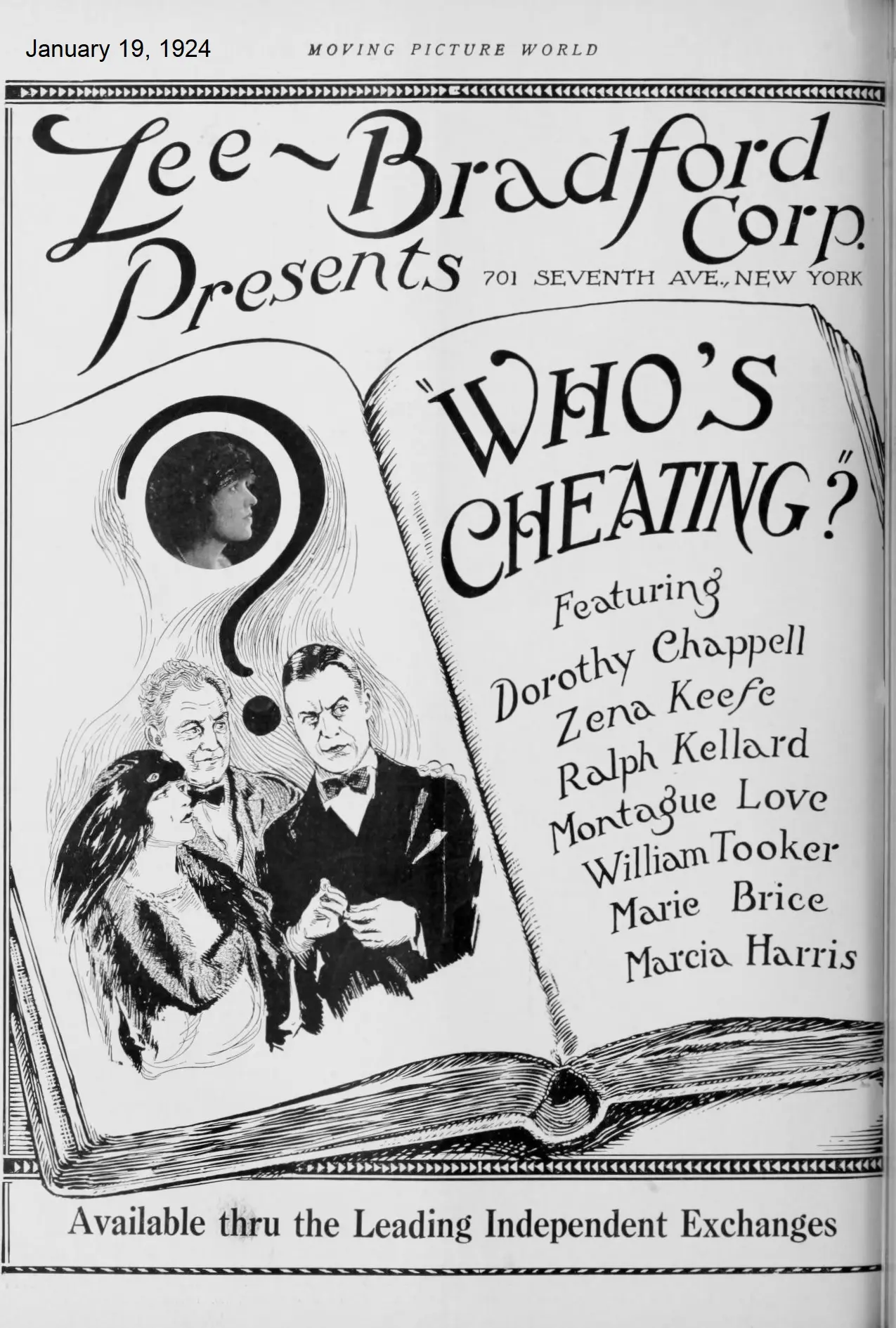
Ah, the silent era. A time when narratives were painted in broad strokes of light and shadow, where human emotion was magnified through exaggerated gesture and the eloquent power of the intertitle. To revisit a film like Dorothy Chappell's 'Who's Cheating?' from 1923 is to step back into a formative period of cinematic storytelling, a time when the very grammar of the moving picture was still being established. And what a fascinating artifact it is, a potent blend of melodrama, industrial realism, and a surprisingly nuanced character study, all wrapped up in a package that, while occasionally quaint, remains remarkably compelling.
At its heart, 'Who's Cheating?' is a quintessential tale of redemption, a narrative arc that has resonated with audiences since time immemorial. We are introduced to Larry Fields, portrayed with a certain initial flaccidity by Ralph Kellard. Fields is not inherently malicious, but rather, tragically flawed by a palpable lack of courage. His engagement to the spirited Myrtle Meers (Marie Burke) shatters precisely because of this failing. It's a brutal, public severing, one that leaves Fields not just heartbroken, but utterly stripped of his self-esteem. This isn't just a romantic spat; it's an existential crisis for a man in an era where masculine fortitude was not merely admired but expected. The film doesn't shy away from depicting the harsh consequences of his perceived weakness, setting the stage for a dramatic internal and external struggle.
What follows is a deliberate descent into the very antithesis of his comfortable, perhaps pampered, existence. Larry forsakes his urban life for the grim, demanding reality of his father's Pennsylvania coal mines. This setting is not merely a backdrop; it is a character in itself, a dark, dangerous, and utterly unforgiving landscape designed to either break a man or forge him anew. The director, whose vision, even without a credited name, clearly understood the symbolic weight of this environment, uses the oppressive claustrophobia of the mines, the omnipresent dust, and the sheer physical toil to underscore Larry's journey. It's a stark contrast to the drawing-room dramas of the period, hinting at a burgeoning realism that would become more prominent in later decades.
Once ensconced in the bowels of the earth, Larry's transformation begins. It's not an overnight epiphany, but a gradual chipping away of his former self, replaced by a hardened resolve born of necessity. Here, the film introduces another layer of complexity: industrial intrigue. A shadowy plot to control the mines unfolds, adding a thrilling dimension of peril beyond the inherent dangers of the work itself. This element elevates 'Who's Cheating?' beyond a mere melodrama of personal growth, injecting it with a sense of urgent, high-stakes conflict. The audience is drawn into the machinations of power and greed, a theme that resonates even today, making the film feel surprisingly contemporary in its critique of capitalist exploitation.
It is within this volatile environment that Larry encounters June Waugh, portrayed by the expressive Zena Keefe. June is not a mere damsel in distress, but a woman entangled in the mine's struggles, perhaps even a victim of the very plot Larry is uncovering. His burgeoning courage finds its true test in her rescue. This act is not just about saving a woman; it is the ultimate affirmation of his newfound strength, a tangible demonstration that the timid man who lost Myrtle is gone, replaced by an individual capable of decisive, selfless action. The shift in his romantic interest from the initially demanding Myrtle to the more genuinely appreciative June feels earned, a natural consequence of his profound personal evolution.
The cast, though working within the constraints of silent film acting, delivers performances that are largely effective. Ralph Kellard, as Larry Fields, handles the character's transition admirably. His initial scenes convey a convincing weakness, making his eventual heroism all the more impactful. One can almost feel the weight of his shame and the subsequent grit of his determination. Zena Keefe's June Waugh is a sympathetic figure, her vulnerability balanced by an inner strength that makes her an ideal foil and eventual partner for the transformed Larry. Marie Burke's Myrtle Meers, while perhaps a less complex character, effectively embodies the initial catalyst for Larry's journey, her rejection stinging enough to propel him into action.
The supporting cast adds considerable texture. Montagu Love, often remembered for his villainous roles, likely brings a commanding presence to whatever part he inhabits here, perhaps as the mastermind behind the mine conspiracy or a formidable foreman. The roster also includes Frank Montgomery, Edward Roseman, Marcia Harris, Dorothy Chappell (who also penned the screenplay, a notable achievement for a woman in that era), and William H. Tooker. Each would have contributed to the rich tapestry of the mining community and the dramatic tension of the plot. The very fact that Dorothy Chappell not only wrote but also acted in the film speaks volumes about the collaborative, often multi-faceted nature of early filmmaking, a testament to the pioneering spirit of the time.
One cannot discuss a silent film without acknowledging the unique challenges and triumphs of its form. 'Who's Cheating?' relies heavily on visual storytelling, using composition, blocking, and the stark contrast between light and shadow to convey mood and meaning. The cinematography, even when rudimentary by today's standards, effectively captures the grim reality of the mines and the emotional states of the characters. Intertitles are deployed judiciously, providing necessary exposition and dialogue without overwhelming the visual narrative. The rhythm of the editing, though perhaps less frenetic than later films, guides the audience through the escalating tension and Larry's emotional arc with a steady hand.
Comparatively, while 'Who's Cheating?' doesn't possess the epic scope or revolutionary techniques of a film like The Birth of a Nation (a film that, despite its profound historical and technical influence, is rightly controversial), it finds its strength in its more intimate, character-driven focus. It shares a thematic kinship with other films of the era that explored personal morality and the struggle against external forces, such as The Evil Thereof, where characters grapple with the consequences of their actions and choices. The journey of self-discovery amidst challenging environments can also be seen in films like The Border Legion, though that film leans into the rugged Western genre, whereas 'Who's Cheating?' grounds itself in industrial realism.
While 'Who's Cheating?' may not be as widely celebrated or as frequently screened as some of its silent contemporaries, its enduring appeal lies in its straightforward yet potent narrative. It speaks to universal human experiences: the sting of inadequacy, the arduous path to self-improvement, and the triumph of character over circumstance. Dorothy Chappell's screenplay, with its clear motivations and escalating stakes, is a testament to effective storytelling that transcends the limitations of its medium. It's a reminder that compelling drama doesn't require elaborate special effects or complex soundscapes; it requires relatable characters facing meaningful challenges.
The film’s exploration of the coal mining industry also offers a valuable glimpse into the socio-economic realities of early 20th-century America. It's a world built on hard labor and fraught with peril, a setting that provides a visceral context for Larry's transformation. This blend of personal drama with a grounding in a specific industrial environment elevates the film beyond mere escapism, offering a window into a bygone era's struggles and aspirations.
"'Who's Cheating?' ultimately affirms the timeless power of the human spirit to overcome personal failings and external threats, a narrative that continues to resonate with audiences seeking stories of genuine transformation."
— A. Film Critic
In an age saturated with digital spectacles and intricate sound design, there's a profound simplicity and purity in the silent film experience. 'Who's Cheating?' invites us to engage our imaginations, to fill in the gaps, and to appreciate the artistry of visual communication. It's a film that, despite its age, still manages to captivate, offering a robust narrative of courage found, love earned, and self-respect forged in the darkest of places. It stands as a worthy, if sometimes overlooked, entry in the canon of early American cinema, a testament to the enduring power of a good story well told, even without a single spoken word.
For those with an appreciation for the foundational works of cinema, for stories of profound personal change, and for a glimpse into the industrial heartland of a nascent America, 'Who's Cheating?' is an absolute must-see. It's a film that asks us to consider what truly defines a man, and then shows us, through vivid imagery and compelling performances, the arduous but ultimately rewarding journey of discovering that definition within oneself. It's a silent film, yes, but its message speaks volumes.
IMDb 6.9
1927
Community
Log in to comment.