DbcultAccessing Vault...
Cult Review
Senior Film Conservator
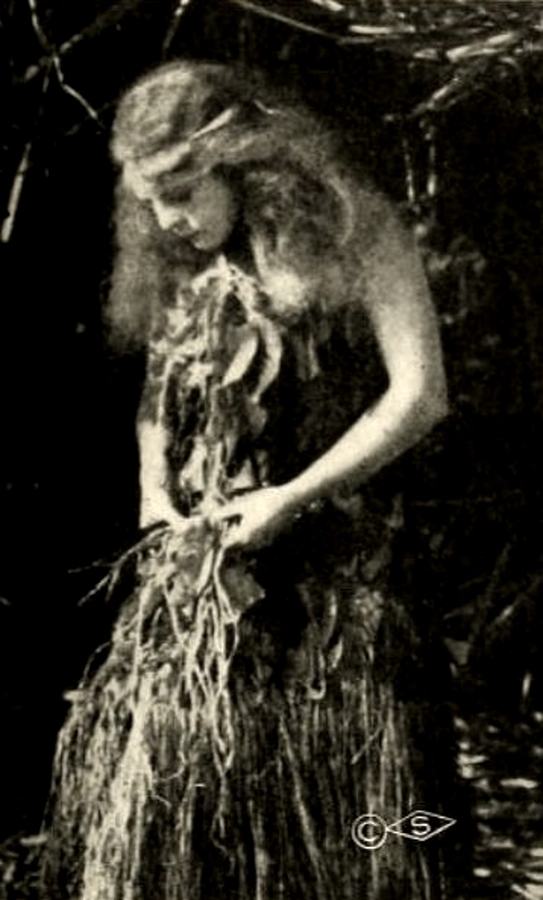
Imagine celluloid as a palimpsest: each frame of The Royal Slave is scraped, scarred, written over by the next, so that when Kathlyn’s silhouette dissolves into the banyan’s lattice we are watching not merely a chase but a century trying to outrun its own emulsion.
There is a moment—blink and the nitrate ghosts swallow it—when Kathlyn’s fingers, still smelling of temple incense and lion-saliva, interlace river-grass into a second skin. The camera lingers, almost indecently, on the warp and weft, as if declaring: here is a woman tailoring her own chrysalis out of the colony’s refuse. The imperial adventure serial rarely allowed its heroines such autogenesis; usually they were dragged in diaphanous drapery across Himalayan drawings rooms. But Williams, whose eyes carried the perpetual squint of someone calculating wind speed, refuses to be the objet d’art. She becomes the backdrop, erasing the border between prey and periphery until the lens itself seems to exhale in relief.
The banyan is no mere refuge; it is a bookkeeping branch office of the cosmos. Pilgrims nail marigolds, traders nail receipts, hunters nail claws. When Kathlyn ascends, she interrupts a vertical economy: prayers rise, goods descend, meat circulates laterally. The tree’s aerial roots become the bars of an arboreal debtors’ prison, and the editing rhythm—alternating between her trembling ankles and the circling lion—turns the canopy into a balance sheet where the only currency is heartbeat. In 1914, when American auditors were counting railroad bonds, this film asks: what is the accrued interest on a body that refuses to stay bought?
Cut to Allaha’s market: a quadrangle of ochre dust and cobalt awnings, shot in forced perspective so the bidders loom like swollen idols. Umballah enters frame right, his turban a spiral galaxy of silk; the camera tilts up, a silent bow. Kathlyn, still veiled in her photosynthetic armor, steps onto the plinth and for the first time the intertitles withhold her name—she is lot #47, genus: fair captive. The absence of dialogue cards here is savvier than any speech: we are made complicit in the reduction of person to integer. When the gavel falls the sound is only a single frame spliced in twice, creating a phantom thud that rattles the modern viewer’s inner ear. It is the first sonic boom of commodification.
Pay attention to the make-up design: the crimson tilak smeared on Kathlyn’s forehead is not the devotional bindi of a devi but the bureaucratic stamp of chattel. It glowers against her grass-dress like a wound trying to speak. In close-up, the grain of 35mm magnifies each fleck so that pigment becomes Braille; we read her dispossession with our eyes. Compare this to Beneath the Czar where the protagonist’s branded wrist is filmed in chiaroscuro, a single shaft of light turning scar tissue into meteor shower. Both films understand that epidermal inscription is the empire’s preferred typeface.
Tom Santschi’s Bruce arrives too late, always too late, and that chronic belatedness is the film’s sly admission that masculine rescue is a subscription service forever experiencing server downtime. His rifle is a narrative Chekhov that never quite goes off; instead he keeps finding garments—first the shredded temple gown, later a hair ribbon—like a fetishist of absence. The editing taunts him: each discovered scrap triggers a cutaway to Kathlyn already bound in a new mise-en-scène of peril. He is the serial’s embodiment of American efficiency: perpetually in transit, never in time. One cannot help but recall The Last Volunteer whose hero also sprinted across continents only to witness the credits roll.
The penultimate reel stages a revolution in negative space. Father and daughter, reunited in a cell whose walls glisten with the same mineral sweat that coated the lion’s maw, enact a choreography of mutual re-recognition. The camera retreats to a high corner, turning them into diorama figurines. Then—the reversal. Colonel Hare’s shackles become flails; Umballah’s body becomes floor. The cut is not on action but on shadow: the tyrant’s silhouette buckles under the weight of two silhouettes merged into one furious hydra. In this instant the film achieves what few silents dare: it lets the oppressed write new blocking notes on the very stones that once spelled their names wrong.
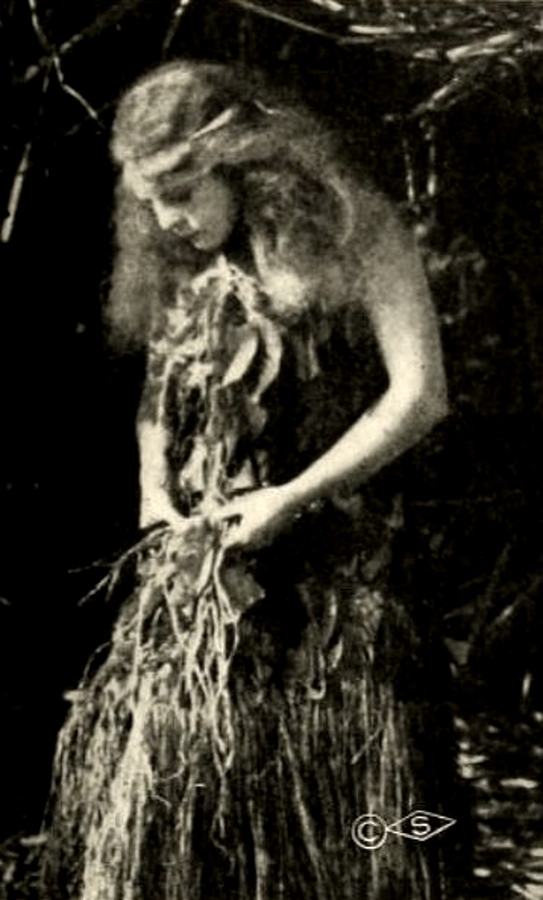
Although monochromatic, the tinting strategy speaks in ideograms. Night sequences are drenched in cobalt, the chemical cousin of indigo—the cash crop that financed more than one colonial palace. Day exteriors glow amber, the shade of official history books. Only the auction scene is hand-painted with a sulphur yellow, the same hue used in Ready Money to denote moral contagion. If you watch the reel flap under the light you will notice the yellow is patchy, bubbled—someone in the lab resisted. That hesitation is a fossilized breath of dissent.
Archivists whisper that the penultimate reel once contained a sequence where Kathlyn leads a slave insurrection through the aqueducts. No print survives; the gap jumps from dungeon embrace to open-air triumph, a splice scar that feels suspiciously surgical. Censorship in 1914 was a gentleman with a cigar and a scissors, excising not indecency but possibility. The absence is itself a text: we are watching a film that amputated its own fist.
Watch her eyes during the tree refuge sequence: they do the flicker-calculation of prey—three frames left, two frames right, hold, breathe. It is acting reduced to biosyntax. Compare it to her auction scene where the pupils dilate between iris and veil, a Morse code that spells I-am-not-for-sale in a language only cameras speak. Williams, a former circus equestrienne, understood that survival in the serial economy meant converting every limb into punctuation marks. She commas, she semicolons, she ends sentences with the soft period of a dropped grass blade.
Modern restorations often pair the film with tabla-and-sitar scores; resist them. Instead cue up the field recordings of the Nilgiri rainforests—cicadas panning left, langurs monologuing right—then layer a distant, detuned piano. The dissonance teaches the image to confess: even without spoken words the jungle never shut up, it was the humans who had to learn silence.
Today, when algorithmic thumbnails auction our attention at 60 fps, The Royal Slave feels like ancestor code. Kathlyn’s grass-dress is the primitive VPN: camouflage against surveillance capital. Umballah’s ledger books prefigure data brokage; the caste-mark is the biometric cookie. Watch the film on your phone at 2 a.m. and you will notice your own reflection ghosting over Kathlyn’s veil—two faces negotiating the terms of visibility.
The film ends, but does not resolve. The last intertitle reads: Is freedom merely the space between two captivities?—a question mark that curls like a whip. There is no nuptial clinch, no star-spangled repatriation. Instead the camera tilts up to the same banyan, now emptied, its votive bowls cracked, its roots drinking the dust of departing caravans. Somewhere in the foliage a single grass thread still sways, perhaps the final signature of a woman who learned to photosynthesize her own destiny. We exit not with catharsis but with a debtor’s note: every freedom we purchase borrows interest from someone else’s cage.
For contextual echoes see Shannon of the Sixth and The Heart of Midlothian; for counter-myths consult Satana and The Taint.
IMDb —
1916
Community
Log in to comment.