DbcultAccessing Vault...
Cult Review
Senior Film Conservator
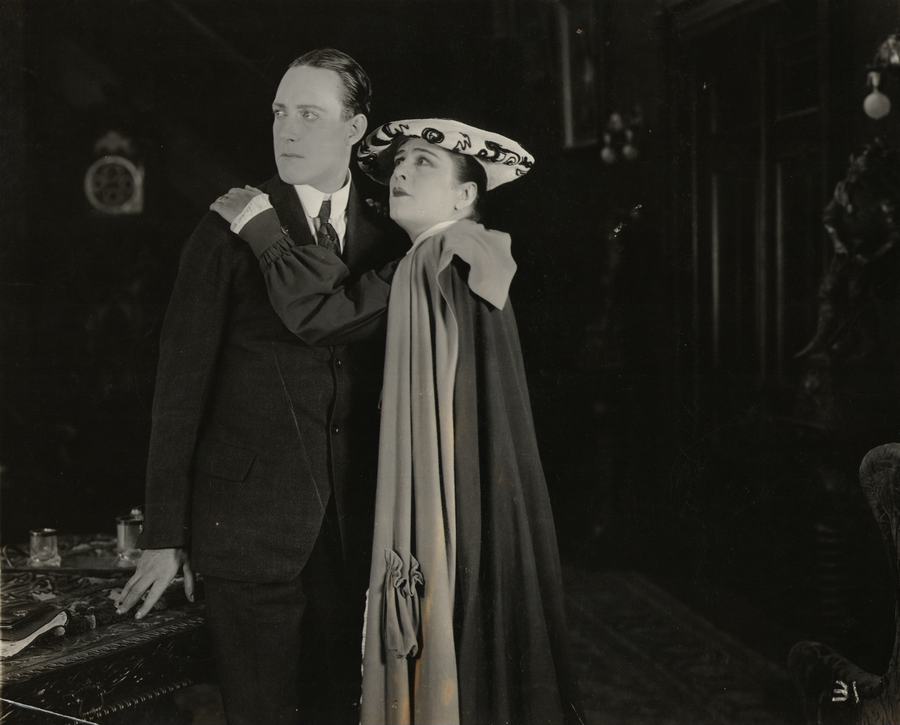
In the annals of early cinema, where grand gestures and stark emotional truths often replaced nuanced dialogue, certain narratives resonate with a timeless power. William Nigh’s ‘Wife Number Two’ stands as one such poignant artifact, a film that, despite its vintage, speaks volumes about the human condition, particularly the plight of women trapped within the suffocating confines of societal expectations and unfulfilling domesticity. It’s a narrative that peels back the veneer of genteel country life to expose the raw, aching loneliness beneath, a loneliness so profound it drives its protagonist to the very brink of despair and beyond.
At the heart of this somber tale is Emma Rolfe, portrayed with an undeniable intensity by the captivating Valeska Suratt. Suratt, a prominent figure of the silent screen known for her dramatic prowess, embodies Emma not merely as a character, but as a symbol of unfulfilled potential and suppressed yearning. Emma’s initial state is one of profound disenchantment. Her country life, often romanticized in literature and art, is for her a gilded cage, a monotonous existence devoid of intellectual stimulation or emotional resonance. Her parents, perhaps well-meaning but ultimately obtuse, fail to grasp the depths of her dissatisfaction, leaving her feeling fundamentally misunderstood and isolated. This early depiction of Emma’s psychological landscape is crucial; it establishes a fertile ground for the tragic trajectory that is to follow. One could draw parallels to the existential angst found in later European art films, though here, it's framed within the more melodramatic conventions of the era.
Her marriage to Dr. Charles Bovar, played by Danny Sullivan with a stoic gravitas, is less a union of hearts and more a calculated escape – or perhaps, a desperate leap into the unknown. Charles, an older man, is deeply engrossed in his medical practice, a devotion that, while commendable in a professional sense, leaves precious little room for the emotional nourishment required by a young wife. This marital neglect isn't necessarily malicious; it’s born of a man’s singular focus, a common enough failing, yet devastating in its impact on Emma. The doctor’s office, filled with tinctures and surgical instruments, becomes a metaphor for his emotional unavailability, a sterile environment where life is saved but love is forgotten. Emma’s loneliness deepens, transforming from a quiet ache into a palpable void that yearns to be filled. This dynamic brings to mind the societal critiques present in films like Should a Woman Divorce?, which similarly explores the discontent simmering beneath the surface of seemingly respectable marriages.
It is against this backdrop of emotional desolation that Rudolph Bulwer, portrayed by W.H. Burton, enters Emma’s life. Rudolph is the quintessential charming rogue, a figure of youthful vitality and superficial allure, precisely what Emma’s starved heart craves. His attention, his professed understanding, and his romantic overtures offer a stark contrast to Charles’s paternalistic detachment. The gradual escalation from innocent flirtation to a full-blown affair is depicted with a keen understanding of human vulnerability. Emma isn't seeking a moral transgression; she's seeking connection, validation, and a reflection of her own forgotten desires. The affair with Rudolph, then, is not merely an act of infidelity but a desperate attempt at self-preservation, a grasping at a lifeline in a sea of emotional isolation. It’s a tragic irony that her chosen savior turns out to be her ultimate undoing.
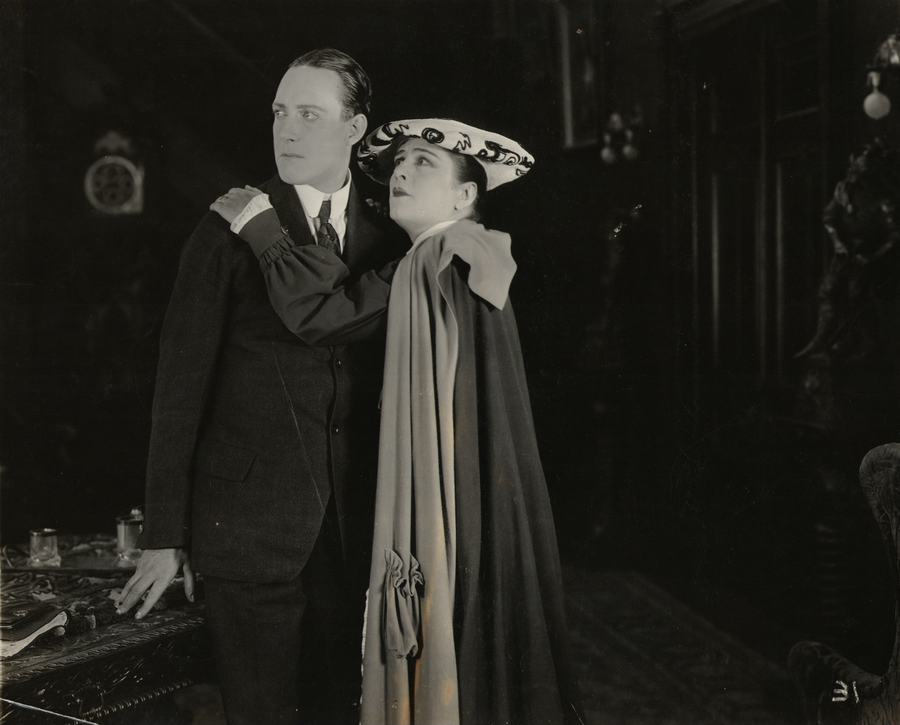
The film deftly portrays the intoxicating power of forbidden love, even as it foreshadows its inevitable collapse. Rudolph’s proclaimed love, however fervent, lacks the bedrock of genuine commitment. His character serves as a stark reminder that not all who promise solace deliver salvation. The dramatic climax of their relationship arrives on the night of their arranged elopement. Emma, having staked her entire future, her reputation, and her very soul on this illicit escape, is left utterly devastated when Rudolph, in a cowardly act of self-preservation, deserts her. This betrayal is more profound than any neglect she experienced from Charles; it shatters her last vestiges of hope, leaving her stranded in an emotional wasteland. The scene of her abandonment must have been heart-wrenching in its silent portrayal, a testament to Suratt's ability to convey profound anguish without uttering a single word. The crushing weight of this betrayal can be compared to the narratives of dashed hopes and moral quandaries explored in films like God, Man and the Devil, where human weakness often leads to tragic consequences.
In her darkest hour, consumed by despair and the crushing weight of her circumstances, Emma’s mind turns to the ultimate escape. She steals acid from Charles’s medicine cabinet, a chillingly mundane object transformed into an instrument of self-destruction, and makes her way to the river. This sequence is laden with symbolism. The medicine cabinet, a repository of healing, now holds the means of death. The river, often a symbol of life, purification, or passage, becomes her intended grave. Yet, even in this moment of profound despondency, Emma's inherent resilience, or perhaps a lingering flicker of hope, asserts itself. Standing by the water’s edge, contemplating the finality of her act, she experiences a change of heart. The decision to confess to Charles and beg for his forgiveness is a monumental one, a desperate reach for redemption, a testament to her desire to reclaim some semblance of honor and peace. It’s a moment of profound psychological turning, where the character chooses life, chooses accountability, over annihilation.
However, 'Wife Number Two' is a tragedy in the classical sense, and fate, it seems, has a cruel hand to play. Just as Emma resolves to turn back, to face the consequences of her actions and seek reconciliation, the river bank, as if mirroring the instability of her life, gives way beneath her feet. She drowns in the swift current, a victim not of her own hand, but of an unforeseen, merciless accident. This sudden, ironic twist of fate elevates the film beyond a simple morality tale. It imbues Emma's death with a profound sense of injustice and inevitability, highlighting the capricious nature of destiny. Her death, coming precisely at the moment of her moral awakening, is a gut-wrenching conclusion, leaving the audience to ponder the 'what ifs' and the cruel timing of her demise. It’s a narrative device that ensures her tragedy is not merely a consequence of her choices, but also a victim of circumstance, echoing the sense of predestined sorrow found in works like Le crépuscule du coeur, where characters often find themselves caught in the inescapable twilight of their emotional lives.
The film’s final act shifts its focus to Charles, revealing a depth of character previously obscured by his professional dedication. The discovery of Emma’s love letters from Rudolph is undoubtedly a devastating blow, a public confirmation of his wife’s infidelity. Yet, in a remarkable display of grace and profound love, Charles chooses not to condemn her. Instead, he stoutly defends her honor in front of the judgmental townspeople, preserving her memory from scandal. This act of public defense is powerful, a testament to his understanding, however belated, of Emma’s inner turmoil. More significantly, he forgives her in his heart. This internal absolution is perhaps the most moving aspect of his character arc. It suggests that despite his earlier neglect, his love for Emma was real and enduring, capable of transcending betrayal and societal judgment. Charles’s journey from detached husband to understanding widower provides a bittersweet counterpoint to Emma’s tragic end, offering a glimmer of human compassion in a world that often seems unforgiving. His actions elevate the narrative, transforming it from a mere story of infidelity and suicide into a meditation on forgiveness, empathy, and the complexities of human relationships.
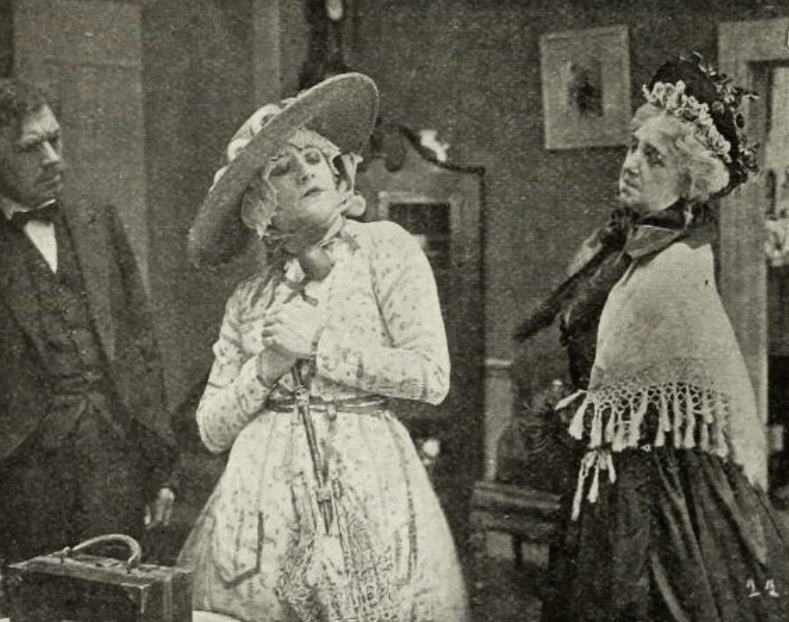
Valeska Suratt's performance as Emma Rolfe is undoubtedly the cornerstone of 'Wife Number Two'. In the silent era, an actor's ability to convey complex emotions through facial expressions, body language, and carefully choreographed movements was paramount. Suratt, with her theatrical background, was a master of this craft. She brings a palpable vulnerability and a desperate longing to Emma, making her plight deeply sympathetic even as she embarks on morally ambiguous choices. Her eyes, her gestures, and her overall demeanor communicate the suffocating boredom, the burgeoning hope, the crushing despair, and the fleeting resolve that define Emma’s journey. Without her nuanced portrayal, Emma might have devolved into a mere caricature of a fallen woman. Instead, Suratt ensures that Emma is seen as a complex human being, a victim of circumstance as much as her own choices. The supporting cast, including Danny Sullivan's Charles and W.H. Burton's Rudolph, provide solid foundations for Suratt's central performance, allowing her to shine as the tragic focal point. The ensemble, under William Nigh's direction, crafts a believable, if melodramatic, world where these emotional dramas unfold. One can imagine the impact of such a performance on audiences of the time, accustomed to exaggerated expressions yet capable of discerning genuine emotional depth.
William Nigh, a prolific director of the era, demonstrates a keen understanding of the silent film aesthetic in 'Wife Number Two'. His direction is purposeful, utilizing visual storytelling to convey the narrative's emotional thrust. The framing of shots, the use of light and shadow, and the pacing of the scenes all contribute to the film’s melancholic atmosphere. Nigh avoids overt sensationalism, opting instead for a more grounded, albeit dramatic, depiction of Emma’s internal struggles. The transition from the idyllic yet stifling country setting to the river’s somber banks is handled with a sense of escalating tension and impending doom. He understands the power of the unspoken, allowing the actors’ performances and the visual cues to carry the narrative weight. The film's relatively straightforward plot allows for a deeper exploration of character psychology, a hallmark of Nigh's more successful dramatic efforts. His handling of the final, ironic twist of fate at the riverbank is particularly effective, ensuring that Emma's death feels both tragic and profoundly unfair, rather than a simple consequence of her actions. This directorial choice elevates the film from a cautionary tale to a more complex meditation on destiny and human frailty. Comparing Nigh's approach to the more adventurous narrative structures found in films like The New Mission of Judex, one sees a clear preference for psychological realism within a melodramatic framework, rather than grand adventure.
Beyond its immediate narrative, 'Wife Number Two' serves as a compelling social commentary on the limited agency afforded to women in early 20th-century society. Emma’s choices, however flawed, are largely dictated by her constricted circumstances. Her boredom, her parents’ misunderstanding, and her husband’s neglect are all symptoms of a patriarchal structure that often left women with little outlet for intellectual or emotional fulfillment outside of domestic roles. Her affair, then, can be viewed not just as a moral failing, but as a desperate act of rebellion, a misguided attempt to seize control of her own happiness in a world that denied her meaningful choices. The film implicitly critiques the societal pressures that could drive a woman to such extremes, forcing her into a corner where infidelity and despair seemed the only avenues of escape. This theme resonates with other films of the era that dared to explore the complexities of female experience, such as The Lotus Dancer or Zaza, which likewise presented women grappling with challenging social situations and personal desires.
The film’s tragic conclusion, with Emma’s accidental death just as she chooses redemption, adds another layer to this commentary. It suggests that for some, escape from societal judgment or personal consequence is not always granted, even when a moral turning point is reached. Her fate is a stark reminder of the often-harsh realities faced by women who deviated from prescribed norms. Yet, Charles’s final act of forgiveness offers a glimmer of hope, suggesting that empathy and understanding can triumph over rigid societal expectations, even if only posthumously. His defense of her honor, despite knowing the truth, represents a profound act of love and a challenge to the prevailing judgmental attitudes of the time. It is this complex interplay of individual tragedy and societal critique that allows 'Wife Number Two' to transcend its melodramatic roots and emerge as a powerful, enduring piece of cinematic history. It invites us to consider the unseen burdens carried by those around us and the profound impact of neglect, forgiveness, and the unpredictable hand of fate.
In conclusion, 'Wife Number Two' is more than just a silent film from a bygone era; it's a compelling exploration of human emotion, societal pressures, and the enduring quest for connection and understanding. Valeska Suratt’s powerful performance, combined with William Nigh’s sensitive direction, crafts a narrative that, despite its tragic arc, leaves a lasting impression. It reminds us that even in the absence of spoken words, the human heart can communicate volumes, and that some stories, particularly those of love, loss, and redemption, are truly timeless.
IMDb —
1920
Community
Log in to comment.