DbcultAccessing Vault...
6.2/10
Senior Film Conservator
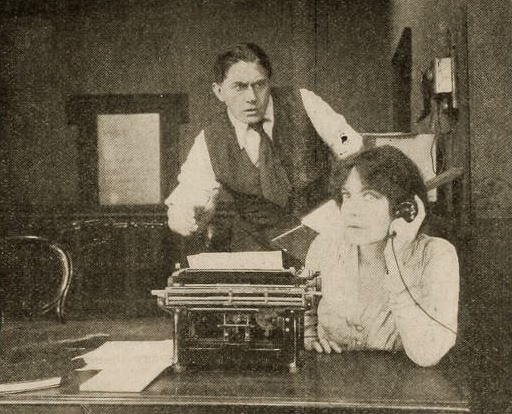
A definitive 6.2/10 rating for a film that redefined the boundaries of cult cinema. 0-18 or A Message from the Sky remains a cornerstone of transgressive art.
Stepping back into the nascent years of cinematic storytelling, one encounters a fascinating tapestry of narratives, often simplistic by modern standards yet brimming with raw, unadulterated dramatic ambition. Among these early gems, '0-18 or A Message from the Sky' emerges as a particularly intriguing artifact, a silent film whose very title hints at a clandestine world, a whispered secret carried on the winds of political tension. This is not merely a historical curiosity; it is a vibrant, if sometimes quaint, precursor to the spy thrillers that would dominate screens for decades to come, offering a glimpse into the anxieties and patriotic fervor of its era.
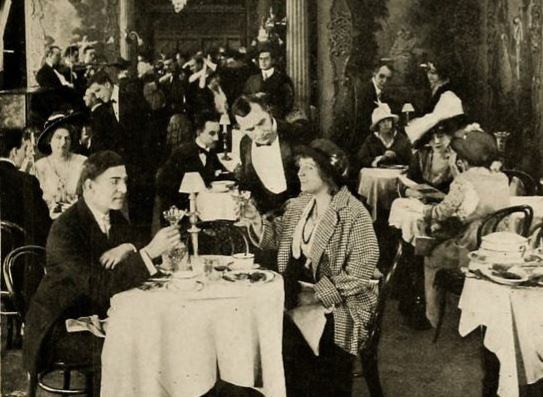
The film plunges us headfirst into a world on the precipice, where the mundane veneer of everyday life barely conceals a simmering cauldron of international intrigue. At its heart lies a seemingly ordinary typist, a character whose unassuming profession belies a burgeoning capacity for heroism. Her daily routine, a repetitive dance of keystrokes and carbon paper, becomes the unlikely crucible in which a grand conspiracy is forged and, ultimately, unraveled. This narrative choice, placing an everyday individual at the epicenter of a global threat, resonates deeply, humanizing the abstract concept of espionage and grounding it in relatable experience. It’s a trope that, while refined over time, finds its robust origins here, demonstrating the power of the ordinary person to effect extraordinary change.
The plot, deceptively straightforward, unfurls with a quiet intensity. Our typist, through diligent observation and perhaps a touch of serendipity, begins to piece together fragments of a larger, more sinister design. The businessmen she serves, initially appearing as pillars of commerce, gradually shed their respectable façades to reveal their true identities: German spies. Their objective? The audacious destruction of a vital bridge, a strategic act of sabotage designed to cripple infrastructure and sow discord. The tension here is not derived from explosive action sequences, as would be the case in later thrillers, but from the slow, methodical accretion of suspicion, the dawning horror of realization in the protagonist's eyes, and the palpable threat of impending disaster.
This film, like many of its contemporaries, operates within a specific cultural and political context. The specter of international conflict, particularly with Germany, loomed large in the early 20th century. Thus, '0-18 or A Message from the Sky' functions not just as entertainment but also as a reflection of national anxieties and a subtle piece of patriotic messaging. It tapped into a collective consciousness, affirming the idea that vigilance was paramount and that even the most unassuming citizens had a role to play in safeguarding national interests. In this regard, it shares thematic DNA with films like Her Life for Liberty, which similarly explored themes of sacrifice and patriotism, albeit often through a more melodramatic lens. Both films, in their own ways, sought to galvanize audiences by presenting compelling narratives of individual agency against larger, threatening forces.
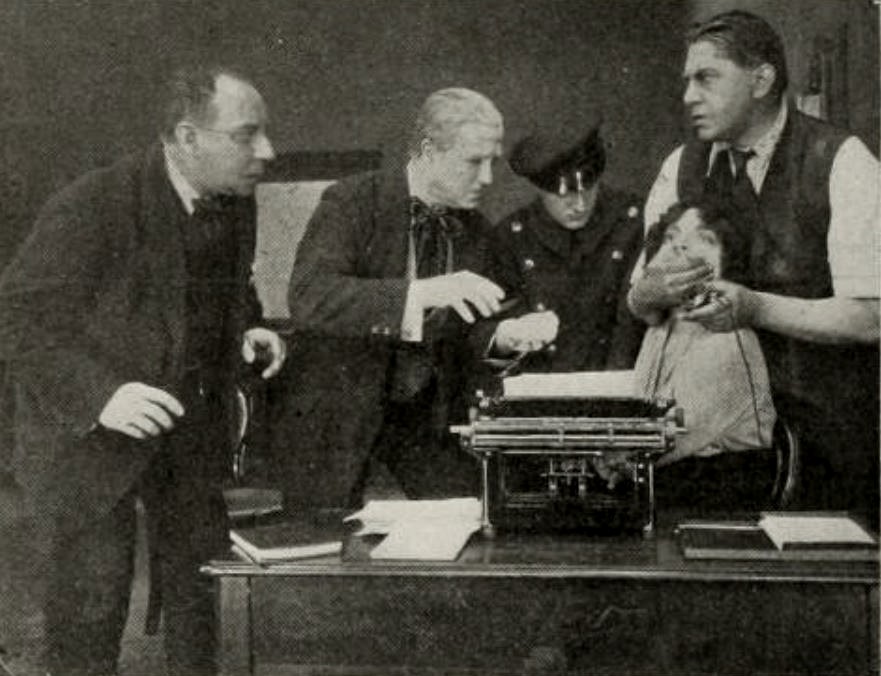
In the realm of silent cinema, the onus on actors to convey emotion, intent, and character through purely physical means is immense. The performances in '0-18 or A Message from the Sky' are a testament to this unique craft. Jane Gail, as the typist, delivers a portrayal that is both nuanced and compelling. Her transformation from quiet diligence to determined courage is rendered with a subtlety that transcends the broad gestures often associated with the era. One can discern the gears turning in her mind, the fear mingling with resolve, through her expressive eyes and carefully modulated movements. She embodies the everywoman hero, a figure audiences could readily identify with and root for.
The male cast, including Douglas Munro, Edward O'Neill, Gerald Ames, Lewis Gilbert, and Wyndham Guise, collectively craft a convincing cadre of villains and supporting figures. The businessmen-turned-spies, in particular, manage to project an air of sophisticated menace, their seemingly innocuous interactions imbued with an undercurrent of something far more sinister. It’s in the furtive glances, the guarded expressions, and the controlled theatricality of their actions that their true nature is revealed. While specific character arcs for these supporting players might be less developed than in modern cinema, their collective presence effectively establishes the threat and heightens the narrative stakes. Their performances, though perhaps less individually spotlighted than Gail's, are crucial in building the atmosphere of paranoia and impending danger that permeates the film.
Technically, '0-18 or A Message from the Sky' showcases the evolving grammar of early filmmaking. While lacking the elaborate set pieces or dynamic camerawork that would become commonplace in later decades, the film effectively utilizes the tools available to it. Intertitles are deployed judiciously, providing essential exposition and dialogue without bogging down the visual flow. The editing, though perhaps not as rapid-fire as modern thrillers, builds suspense through carefully chosen cuts and scene transitions. The use of close-ups, though still developing, helps to emphasize emotional states and crucial plot details, drawing the audience deeper into the typist's psychological journey.
The film's pacing, characteristic of its era, might feel deliberate to contemporary viewers accustomed to faster cuts and more immediate gratification. However, this measured tempo allows for a gradual immersion into the narrative, permitting the suspense to build organically rather than relying on jump scares or abrupt revelations. This slow burn approach, when appreciated within its historical context, proves surprisingly effective, drawing the audience into the typist's growing unease and eventual determination. It's a testament to the filmmakers' understanding of visual storytelling, even in its nascent form, that they could evoke such palpable tension with relatively simple means.
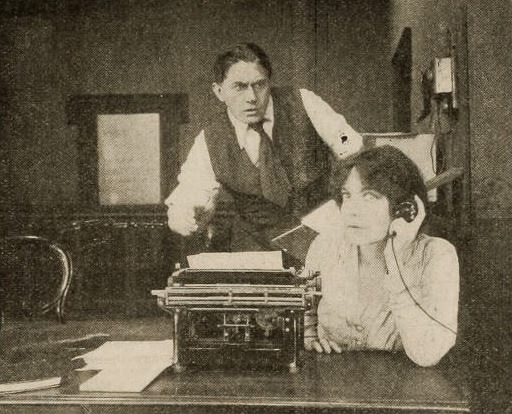
Beyond its thrilling plot, '0-18 or A Message from the Sky' touches upon themes that remain perennially relevant. The idea of hidden threats lurking beneath a placid surface, the quiet heroism of ordinary individuals, and the eternal struggle against forces seeking to undermine societal stability are all powerfully articulated. The film subtly explores the vulnerability of infrastructure and the psychological impact of perceived external threats, ideas that continue to resonate in our complex world.
Comparatively, one might draw parallels to other early films that explored similar veins of social commentary or suspense. While not a direct comparison in plot, the underlying tension and the sense of an unseen hand manipulating events might evoke a faint echo of The Mystery of the Rocks of Kador, another film that built suspense around hidden dangers and unfolding revelations. Similarly, the societal anxieties reflected in the plot, though distinct in their manifestation, could be seen as a cousin to the broader social critique found in a film like Strike, which, despite its vastly different subject matter, also exposed underlying societal fault lines. The notion of a 'message from the sky' itself, hinting at a revelation or a warning, aligns loosely with the more fantastical, moralistic messaging of A Message from Mars, although the latter operates on a cosmic rather than geopolitical scale.
The film's contribution to the burgeoning espionage genre cannot be overstated. It helped lay foundational elements for countless spy narratives to come, establishing archetypes and narrative beats that would be refined and reinvented. The notion of a 'message' being crucial to uncovering a plot is a timeless device, and here it is employed with a charming directness that speaks to the era's storytelling sensibilities. The film’s focus on intelligence gathering, even if rudimentary, and the high stakes involved in preventing a catastrophic event provide a blueprint for the intricate spycraft that would later define the genre.
Viewing '0-18 or A Message from the Sky' today is more than just an academic exercise in film history; it's an opportunity to connect with the origins of popular storytelling. It reminds us that the fundamental human desires for justice, security, and the triumph of good over malevolence are timeless. The simplicity of its presentation, far from being a drawback, allows for a clear appreciation of its narrative strengths and the earnest efforts of its creators.
While it may lack the technical sophistication of contemporary blockbusters or the psychological depth of modern character studies, its charm lies in its directness and its unvarnished portrayal of a world grappling with new forms of conflict and heroism. It stands as a testament to the ingenuity of early filmmakers who, with limited resources, managed to craft compelling stories that resonated with their audiences and continue to offer insights into the cultural fabric of their time.
In conclusion, '0-18 or A Message from the Sky' is a vital piece of cinematic heritage. It's a silent film that speaks volumes, not just about a typist's courageous act against German spies, but about the evolving art of motion pictures itself. It invites us to appreciate the foundational work that paved the way for the complex and diverse cinematic landscape we inhabit today. For enthusiasts of early cinema, espionage thrillers, or simply those curious about how stories were told a century ago, this film offers a richly rewarding experience, a true message from the past that still resonates with dramatic power.

IMDb —
1935
Community
Log in to comment.