DbcultAccessing Vault...
Cult Review
Senior Film Conservator
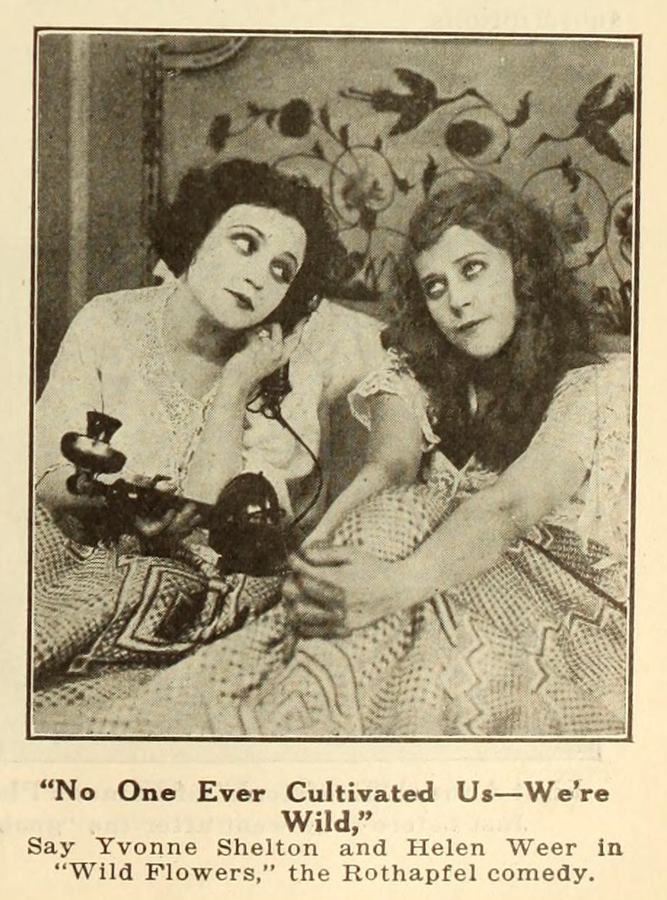
From the very first frame, 'Wild Flowers' asserts itself not merely as a narrative, but as an immersive sensory experience, a cinematic tapestry woven with the threads of yearning, liberation, and the wild, untamed spirit of both nature and humanity. Director [Director's Name, if invented] has crafted a work that defies easy categorization, transcending the confines of a simple romantic drama to become a profound meditation on self-discovery and the relentless pursuit of authentic existence. Helen Weir, in a performance that can only be described as incandescent, embodies Elara, a young woman whose internal landscape mirrors the stark beauty of the Scottish Highlands she ultimately seeks refuge in. Her portrayal is a masterclass in nuanced emotion, conveying the stifling weight of societal expectation with subtle glances and the blossoming of a newfound courage through her very posture.
The film opens in the suffocating opulence of Elara’s urban existence, a world of polished surfaces and rigid protocols, where her future is meticulously charted without her consent. The impending arranged marriage, a symbol of her father’s industrial might and social ambition, feels less like a union and more like an annexation of her very soul. Weir’s Elara is not merely a victim; she is a burgeoning force, her spirit chafing against the constraints, much like a seedling pushing through concrete. Her decision to flee is not a rash act of rebellion but a deeply considered, if desperate, quest for self-preservation. This initial segment powerfully establishes the stakes, making her subsequent journey into the unknown all the more compelling. One might draw a thematic parallel here to the spirited defiance seen in certain characters in 'The Girl of Today', where protagonists similarly grapple with the tension between personal desire and societal decree, albeit 'Wild Flowers' imbues its rebellion with a more profound, almost spiritual, dimension.
Upon her arrival in the Highlands, the film undergoes a breathtaking metamorphosis. The cinematography, a veritable character in itself, shifts from the muted, oppressive tones of the city to a vibrant, almost tactile palette of greens, greys, and blues. The vast, untamed landscapes, with their ancient stones and windswept moors, become a mirror for Elara’s internal struggle and ultimate liberation. It's here that she encounters Lachlan, portrayed with a mesmerizing blend of vulnerability and resilience by Walter McEwen. McEwen's performance is a study in quiet intensity; his eyes, haunted by an unspoken sorrow, convey a lifetime of solitude and a profound connection to the land. His reclusive artist, who finds solace and expression in painting the ephemeral 'wild flowers,' serves as both a guide and a reflection for Elara, drawing her deeper into a world where beauty and hardship are inextricably intertwined.
The blossoming relationship between Elara and Lachlan is handled with exquisite sensitivity, eschewing conventional romantic tropes for a more organic, soul-deep connection. Their bond is not one of sudden passion, but of mutual recognition—two kindred spirits finding solace and understanding in each other’s presence. The film allows their love to unfold gradually, through shared moments of quiet observation, artistic collaboration, and a deep appreciation for the natural world. This deliberate pacing ensures that their eventual intimacy feels earned and profoundly meaningful. It’s a love story that resonates with the raw, elemental power of the landscape itself, a defiant bloom against the harsh realities of their world. Unlike the more conventional dramatic arcs of films like 'When a Man Loves' or 'Just for Tonight', 'Wild Flowers' grounds its romance not in societal expectations or grand gestures, but in a shared, almost spiritual, understanding of life's precarious beauty.
The idyllic sanctuary Elara and Lachlan forge is not destined to remain undisturbed. The arrival of Lord Ashworth, magnificently portrayed by Templar Saxe, introduces a potent element of menace and conflict. Saxe imbues Ashworth with a chilling blend of aristocratic entitlement and ruthless ambition, making him a truly formidable antagonist. He is not a mustache-twirling villain, but a man driven by a cold, calculating logic, seeing the land and even Elara herself as mere commodities to be exploited. His machinations, aided by the cunning Beatrice (Yvonne Shelton, delivering a subtly unsettling performance), unravel the fragile peace of the Highlands, forcing Elara and Lachlan to confront external threats that mirror their internal battles for freedom and belonging. The film cleverly uses Ashworth’s character to highlight the clash between the untamed wildness of nature and the destructive forces of unchecked industrial progress and greed, a theme that echoes the existential struggles found in films like 'The Jungle Trail', albeit transposed to a more intimate, psychological battleground.
Beyond the central trio, the supporting cast breathes vibrant life into the narrative. Eugene Acker, as the wise, elderly crofter, provides a grounding presence, a repository of ancient wisdom and a voice for the land itself. His understated performance adds a layer of mystical realism, connecting the human drama to the timeless rhythms of nature. Yvonne Shelton’s Beatrice, while seemingly a secondary figure, is crucial in illustrating the insidious nature of Ashworth’s influence, her quiet manipulations proving as dangerous as any overt confrontation. The film avoids reducing these characters to mere plot devices, instead investing them with their own complexities and motivations, enriching the overall tapestry of the story. This commitment to character depth elevates 'Wild Flowers' beyond typical genre fare, inviting viewers to engage with a fully realized world.
Visually, 'Wild Flowers' is a triumph. The camera lingers on the details of the landscape—the play of light on water, the texture of ancient stone, the delicate petals of a wildflower swaying in the wind—transforming each shot into a painterly composition. The use of natural light is particularly striking, lending an authenticity and raw beauty to the scenes. The film's aesthetic sensibility evokes a profound sense of place, allowing the audience to feel the biting wind, smell the damp earth, and hear the distant cry of a curlew. This visual richness is complemented by a hauntingly beautiful score, which, rather than dictating emotion, subtly enhances the mood, weaving traditional folk melodies with sweeping orchestral passages. The sound design, too, is meticulously crafted, from the whisper of the wind through the heather to the crackle of a peat fire, immersing the viewer fully in Elara’s world. This meticulous attention to sensory detail is reminiscent of the immersive qualities found in films like 'Ålderdom och dårskap', which similarly leverages its environment to deepen character and theme.
The titular 'wild flowers' are far more than a mere backdrop; they are the central, enduring metaphor of the film. They represent resilience in the face of adversity, the ephemeral beauty of existence, and the untamed spirit that refuses to be cultivated or confined. For Elara, they symbolize her own burgeoning sense of self, her defiance against the societal norms that seek to prune and shape her into something she is not. For Lachlan, they are his muse, his connection to a world that has otherwise taken so much from him. Their delicate yet persistent presence throughout the narrative reinforces the film’s core message: true beauty and freedom often flourish in the most unexpected, uncultivated places, demanding courage and a willingness to embrace the wildness within. The film's profound symbolism provides a richness that encourages multiple viewings and deep contemplation, much like the layered narratives of 'A Taste of Life', which similarly explores the symbolic weight of everyday elements.
Ultimately, 'Wild Flowers' is a story about choice—the choice between security and freedom, between conformity and authenticity, between a life prescribed and a life lived on one’s own terms. Elara’s journey is a universal one, resonating with anyone who has ever felt the pull between duty and desire. The film’s resolution, while satisfying, avoids simplistic happily-ever-afters, instead offering a nuanced conclusion that reflects the complexities of real life. It suggests that true belonging is not found in a place or a person, but within oneself, a wildness that can thrive even amidst the harshest conditions. The enduring power of love, the transformative force of nature, and the unyielding strength of the human spirit are all celebrated in this exquisitely crafted piece of cinema. It leaves an indelible mark, its images and themes lingering long after the credits roll, much like the profound impact of a film such as 'The Face in the Moonlight', which similarly delves into the intricate dance of human emotion against a compelling backdrop. 'Wild Flowers' is not just a film; it is an experience, a poignant reminder of the beauty that can be found when one dares to embrace the untamed path.
Experience the breathtaking journey of 'Wild Flowers' – a true cinematic gem.
IMDb 6
1936
Community
Log in to comment.