DbcultAccessing Vault...
Cult Review
Senior Film Conservator
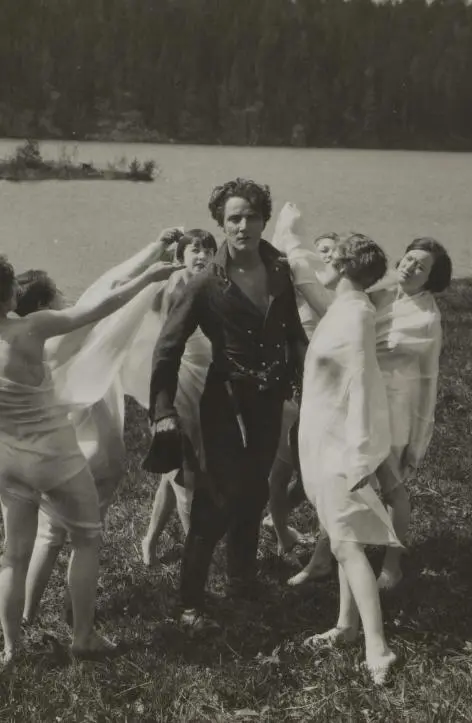
Is this film worth watching today? Short answer: yes, but only if you possess a genuine appetite for the slow-burn texture of the silent era. It is a fascinating artifact for those who enjoy character-driven deception, yet it will likely alienate modern audiences accustomed to rapid-fire pacing and high-octane stakes.
This film is for the cinematic historian and the lover of atmospheric, rural storytelling. It is NOT for anyone seeking a traditional action-oriented western or a plot that moves with contemporary urgency.
This film works because it utilizes its naturalistic setting to heighten the tension of a simple lie, making the mountain valley feel like a pressure cooker for our protagonist.
This film fails because the third act relies on somewhat dated comedic tropes that undercut the psychological potential of Franz’s identity crisis.
You should watch it if you want to see how early Norwegian cinema navigated the line between folk-tale charm and social critique, or if you are exploring the evolution of the 'imposter' archetype in film.
At its heart, Den nye lensmanden is a study of social performance. When Franz arrives in the valley, he isn't just a man looking for a meal; he is a blank slate. The villagers don't see a traveler; they see the authority figure they’ve been conditioned to expect. This dynamic is handled with a surprising amount of nuance by director Leif Sinding.
Consider the scene where Franz first accepts the deference of the village elders. There is a micro-expression of hesitation on Ulf Selmer’s face that suggests a man terrified by his own success. It’s a subtle touch in an era often defined by over-the-top pantomime. This nuance makes the deception feel grounded, rather than cartoonish.
The film captures a specific moment in Norwegian history where the transition from traditional rural life to a more formalized legal state was still fresh. By inserting a fake sheriff into this environment, Sinding mocks the very idea of institutional authority. If a drifter can perform the law as well as a lawman, what does that say about the law itself?
The cinematography in 1926 was often limited by bulky equipment, yet the outdoor sequences here are remarkably fluid. The mountains aren't just a backdrop; they are a character. The scale of the peaks compared to the smallness of the village square emphasizes the isolation that allows Franz’s lie to flourish.
Compared to the gritty, urban despair found in The Salvation Hunters, Den nye lensmanden feels airy and expansive. However, it shares a certain thematic DNA with The Silent Lie in how it treats the secrets kept by those living on the fringes of society. The light in the valley is used to great effect, often casting long shadows that mirror the protagonist's dubious morality.
There is a specific shot of Franz looking out over the valley from a high ridge that perfectly encapsulates the film's tone. He is literally above the people he is tricking, yet he looks incredibly small against the horizon. It is a moment of visual irony that speaks louder than any title card could.
Ulf Selmer delivers a performance that anchors the entire production. He avoids the trap of making Franz a villain. Instead, he plays him as a man who is simply tired of being at the bottom of the social ladder. His chemistry with Ranveig Aasgaard provides the film's emotional core, adding a layer of romantic stakes to the political deception.
The supporting cast, particularly the village types, are played with a heavy hand, which was standard for the time. However, this creates a necessary contrast. Franz must be the most 'modern' person in the room to make the deception believable. He uses his worldliness as a shield against the provincialism of the valley residents.
In many ways, the acting style here is more restrained than what you might see in The Whip or The Flash of Fate. There is a focus on eyes and posture rather than grand gestures. This restraint is what allows the film to age better than many of its contemporaries.
Let’s be honest: the middle of this film drags. After the initial thrill of the deception, the narrative settles into a series of vignettes that show Franz performing his 'duties.' While these scenes provide some comic relief, they don't always move the plot forward. It’s a common issue in 1920s cinema, where the novelty of the premise often outpaced the complexity of the script.
The shift from lighthearted comedy to the tension of potential discovery is handled well, but the resolution feels a bit too tidy. Like Thin Ice, the film flirts with a darker ending before retreating into the safety of a conventional wrap-up. It works. But it’s flawed.
The tone is occasionally uneven. One moment we are watching a serious meditation on identity, and the next we are treated to broad slapstick. This doesn't ruin the experience, but it does prevent the film from reaching the heights of the era's true masterpieces.
For the casual viewer, probably not. But for the cinephile? Absolutely. It offers a window into a specific cultural moment and showcases a level of technical proficiency that was impressive for the Norwegian film industry at the time.
It is a film that rewards patience. If you can move past the silence and the slower rhythm, you’ll find a story that is surprisingly relevant. We still live in a world where people 'fake it until they make it,' and Franz is the spiritual ancestor of every modern-day grifter.
Pros:
- Strong lead performance by Ulf Selmer.
- Beautifully preserved visual aesthetic.
- Interesting social commentary on authority.
Cons:
- Slow pacing in the second act.
- Some supporting characters are caricatures.
- The ending lacks a truly satisfying punch.
When placed alongside other films of the period like Moth and Rust or The Iron Man, Den nye lensmanden stands out for its light touch. It doesn't have the heavy moralizing of Is Divorce a Failure?, nor does it possess the epic scale of Die Herrin der Welt. Instead, it is a localized, intimate story that feels more personal than its peers.
It shares a sense of deceptive identity with The Man Tamer, but with a more grounded, realistic approach. The film doesn't rely on stunts or spectacle; it relies on the tension of a man trying to keep his head above water in a sea of his own making.
Den nye lensmanden is a quiet triumph of 1920s Norwegian filmmaking. While it lacks the international fame of German Expressionism or Soviet Montage from the same era, it possesses a rugged, honest charm that is hard to find elsewhere. It’s a film about the masks we wear and the places we go to hide them. It isn't a masterpiece, but it is a deeply competent and enjoyable piece of history. Watch it for the scenery, stay for the subtle subversion of the law.

IMDb —
1926
Community
Log in to comment.