DbcultAccessing Vault...
Cult Review
Senior Film Conservator
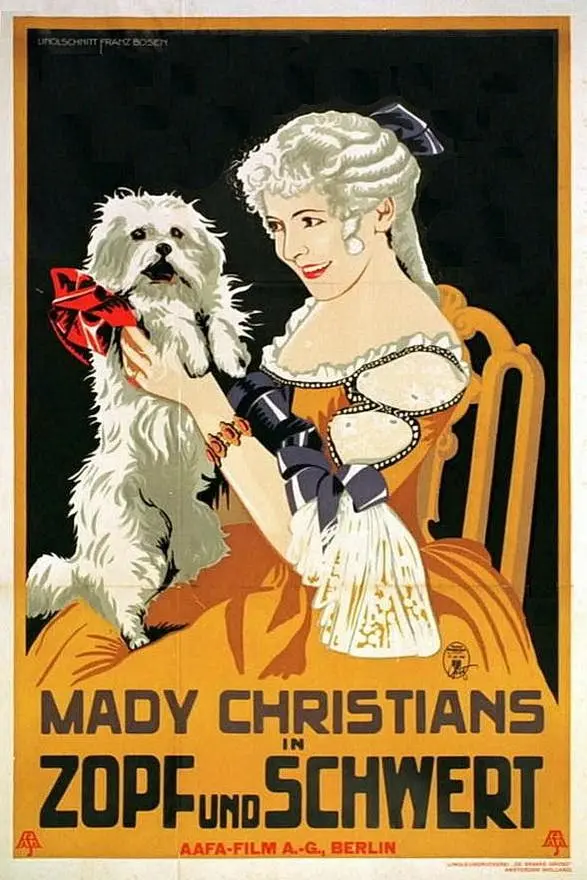
Is Zopf und Schwert - Eine tolle Prinzessin a film that merits a watch in the crowded cinematic landscape of today? Short answer: yes, but with significant caveats. This German silent film from the 1920s offers a fascinating window into early filmmaking ambition and a particular style of dramatic storytelling that has largely vanished, making it an essential viewing experience for dedicated silent film enthusiasts and historians, though likely a challenging one for casual viewers.
This film works because of its undeniable historical significance, its surprisingly potent performances, and a visual grandeur that belies its age. It fails, however, in its often-languid pacing, a narrative that occasionally meanders, and a certain theatricality that might feel alien to modern sensibilities. You should watch it if you possess a genuine curiosity for the origins of cinema, appreciate the nuanced art of silent acting, or seek to understand the stylistic evolution of German film before its golden era of expressionism fully bloomed.
Conversely, if you expect brisk pacing, contemporary narrative complexity, or a seamless emotional journey without the interpretive effort silent cinema demands, this film is decidedly not for you. It requires patience, an open mind, and a willingness to engage with a different mode of storytelling.
Zopf und Schwert - Eine tolle Prinzessin emerges from a pivotal period in German cinema, a time when the industry was finding its footing, experimenting with form, and beginning to establish a distinct voice. While often overshadowed by the later, more flamboyant works of German Expressionism, films like this one laid crucial groundwork. It's a historical drama, a romance, and a testament to the aspirations of its creators to craft epic narratives without the benefit of sound.
The film’s very title, 'Braid and Sword - A Great Princess,' hints at its dual nature: the romantic, delicate beauty of the princess (symbolized by her braid) juxtaposed with the harsh realities of power and conflict (the sword). This thematic tension is the film’s strongest suit, even if its execution is sometimes uneven. It’s a bold statement for its time, attempting to marry grand spectacle with intimate character drama.
One cannot discuss this film without acknowledging its ambition. German studios, particularly UFA, were keen to compete with Hollywood and other European powerhouses, and this often meant lavish sets, extensive costume departments, and large ensemble casts. Zopf und Schwert clearly benefits from this investment, presenting a visual richness that, when viewed through a modern lens, feels both archaic and strangely compelling.
The directorial hand, guided by an uncredited vision (given the multiple writers, it's fair to assume a collaborative or evolving process), navigates a complex narrative with varying degrees of success. There are moments of genuine visual flair, particularly in the grand ballroom sequences or the more intimate, candlelit chambers where Princess Adelheid (Mady Christians) grapples with her fate. The use of deep focus, though not yet perfected, is discernible, adding layers to the frame.
Consider, for instance, a scene where Duke Albrecht (Robert Scholz) confronts Adelheid. The director often frames them not in simple shot-reverse-shot, but in compositions that emphasize power dynamics – Albrecht looming over a seated Adelheid, or her figure small against a vast, ornate backdrop. This visual language speaks volumes without a single intertitle, a hallmark of effective silent film direction.
However, the pacing can feel glacial. There are sequences, particularly in the film’s midsection, that linger perhaps too long on establishing shots or minor character reactions, testing the patience of even the most dedicated silent film aficionado. While this was common for the era, a tighter edit would undoubtedly elevate its impact today. The film’s visual storytelling, while often strong, occasionally sacrifices narrative momentum for aesthetic indulgence.
The cinematography, while not groundbreaking in the vein of a The Cabinet of Dr. Caligari, is competent and often beautiful. The use of natural light, augmented by strategically placed studio lamps, creates a sense of depth and atmosphere. Close-ups are employed sparingly but effectively, often to capture the raw emotion etched on an actor's face – a tear, a defiant glare, a subtle smile. These moments are where the film truly shines, allowing the audience to connect with the characters on a deeply human level.
The ensemble cast of Zopf und Schwert is a treasure trove of early German talent, and their performances are, without question, the film's beating heart. Mady Christians, as Princess Adelheid, delivers a performance of remarkable subtlety and strength. She avoids the over-the-top melodrama sometimes associated with silent film, instead conveying Adelheid’s internal conflict through nuanced facial expressions and graceful gestures.
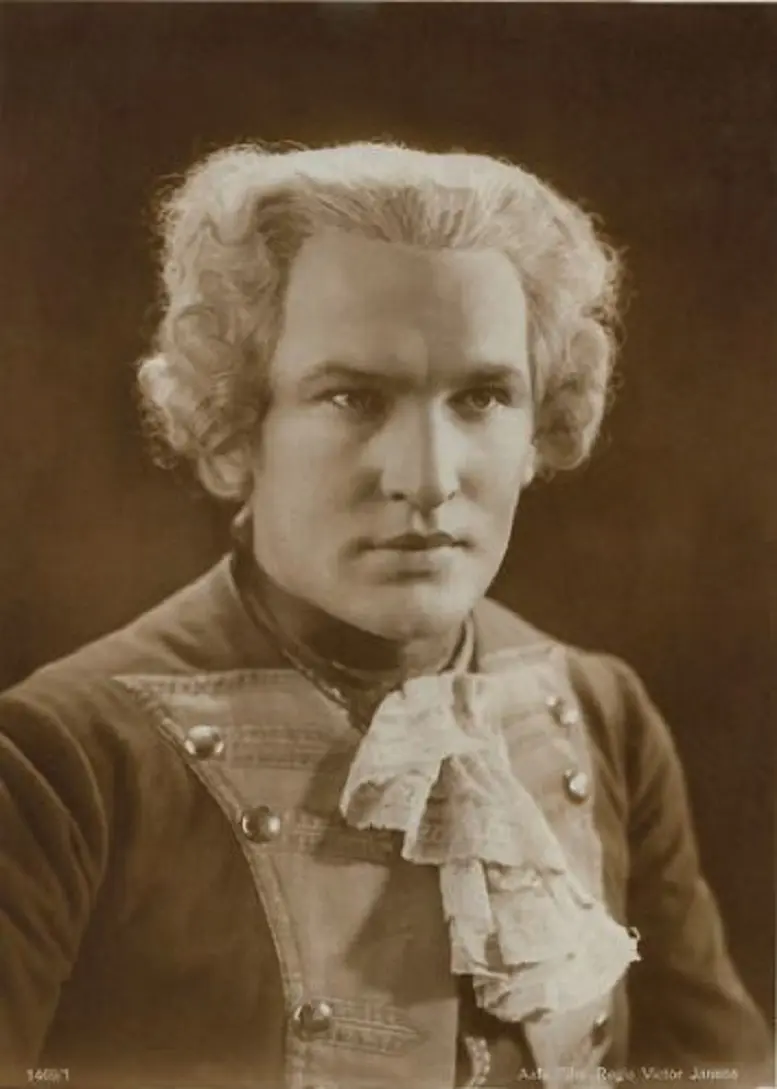
Her portrayal of a princess torn between duty and love is genuinely compelling. Watch her during the betrothal ceremony: a slight tremor in her hand, a fleeting shadow across her eyes, a stiffening of her posture – these minute details communicate a world of inner turmoil. She carries the emotional weight of the film with an impressive gravitas.
Robert Scholz, as the antagonist Duke Albrecht, perfectly embodies the cold, calculating villain. His physicality is imposing, his gaze piercing, and his gestures economical yet menacing. He manages to convey a sense of power and threat without resorting to caricature, which is a testament to his skill. The subtle sneer, the way he leans into a conversation, all speak to a character convinced of his own right to rule.
William Dieterle, who would later become a renowned director in Hollywood, also features in the cast, likely as the heroic suitor. Even in his early acting roles, one can sense a certain charisma and intensity. His scenes with Christians often generate a palpable chemistry, a quiet yearning that transcends the lack of dialogue. The supporting cast, including veterans like Sophie Pagay and Albert Steinrück, provide solid foundations, each contributing to the rich tapestry of court life and intrigue. Their ability to communicate complex emotions and character traits without words is truly commendable.
At its core, Zopf und Schwert explores timeless themes: the conflict between personal freedom and societal obligation, the intoxicating nature of power, and the enduring strength of love. These themes are universal, which is why the film, despite its age, still resonates. The 'braid' symbolizes Adelheid's identity, her heritage, and perhaps even her vulnerability, while the 'sword' represents the external forces of war, politics, and patriarchal control.
However, the narrative, penned by a team including Adolf Lantz and Karl Gutzkow, occasionally stumbles. While the core conflict is clear, the path to its resolution can be circuitous. There are subplots that feel underdeveloped or moments where the story seems to lose focus, drifting into tangential scenes that, while visually interesting, don't always serve the main thrust of the plot. This is a common pitfall for silent films attempting epic scope without the narrative economy that would develop later.
One unconventional observation is how the film, despite its grand scale, often feels most alive in its quietest moments. A simple glance between lovers, a solitary figure gazing out a window, or the subtle shift in a character's posture can be more impactful than any elaborate set piece. It's in these intimate vignettes that the film transcends its period trappings and touches something universal.
The pacing of Zopf und Schwert is, to put it mildly, deliberate. This is not a film that rushes. It breathes, it observes, and it allows scenes to unfold at a pace that modern audiences might find challenging. The average shot length is considerably longer than contemporary cinema, and the reliance on intertitles for dialogue and exposition can interrupt the flow, though this is a fundamental aspect of the silent film experience.
The tone oscillates between high drama and quiet introspection. There are moments of genuine tension, particularly leading up to the climax, but also extended periods of stately exposition. It rarely veers into overt comedy, maintaining a serious, almost somber, mood befitting its historical romance genre. This consistent tone, while perhaps not universally appealing, does lend the film a certain gravitas and authenticity for its period.
Comparing it to more tightly constructed silent films like F.W. Murnau's The Last Laugh, one notices a less fluid narrative drive. Yet, this difference isn't necessarily a failure; it's a reflection of distinct aesthetic choices and the evolving grammar of cinema. The film asks for your full attention, rewarding it with visual detail and emotional depth, but demanding a certain level of engagement that isn't always effortless.
Zopf und Schwert - Eine tolle Prinzessin is a valuable artifact of early German cinema, a film that, despite its imperfections, offers a rich viewing experience for those willing to meet it on its own terms. It works. But it’s flawed. Its strengths lie in its visual ambition, its historical context, and above all, the powerful, wordless performances that anchor its dramatic core. While it may not possess the universal appeal of some of its more celebrated contemporaries, its contribution to the evolving art form is undeniable.
For the discerning cinephile, this film is a journey worth taking, a chance to appreciate the foundational elements of storytelling before sound irrevocably changed the landscape. It demands an investment of time and attention, but it repays that investment with moments of genuine beauty and a profound sense of connection to cinema's past. It's not a film to simply 'watch'; it's a film to study, to absorb, and to appreciate for its place in the grand narrative of film history.
Community
Log in to comment.