Is 'Cupid à la Carte' a silent film worth your time in the 21st century? Short answer: yes, but with a significant caveat. This charming relic offers a delightful glimpse into early cinematic storytelling, brimming with an unexpected narrative wit that belies its age.
This film is an absolute must-watch for silent film aficionados, early romantic comedy historians, and anyone who appreciates the foundational elements of a well-crafted, if broad, comedic plot. However, it is decidedly not for viewers accustomed to modern pacing, dialogue-driven humor, or those who find the conventions of silent cinema challenging to engage with.
A Deeper Look: The Enduring Allure of 'Cupid à la Carte'
In the vast, often overlooked archives of early cinema, one occasionally unearths a gem that, despite its age and silent medium, speaks volumes about timeless human desires and societal structures. 'Cupid à la Carte' is one such discovery, a lighthearted romantic comedy that, beneath its surface of mistaken identities and culinary chaos, offers a surprisingly sharp commentary on ambition, class, and the unpredictable nature of love.
The film’s plot, centered around the resourceful Mame and her various suitors, is a masterclass in escalating comedic tension. It’s a narrative that, even without spoken words, manages to convey a rich tapestry of character motivations and social dynamics. The brilliance here isn't in groundbreaking cinematography or revolutionary acting, but in the sheer ingenuity of its storytelling – a quality often underestimated in films of this era.
This film works because of its ingenious plot construction, which builds comedic tension with remarkable efficiency, culminating in a genuinely surprising and satisfying twist.
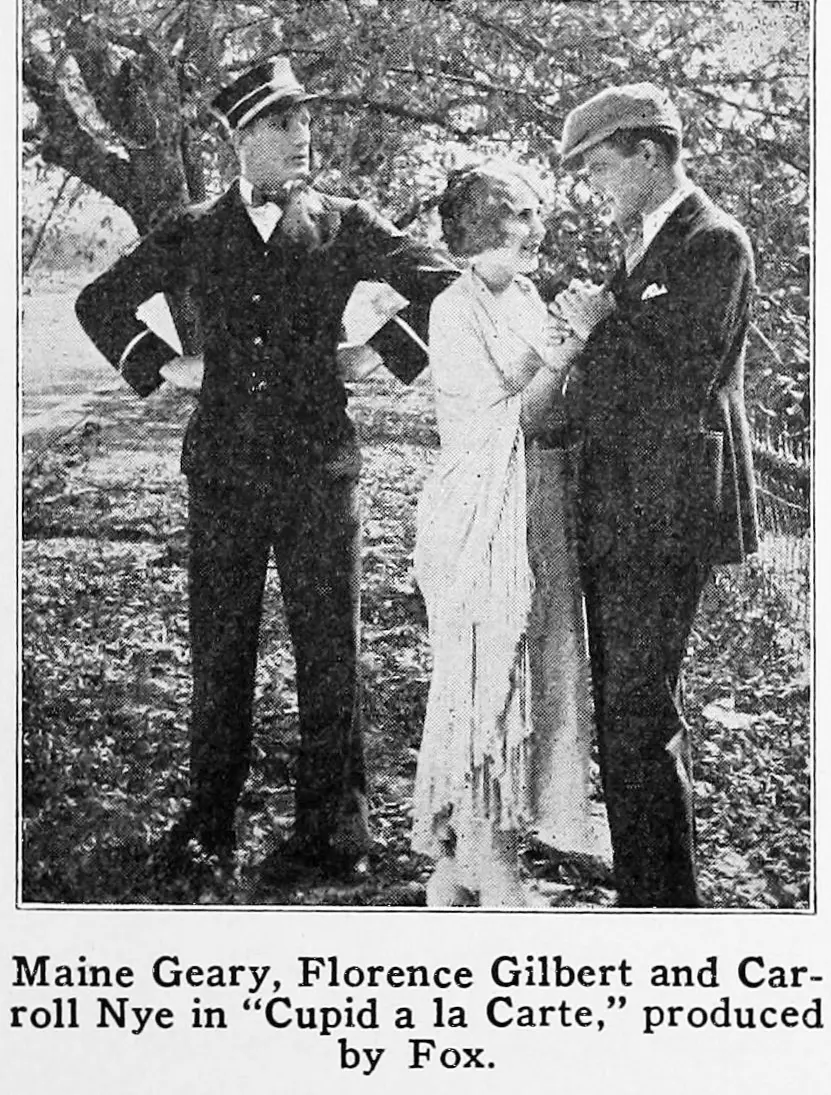
Scene from Cupid à la Carte
Cinematic perspective: Exploring the visual vocabulary of Cupid à la Carte (1926) through its definitive frames.
This film fails because its reliance on broad, physical comedy and a somewhat simplistic depiction of character motivations may not resonate with all modern viewers.
You should watch it if you appreciate the historical context of early romantic comedies and enjoy narratives that prioritize clever plotting over deep psychological exploration.
The Narrative: A Recipe for Romantic Chaos
At its core, 'Cupid à la Carte' is a delightful exercise in narrative misdirection. Mame, a character who, even on paper, exudes a vibrant independence, serves as the magnetic center of the story. Her boarding house is not just a place of lodging but a hub of social interaction, a microcosm of ambition and desire. The film’s strength lies in its ability to establish Mame’s agency early on, positioning her not as a damsel in distress, but as a shrewd businesswoman and a desirable woman in her own right.
The introduction of Jeffrey Peters, the general manager's son, sets up the initial romantic conflict. His attempt to impress Mame by revealing his lineage, only to be met with her understated indifference, is a subtle but effective comedic beat. It immediately tells the audience that Mame operates on her own terms, valuing substance over status – a refreshing character trait for the era. This moment, conveyed likely through a slight shrug or a dismissive glance from Florence Gilbert, would have been pivotal in establishing Mame's character depth.
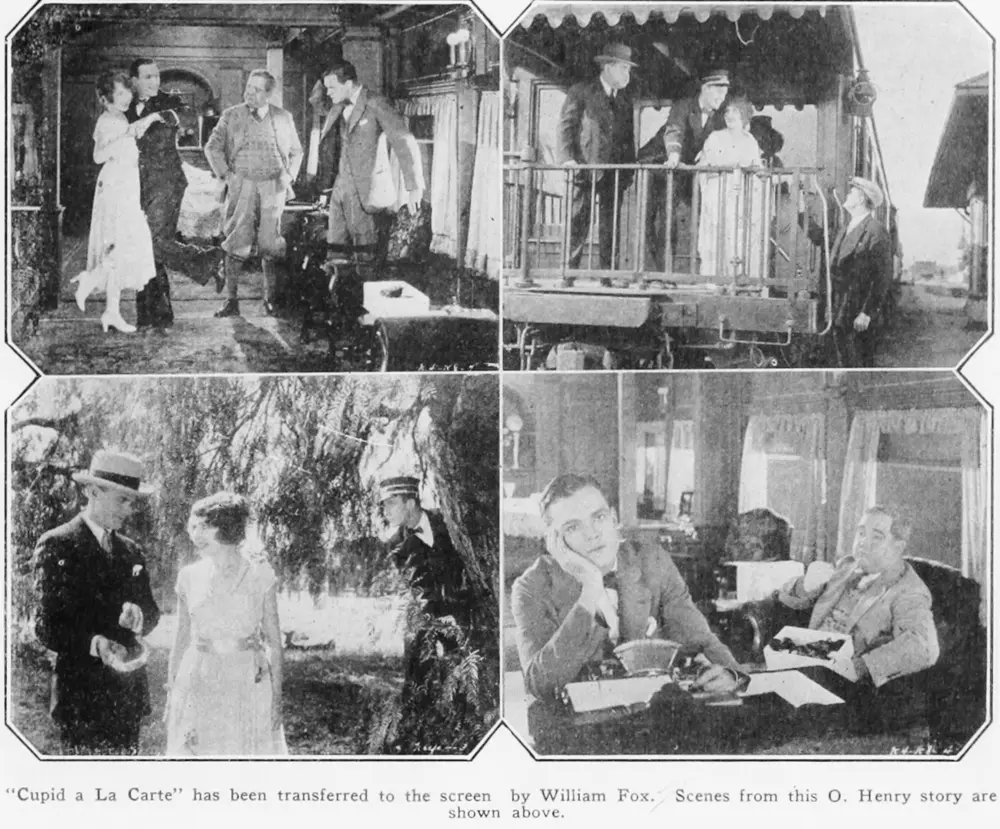
The arrival of Michael Peters, the gluttonous general manager, injects a new layer of absurdity. His obsession with food and his secretary's opportunistic maneuvering create a dynamic tension that drives the plot forward. The scene where Michael consumes "sixty or so minute steaks" is a prime example of silent film's reliance on visual hyperbole for comedic effect. One can almost see the exaggerated expressions of delight on William Colvin's face, contrasting with the growing consternation of those around him.
Scene from Cupid à la Carte
Cinematic perspective: Exploring the visual vocabulary of Cupid à la Carte (1926) through its definitive frames.
What truly elevates the narrative is the secretary's swift and calculated courtship of Mame. While Jeffrey fumbles with naive plans to win over his father, the secretary acts decisively, securing Mame's hand in marriage. This stark contrast highlights the different approaches to romance and ambition, portraying the secretary as a shrewd operator, a character type that often thrives in comedic narratives. Sidney De Gray, in this role, would have needed to convey a slick, almost predatory charm, likely through a series of knowing glances and confident gestures.
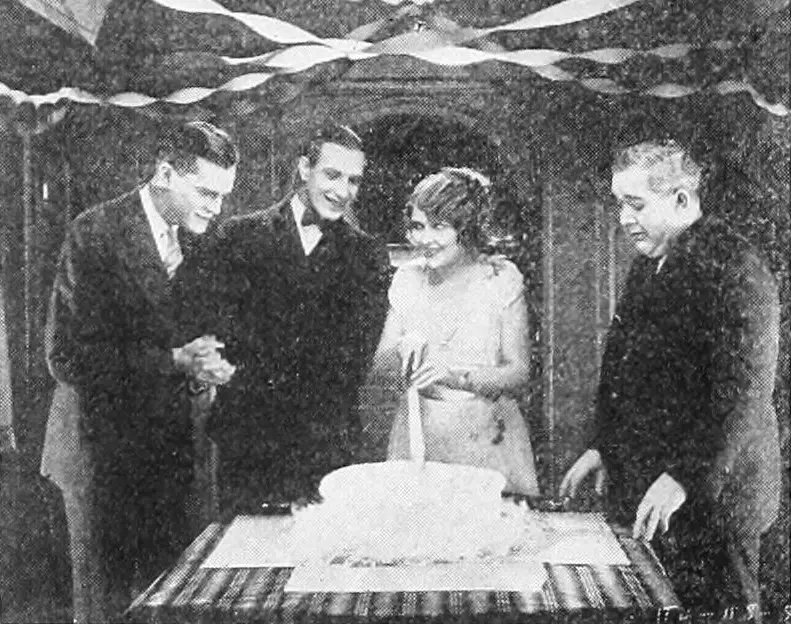
The film’s climax, with the dual revelations of Mame's marriage and her true identity as the railroad president's daughter, is a masterstroke of comedic timing and narrative payoff. It reframes everything that came before, transforming a simple rom-com into a commentary on hidden privilege and the power of perception. This twist, while a common trope in later films, feels fresh and impactful within the context of early cinema, demonstrating the cleverness of Beatrice Van and O. Henry's writing.
Performances and Direction: Silent Expressions, Loud Statements
In silent films, the burden of communication falls squarely on the actors' physicality and facial expressions, guided by the director's vision. For 'Cupid à la Carte', the success of its humor and emotional beats would have hinged on the nuanced performances of its lead cast.
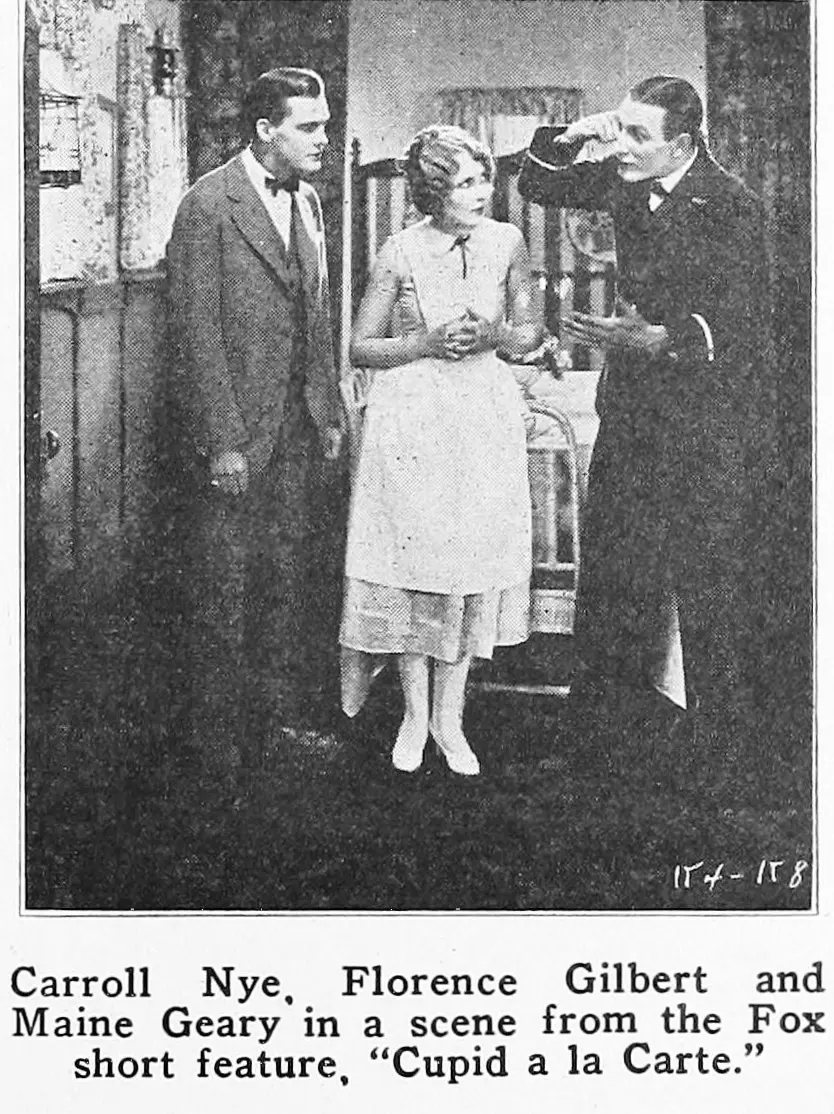
Florence Gilbert, as Mame, was tasked with embodying a character who is both desirable and independent. Her portrayal would have required a delicate balance of charm, resolve, and subtle humor. Imagine her expressions during Jeffrey's clumsy confession or her knowing smiles as the secretary attempts to woo her. These non-verbal cues are crucial in conveying Mame's inner world without a single line of dialogue.
Carroll Nye, as the young Jeffrey Peters, likely delivered a performance steeped in earnest naiveté. His distress over his father's perceived wedding plans, which he mistakenly believes are for him, would have been communicated through exaggerated gestures of confusion and joy. This kind of physical comedy, while perhaps broad by today's standards, was the lingua franca of silent film, designed to elicit immediate audience reaction.
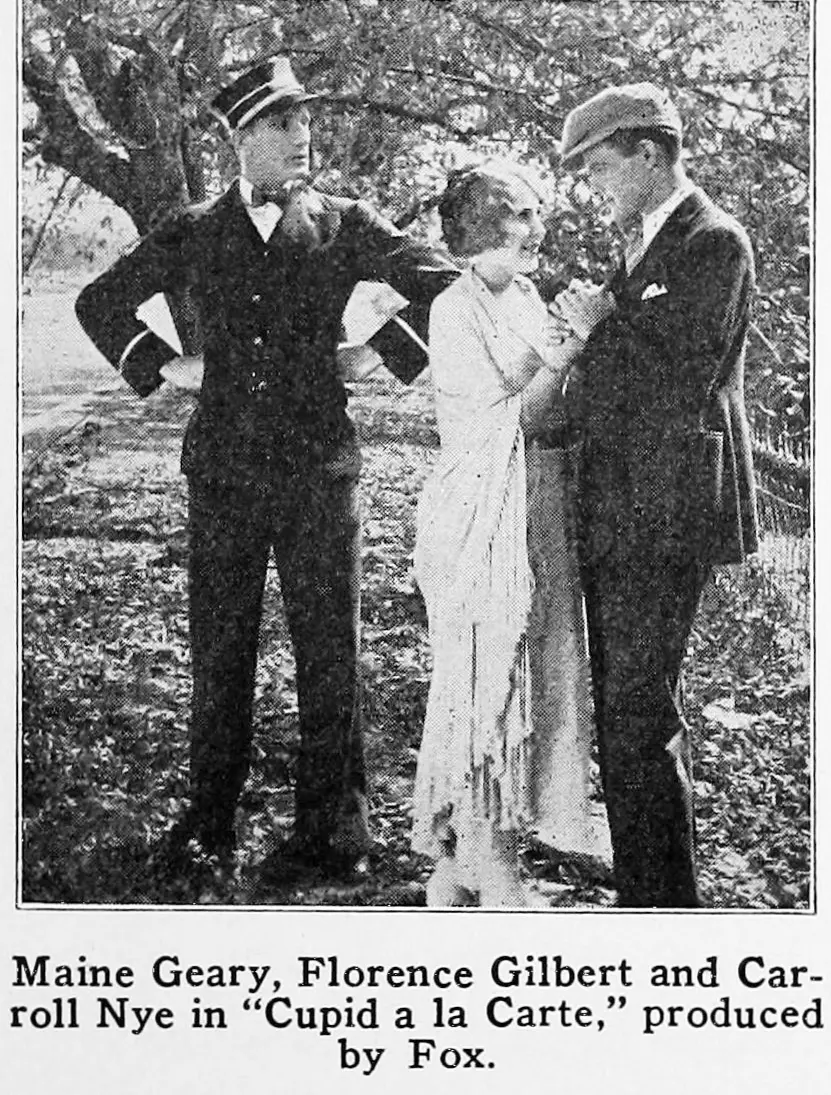
Scene from Cupid à la Carte
Cinematic perspective: Exploring the visual vocabulary of Cupid à la Carte (1926) through its definitive frames.
William Colvin's Michael Peters, the gluttonous general manager, offers ample opportunity for memorable comedic moments. His performance would have centered around the sheer joy of eating, perhaps with bulging eyes and expansive gestures as he devours plate after plate. The visual spectacle of his appetite serves as a comedic anchor, a simple yet effective running gag that punctuates the romantic entanglements.
The direction, while uncredited in many early films, would have prioritized clarity and visual storytelling. Scenes would have been blocked to emphasize character relationships and comedic timing. For instance, the contrast between Jeffrey's bumbling attempts and the secretary's smooth moves would have been highlighted through parallel editing or strategic positioning within the frame. The pacing, though slower than modern cinema, would have been carefully managed to build suspense for the various romantic misunderstandings and, ultimately, the big reveal.
Cinematography, while rudimentary by today's standards, would have focused on clear, well-lit shots that allowed the actors' expressions to dominate the frame. Close-ups would have been sparingly used for emotional impact, such as Mame's reaction to the secretary's proposal, or Michael's look of utter satisfaction after a meal. The film likely employed simple, functional camera work, allowing the strength of the narrative and performances to shine.
Thematic Resonance: Beyond the Laughs
While 'Cupid à la Carte' is undeniably a comedy, it inadvertently touches upon several themes that remain relevant. The most striking is the theme of hidden identity and class disparity. Mame, despite running a boarding house, is revealed to be the daughter of the railroad president. This twist doesn't just provide a comedic punch; it implicitly critiques the snap judgments often made based on one's perceived social standing. Her suitors, particularly Jeffrey and the secretary, are initially drawn to her charm and cooking, only for her true status to dramatically alter their perceptions, and indeed, the entire romantic landscape.
Another interesting theme is the power of female agency, even within the confines of early 20th-century societal expectations. Mame is a self-sufficient businesswoman who runs her own establishment. She is not easily swayed by status (Jeffrey's father's position) or initial charm, suggesting a woman of considerable inner strength and discernment. Her eventual marriage, while orchestrated quickly by the secretary, still feels like a choice she makes, rather than one imposed upon her.
Scene from Cupid à la Carte
Cinematic perspective: Exploring the visual vocabulary of Cupid à la Carte (1926) through its definitive frames.
The film also subtly explores the contrast between genuine affection and opportunistic ambition. Jeffrey's love for Mame, though clumsy, appears sincere. The secretary's pursuit, however, seems more calculated, a strategic move to secure a desirable partner. This dynamic adds a layer of depth to the comedic proceedings, prompting viewers to consider the various motivations behind romantic pursuits.
Pros and Cons
Pros:
Exceptional plot construction with a truly surprising and satisfying twist.
Charming and independent female lead in Mame.
Effective use of visual comedy, particularly with Michael Peters' character.
Provides valuable insight into early romantic comedy tropes and silent film storytelling.
Good pacing for a silent film, keeping the narrative engaging.
Cons:
Reliance on broad physical comedy may not appeal to all modern tastes.
Character motivations can feel somewhat simplistic at times.
The quick resolution of the central romance might feel rushed.
Limited character development beyond initial archetypes.
Key Takeaways
Best for: Silent film enthusiasts, early rom-com historians, and those who appreciate clever, twist-filled narratives.
Not for: Viewers seeking modern pacing, deep psychological dramas, or dialogue-driven humor.
Standout element: The unexpected narrative twist, which recontextualizes the entire story and Mame's character.
Biggest flaw: Its comedic style, while effective for its era, might feel too broad or simplistic for contemporary audiences.
Comparing 'Cupid à la Carte' to its Contemporaries
'Cupid à la Carte' stands out among its peers not for revolutionary filmmaking techniques, but for its sheer narrative cleverness. While many silent comedies relied on slapstick and chase sequences, this film leans into a more intricate plot of mistaken identity and social maneuvering. It shares a certain lighthearted spirit with other romantic comedies of the era, such as Bobbie of the Ballet, but distinguishes itself with its sharper, more surprising conclusion.
The film’s focus on a strong female lead who navigates a world of male suitors also places it in conversation with other films exploring female agency, even if subtly. Unlike the more dramatic explorations seen in films like Love and the Woman, 'Cupid à la Carte' uses comedy to highlight Mame's independence, making her a relatable and admirable figure.
It’s a testament to the enduring appeal of well-told stories that a film like this, despite its technical limitations, can still captivate. It reminds us that good writing, whether for silent screens or modern blockbusters, is truly timeless. The economic use of visual cues to convey complex social dynamics is particularly impressive, distinguishing it from more purely spectacle-driven films of the period.
Verdict
'Cupid à la Carte' is more than just a historical curiosity; it’s a genuinely engaging piece of early cinema that offers a delightful blend of romantic comedy, social commentary, and a narrative twist that holds up remarkably well. It works. But it’s flawed. Its reliance on broad comedic strokes and the rapid progression of its romantic plot might not satisfy all modern viewers, yet its underlying intelligence and charm are undeniable.
For those willing to engage with the conventions of silent film, this movie offers a rewarding experience, showcasing how effective storytelling can transcend the absence of dialogue. It’s a testament to the power of a clever script and expressive performances. This film is a refreshing reminder that the foundations of modern romantic comedy were laid with precision and wit, even in the earliest days of the silver screen. It's a film I wholeheartedly recommend for its historical value and its unexpected capacity to entertain.