DbcultAccessing Vault...
6.3/10
Senior Film Conservator
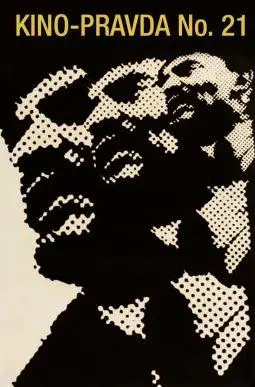
A definitive 6.3/10 rating for a film that redefined the boundaries of cult cinema. Kino-pravda no. 21 - Leninskaia Kino-pravda. Kinopoema o Lenine remains a cornerstone of transgressive art.
In the annals of cinematic history, few filmmakers command the intellectual and artistic reverence bestowed upon Dziga Vertov. His work, particularly the groundbreaking 'Kino-Pravda' series, represents a radical departure from conventional narrative, forging a new path for documentary and experimental cinema. 'Kino-pravda no. 21 - Leninskaia Kino-pravda. Kinopoema o Lenine,' released in 1925, stands as a monumental achievement within this revolutionary oeuvre, a poignant and politically charged commemoration marking the first anniversary of Vladimir Lenin’s death. More than a mere newsreel, this film is a meticulously crafted cinematic poem, a visual eulogy that not only documents a nation's grief but also solidifies the ideological foundation of the nascent Soviet state through the lens of its departed leader.
Vertov's philosophy of 'Kino-Eye' (Kinoglaz) dictates that the camera, unburdened by human emotion or narrative constraints, can capture and organize reality more truthfully than the human eye. In 'Kino-pravda no. 21', this principle is applied with an almost surgical precision, yet imbued with profound emotional resonance. The film eschews traditional storytelling, forgoing actors, scripts, and staged scenes in favor of raw, unadulterated footage. This approach stands in stark contrast to the burgeoning narrative cinema of the era, such as the melodramatic flourishes seen in films like A Soul for Sale or the societal commentary of The Reckless Sex, which relied on constructed realities and fictionalized dramas to engage audiences. Vertov, instead, sought to engage with the actual, lived experience of the Soviet people, transforming their collective mourning into a monumental cinematic event.
The film unfolds as a series of visual fragments: somber processions, faces etched with grief, industrial landscapes humming with renewed purpose, and archival footage of Lenin himself. These disparate elements are not merely presented; they are woven together through Vertov’s revolutionary montage technique. Each cut, each juxtaposition, is deliberate, designed to evoke specific emotions, forge intellectual connections, and reinforce the ideological message of continuity and resilience in the face of loss. It's a testament to Vertov's belief in the camera's ability to 'organize the facts' into a more profound truth than any single, isolated image could convey.
The central thematic thrust of 'Kino-pravda no. 21' is the commemoration of Lenin, but it is not a static portrait. Instead, Vertov captures the dynamic impact of Lenin's absence and the enduring spirit of the revolution he spearheaded. We witness the masses, not as passive observers, but as active participants in a collective historical moment. The film opens with scenes of profound public sorrow, the silent, stoic faces of workers, peasants, and soldiers reflecting the immense void left by the leader. Vertov’s camera lingers on these expressions, allowing the viewer to feel the weight of national grief without the need for explanatory intertitles or dramatic reenactments. This raw, unvarnished depiction of communal sorrow creates an immediate and powerful connection, demonstrating the depth of Lenin's influence on the everyday lives of Soviet citizens.
Beyond the immediate sorrow, the film subtly transitions to portray the ongoing vitality of the Soviet project. Shots of bustling factories, agricultural advancements, and educational initiatives are interspersed with the mourning scenes, suggesting that Lenin's legacy is not merely one of memory, but of continued progress and revolutionary fervor. This clever juxtaposition serves to reassure the populace that the cause endures, that the seeds sown by Lenin continue to bear fruit. The film becomes a powerful tool for ideological reinforcement, transforming personal grief into collective determination, a narrative strategy that speaks volumes about the political climate of the time.
The subtitle 'Kinopoema o Lenine' – a 'film-poem about Lenin' – is crucial to understanding Vertov's artistic intent. This is not a straightforward documentary in the modern sense; it is a lyrical, rhythmic exploration of a historical figure's impact, conveyed through the language of cinema. Vertov's montage operates like poetic verse, where individual shots are like words or phrases, carefully selected and arranged to create rhythm, metaphor, and emotional cadence. The rapid cutting, the use of dissolves, superimpositions, and even slow motion (where technically feasible for the era) contribute to a sense of heightened reality, transforming mundane events into moments of profound significance.
Consider the recurring motifs: the solemn faces, the monumental architecture, the relentless march of progress. These aren't just images; they are symbols that Vertov weaves into a cohesive tapestry, imbuing them with layers of meaning. The film’s structure, while seemingly fragmented, possesses an inherent, almost musical, flow that guides the viewer through the stages of grief, remembrance, and renewed purpose. This poetic sensibility distinguishes 'Kino-pravda no. 21' from a mere historical record, elevating it to the realm of art that transcends its immediate political context. It encourages a deeper, more reflective engagement with the material, inviting viewers to participate in the construction of its meaning.
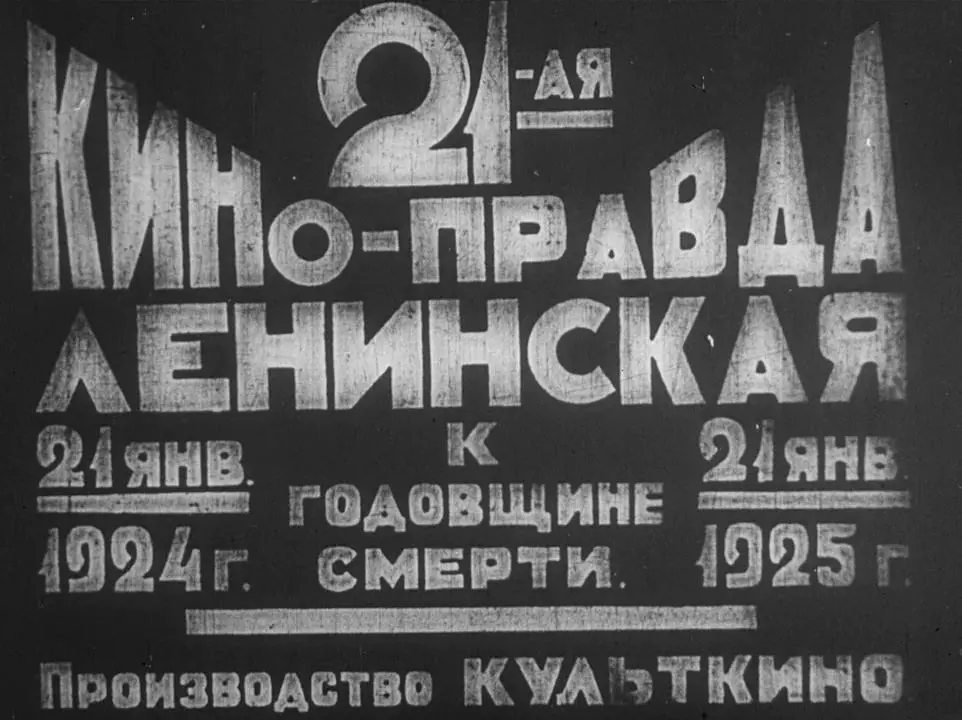
While the film lacks traditional actors, the prompt lists Dziga Vertov himself as 'cast.' This seemingly unconventional attribution highlights his pervasive authorial presence. Vertov is not merely the director or editor; he is the omnipresent 'eye' that perceives, selects, and organizes reality. His personality, his ideology, and his artistic vision are indelibly stamped on every frame. In a sense, the 'Kino-Eye' is a character in itself – an active, observing, and interpreting entity that mediates our experience of Lenin's legacy and the Soviet reality. Vertov's revolutionary zeal for cinema as a tool for social change is palpable throughout, making his presence felt as profoundly as any on-screen performer. He is the invisible protagonist, guiding the narrative of collective memory and future aspiration.
This approach contrasts sharply with the star-driven systems of Hollywood, where films like Alice Adams showcased the charisma of actors. Vertov deliberately subverted such conventions, arguing that the true heroes were the masses and the camera itself. His 'performance' is in the meticulous crafting of the film, in the revolutionary act of seeing and presenting reality in a new, transformative way. He challenges the audience to recognize the power of the cinematic apparatus as a force for social understanding and change, rather than mere entertainment.
'Kino-pravda no. 21' is not an isolated work; it is an integral part of a larger series that fundamentally reshaped documentary filmmaking. The 'Kino-Pravda' newsreels, including earlier issues like Kino-Pravda No. 18: A Movie Camera Race Over 299 Meters and 14 Minutes and 50 Seconds in the Direction of Soviet Reality, were radical experiments in capturing and presenting Soviet life. While No. 18 focused on the dynamic energy of everyday existence and the novelty of cinematic capture, No. 21 delves deeper into the ideological and emotional landscape of a nation confronting a profound loss. Both, however, share Vertov’s commitment to 'life caught unawares,' a philosophy that would become foundational for observational documentary.
The impact of Vertov's work, particularly his innovative use of montage and his theoretical writings on the 'Kino-Eye,' reverberated far beyond the Soviet Union. His ideas influenced filmmakers of the French New Wave, the British Free Cinema movement, and countless avant-garde artists. The raw, unadorned aesthetic, the dedication to capturing reality, and the belief in cinema's power to shape consciousness found echoes in subsequent generations of documentarians. Even today, the spirit of 'Kino-Pravda' can be seen in films that challenge conventional narratives and seek to uncover deeper truths through the manipulation of factual footage.
The film also serves as an invaluable historical document, offering a unique glimpse into the early years of the Soviet Union. It captures the fervor of the revolutionary period, the challenges of nation-building, and the profound cult of personality beginning to coalesce around Lenin. For historians and sociologists, it provides a rich visual archive, allowing for an intimate understanding of a pivotal moment in 20th-century history. Its historical value is undeniable, presenting a candid, if ideologically framed, snapshot of a society in transition.
Despite its specific historical context, 'Kino-pravda no. 21' resonates with universal themes of loss, remembrance, and the enduring power of a leader's legacy. The collective outpouring of grief depicted in the film is a human experience that transcends cultural and political boundaries. Vertov’s masterful ability to evoke this emotion through purely visual means is a testament to his genius. The film asks profound questions about how societies mourn, how they memorialize their heroes, and how they navigate the transition from one era to the next.
The stark, almost austere beauty of Vertov’s cinematography, combined with the dynamic energy of his editing, creates an experience that is both intellectually stimulating and deeply moving. It is a film that demands active engagement from its audience, inviting them to piece together its meaning, to reflect on the power of images, and to consider the complex interplay between art, history, and ideology. Unlike the escapism offered by contemporary features such as In Quest of a Kiss or the thrilling narratives of The Big Game, Vertov's work insists on confronting reality, albeit through a highly stylized, poetic lens.
In conclusion, 'Kino-pravda no. 21 - Leninskaia Kino-pravda. Kinopoema o Lenine' remains a towering achievement in cinematic modernism. It is a film that challenges perceptions, pushes the boundaries of form, and offers an unparalleled glimpse into a pivotal historical moment. Dziga Vertov, as the architect of this 'film-poem,' solidifies his place not just as a filmmaker, but as a visionary who understood the profound potential of the moving image to shape collective consciousness and immortalize revolutionary ideals. Its enduring power lies in its ability to simultaneously document a specific historical event and transcend it, offering a timeless meditation on leadership, grief, and the relentless march of progress, all captured through the revolutionary gaze of the Kino-Eye.
Community
Log in to comment.