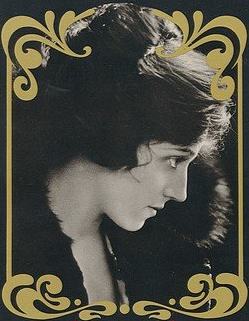
Miriam Cooper
actress, casting_director, costume_department
- Birth name:
- Marian Cooper
- Born:
- 1891-11-07, Baltimore, Maryland, USA
- Died:
- 1976-04-12, Charlottesville, Virginia, USA
- Professions:
- actress, casting_director, costume_department
Biography
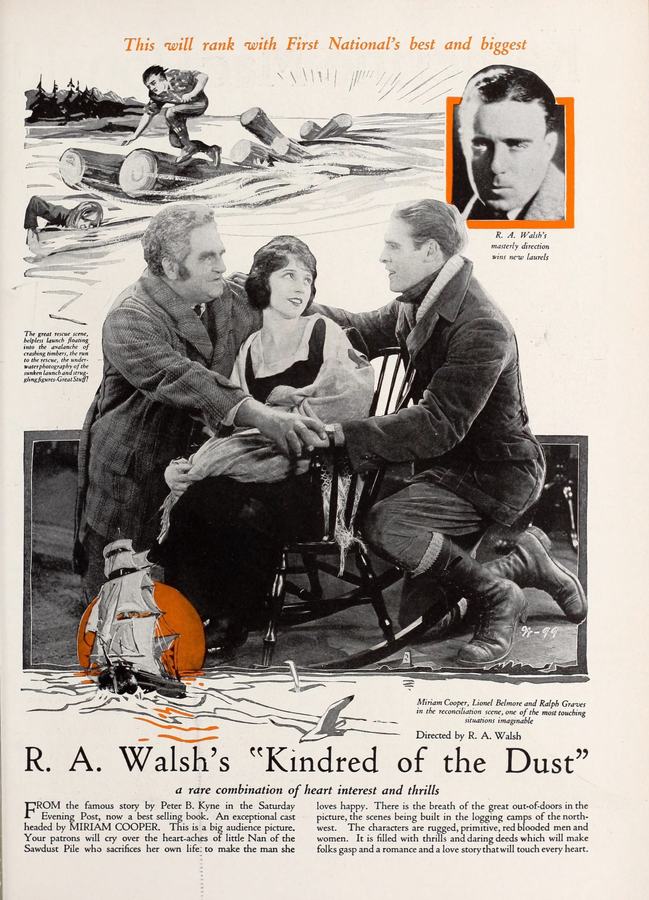
Born in Baltimore, Maryland, in 1891 to Julian Cooper and Margaret Stewart, Miriam Cooper's early life saw a brief period of comfort as part of a Roman Catholic, well-to-do family. This stability shattered when, after welcoming five children in five years (one of whom tragically died in infancy), Julian Cooper abandoned his family, fleeing to Europe. Margaret Cooper, with the initial financial lifeline from her mother-in-law, valiantly raised Miriam and her siblings, Nelson, Gordon, and Lenore. However, with grandmother Cooper's passing, their circumstances plummeted into abject poverty, forcing a move from Washington Heights to the crowded confines of Little Italy. At one point, young Miriam even endured a stay in an orphanage while her mother battled illness. Her education encompassed both the spiritual rigor of St. Walburga's Academy, a convent school, and the artistic pursuits offered by Coopers Union Art School. Before finding her way into the burgeoning motion picture industry, Cooper cultivated a career as a model, gracing the canvases and pages for renowned artists Harrison Fisher and Charles Dana Gibson. Her cinematic journey began modestly in 1912 as an extra in D.W. Griffith's 'A Blot on the 'Scutcheon'. Soon after, she ventured to Florida, where she became a prolific ingénue for Kalem Studios, starring in nearly 30 films. Predominantly Civil War dramas and romances, these roles demanded a fearless spirit, with Miriam performing all her own stunts – from daring horseback rides and navigating the tops of moving trains to swimming a horse across a river. Her reward for such dedication? Dismissal in 1913, simply for requesting a raise. Fate intervened in 1914 when D.W. Griffith rediscovered an old screen test she had submitted, drawing her into his prestigious cinematic circle. This led to pivotal leading roles in two of his most iconic epics: 'The Birth of a Nation' (1915) and 'Intolerance' (1916). During this period, romance blossomed with Raoul Walsh, one of Griffith's assistant directors. Aware of Griffith’s disapproval of their union, Miriam and Walsh exchanged vows in secret on the Hopi Indian Reservation in Arizona in 1916. When Walsh eventually transitioned from Griffith to Fox Films, Miriam followed, making their marriage public. Though her passion for acting waned after marriage, Walsh preferred to direct her, leading to several films at Fox, notably the popular 'Evangeline' (1919). Miriam harbored a deep desire for a life as a wife and mother, but the couple faced infertility. They instead expanded their family by adopting two boys. The marriage, however, was not without its trials; Miriam ultimately grew weary of Walsh's philandering and divorced him in 1925. She never remarried, and despite acknowledging a lingering bitterness and resentment, her continued love and admiration for Walsh remained evident. Her final film appearance was in 1923. Disillusioned with Hollywood and the film industry, she definitively walked away, never looking back. Her judicious savings afforded her a comfortable life, which she filled with a newfound passion for golf, impressively achieving holes-in-one in three different states. Decades later, in the 1960s, she expressed surprise at being rediscovered by film historians and eager college students but gracefully embraced the renewed attention. Miriam Cooper completed her autobiography, 'Dark Lady of the Silents', in 1973, three years before her death from a stroke in 1976.
Filmography
In the vault (8)