
DbcultAccessing Vault...
Director's Spotlight
Senior Film Conservator
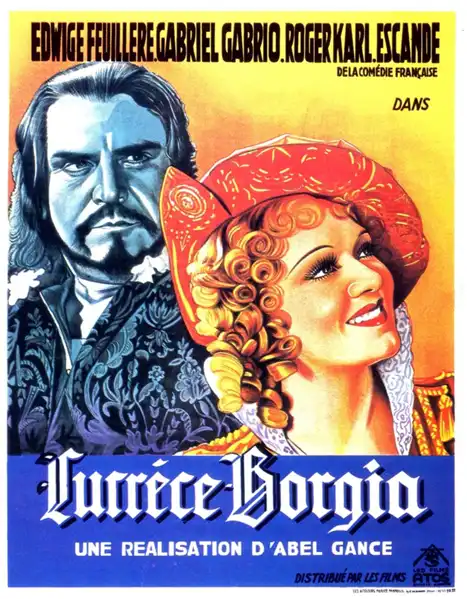
Director's Spotlight: France
A Deep Dive into the 1935 Vision of Abel Gance
The thematic gravity of Lucrezia Borgia (1935) is rooted in the historical context that Abel Gance weaves into the Drama fabric. Synthesizing the best elements of France and international cinema, it highlights the importance of independent voices in France.
In Lucrezia Borgia, Abel Gance pushes the boundaries of conventional narrative. The film's unique approach to its subject matter has sparked endless debates and interpretations among cinephiles and critics alike.
To fully appreciate Lucrezia Borgia, one must consider the cinematic climate of 1935. During this period, France was undergoing significant artistic shifts, and Abel Gance was at the forefront of this Drama movement, often challenging established norms.
| Cinematography | Handheld |
| Soundtrack | Experimental |
| Editing | Elliptical |
| Art Direction | Expressionist |
Visualizing the convergence of Abel Gance's style and the core Drama narrative.
At the end of the 15th Century, Rome is ruled ruthlessly by power mad and sex hungry Cesare Borgia, the eldest son of Pope Alexander VI. Following the advice of his chief adviser Niccolo Macchiavelli, Cesare Borgia decides to attempt to unify the country in order to become even more powerful. To this end he needs his sister Lucrezia. Presently, the beautiful creature is married to the Count of Pesaro but she would be more useful if she was the wife of Alphonse of Aragon. Never mind, let the Count join his ancestors! And when the Duke of Aragon becomes useless, Cesare easily finds his replacement. Used as a pawn by her brother, Lucrezia eventually renounces happiness and becomes patron of the arts and the letters/
Decades after its release, Lucrezia Borgia remains a vital piece of the cinematic puzzle. Its influence can be seen in countless modern works, solidifying Abel Gance's status as a master of the craft in France and beyond.