
DbcultAccessing Vault...
Director's Spotlight
Senior Film Conservator
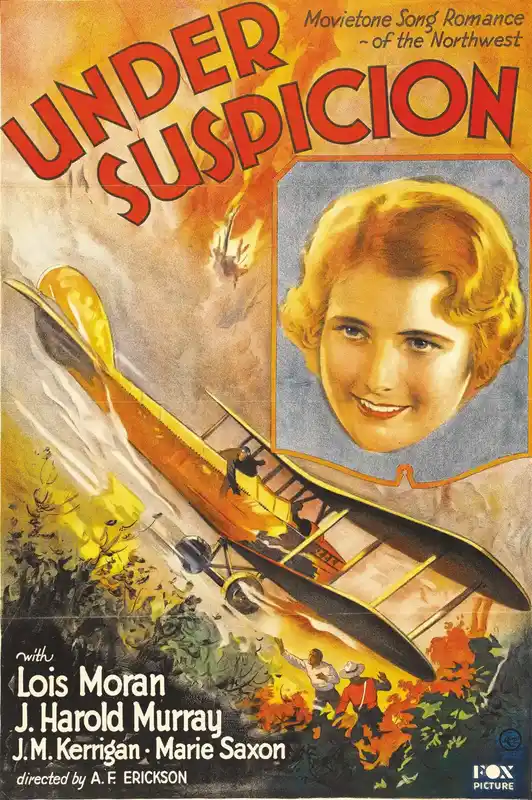
Director's Spotlight: United States
A Deep Dive into the 1930 Vision of A.F. Erickson
The Action DNA of Under Suspicion is a reflection of United States's the subversive storytelling techniques employed by A.F. Erickson in 1930. Breaking the traditional rules of Action engagement, it leaves an indelible mark on the soul of the viewer.
In Under Suspicion, A.F. Erickson pushes the boundaries of conventional narrative. The film's unique approach to its subject matter has sparked endless debates and interpretations among cinephiles and critics alike.
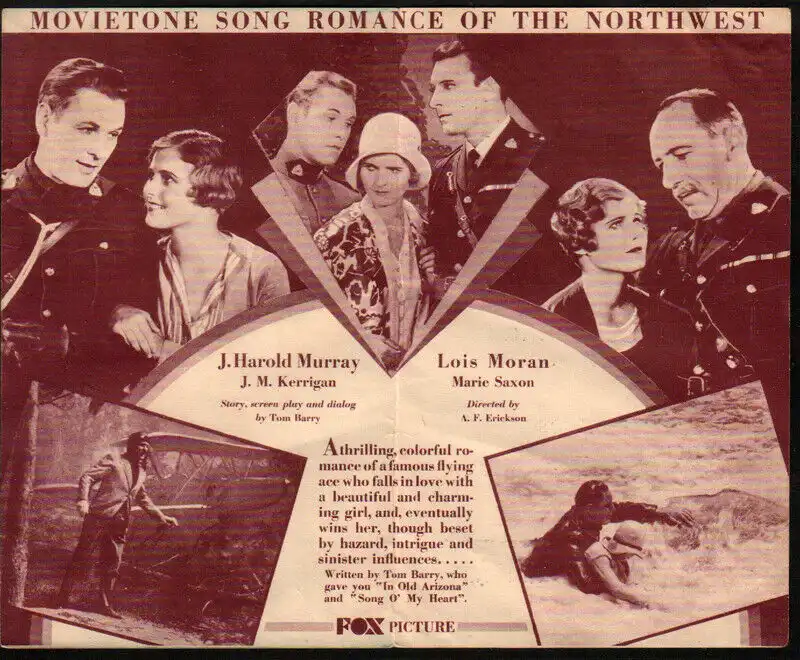
The visual language of Under Suspicion is defined by its use of shadows and framing, a hallmark of A.F. Erickson's style. By utilizing a 1930-era palette, the film creates an immersive experience that perfectly complements its Action themes.
| Cinematography | High-Contrast |
| Soundtrack | Synth-Heavy |
| Editing | Disjunctive |
| Art Direction | Baroque |
Visualizing the convergence of A.F. Erickson's style and the core Action narrative.
A group of Canadian Royal Mounted Police officers arrive home after serving overseas with the Allied Army. After enjoying a birthday banquet for the aged Major Manners amid much singing and revelry, Inspector Turner reveals suspicions about a new recruit, John Smith, whom he knows to be using a pseudonym and whose war record contains something potentially damaging. Smith is purported to have been a flyer during the war; he and his brother fell in love with the same girl who turned out to be a spy and to whom one of them revealed British Air Force secrets, which caused a squadron of planes to be attacked. John meets Freil, another Mountie, who gives him an encouraging talk about self-respect and unselfishness and promises never to dredge up the former's past record. Alice, Freil's daughter, returns home by canoe after visiting her ailing former nurse. When her canoe heads for the rapids, Smith rescues her, and Alice then promises to save a dance for him at a party that night at the lodge. During the festivities, as Turner and Alice dance, he confesses his love for her, as well as his jealousy of Smith, as he had witnessed the pair riding together after Alice's rescue. Smith cuts in, and the lovers take a walk in the moonlight. After the dance, Smith and Alice discuss a song she's given him, "'Round My Kingdom's Door," and Smith begins to sing a few bars. Turner then arrives and announces that he's selected Smith for a dangerous solo mission to rescue an injured hunter from some snowy climes. Smith returns from his mission unscathed and tells Alice that he did not want to take the mission alone, contradicting Turner's earlier claim that Smith requested the mission in order to prove his bravery. Smith then goes to the police barracks and encounters Turner, who informs Smith that he has sent for his official war record but will remain silent about its contents if Smith resigns. Smith refuses, saying that he will tell Alice everything, but when Turner threatens to inform Smith's English family about their son's dishonorable history, Smith agrees to resign. Doyle, Smith's friend during the war and the man responsible for bringing him to the Royal Mounties' camp, promises to help his buddy out of his predicament. Alice hears of John's resignation and vows to stand by him despite his past, while Doyle assures her that anyone would have transgressed in his situation. As Alice is asking Turner about Smith, Turner receives a report of a forest fire in the same region that Freil has been traveling. Smith, an ace flier during the war, takes a plane into the area and rescues Freil, who then reprimands Turner for his earlier act of revenge and asks for his resignation. Alice reads Smith's war record and reports that the "deplorable incident" was actually Smith's attempt to shield his younger brother from blame. The record also reveals that his real name is Sir Robert Macklin. Alice and Macklin, now with a clean slate in the Canadian Royal Mounted Police community, marry at the Mounties' barracks and raise their glasses with the other men.
Decades after its release, Under Suspicion remains a vital piece of the cinematic puzzle. Its influence can be seen in countless modern works, solidifying A.F. Erickson's status as a master of the craft in United States and beyond.