
DbcultAccessing Vault...
Director's Spotlight
Senior Film Conservator
Director's Spotlight: United States
A Deep Dive into the 1933 Vision of A.J. Villiers
The enduring fascination with Around the Horn in a Square Rigger is a testament to the artistic risks taken by A.J. Villiers that eventually paid off. Challenging the viewer to find meaning in the Short shadows, it reminds us of the fragility and beauty of the 1933s.
In Around the Horn in a Square Rigger, A.J. Villiers pushes the boundaries of conventional narrative. The film's unique approach to its subject matter has sparked endless debates and interpretations among cinephiles and critics alike.
The visual language of Around the Horn in a Square Rigger is defined by its use of shadows and framing, a hallmark of A.J. Villiers's style. By utilizing a 1933-era palette, the film creates an immersive experience that perfectly complements its Short themes.
| Cinematography | High-Contrast |
| Soundtrack | Minimalist |
| Editing | Slow-Burn |
| Art Direction | Brutalist |
Visualizing the convergence of A.J. Villiers's style and the core Short narrative.
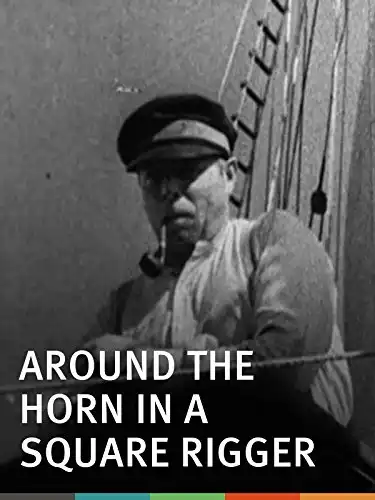
AROUND THE HORN IN A SQUARE RIGGER was filmed by noted sailor, author and photographer Alan Villiers documenting the record-breaking 83-day voyage of the 1902 barque Parma from Australia to England in the 1933 Grain Race. Villiers writes, "We wanted to make a picture that would capture some of the stirring beauty of these ships... some glimmer of understanding of the attraction which they hold over those who sail in them."
Decades after its release, Around the Horn in a Square Rigger remains a vital piece of the cinematic puzzle. Its influence can be seen in countless modern works, solidifying A.J. Villiers's status as a master of the craft in United States and beyond.