
DbcultAccessing Vault...
Director's Spotlight
Senior Film Conservator
Director's Spotlight: United States
A Deep Dive into the 1933 Vision of Al Christie
Few works in United States cinema carry the same weight as Static, especially regarding the technical innovation that Al Christie introduced to the Comedy format. Subverting the expectations of the typical 1933 audience, it bridges the gap between traditional Comedy and contemporary vision.
In Static, Al Christie pushes the boundaries of conventional narrative. The film's unique approach to its subject matter has sparked endless debates and interpretations among cinephiles and critics alike.
The visual language of Static is defined by its use of shadows and framing, a hallmark of Al Christie's style. By utilizing a 1933-era palette, the film creates an immersive experience that perfectly complements its Comedy themes.
| Cinematography | Handheld |
| Soundtrack | Minimalist |
| Editing | Slow-Burn |
| Art Direction | Brutalist |
Visualizing the convergence of Al Christie's style and the core Comedy narrative.
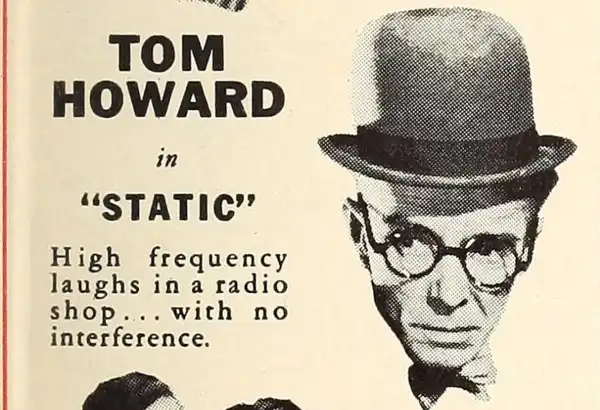
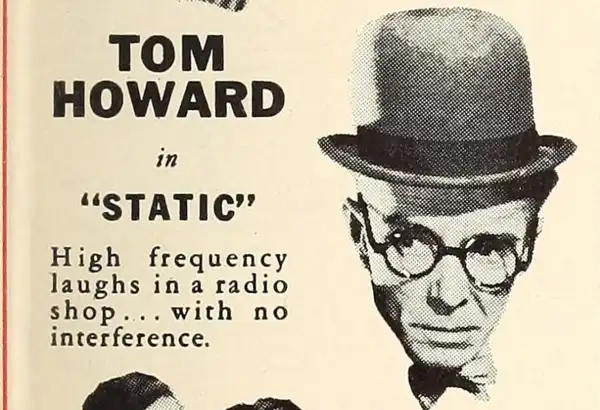
Another one of the "noisy" sound shorts from Educational, only mentioned because some uninformed source somewhere keeps marking nearly every short that came from Educational as being a silent. FYI to uninformed source; Educational wired for sound in 1928... and used it. The title, "Static" and the plot that takes place mostly in a store selling radios (the talking furniture) should have been a clue this one isn't silent. Tom Howard inherits $3000 and he buys a radio store with his Cousin Joe that has nothing but trade-ins and junk for inventory. Plus, an extortion gang is on the way over to collect the protection money. This was made in the period when all businesses were asked to display the NRA Eagle as their sign of support for this Depression-era program, and Walter Soderling plays an irate customer who berates Howard for not being patriotic and having the NRA emblem on display. Everybody talks. There are radio sound effects. There are sound explosions. It is not a silent film. It may have been better if it was.
Decades after its release, Static remains a vital piece of the cinematic puzzle. Its influence can be seen in countless modern works, solidifying Al Christie's status as a master of the craft in United States and beyond.