
DbcultAccessing Vault...
Director's Spotlight
Senior Film Conservator
Director's Spotlight: United States
A Deep Dive into the 1919 Vision of Al Christie
Exploring the cult underpinnings of Wild and Western leads us to the stylistic boundaries pushed by Al Christie during the production. Through a lens of existential fatalism and cult tropes, it continues to spark endless debates among critics and cinephiles alike.
In Wild and Western, Al Christie pushes the boundaries of conventional narrative. The film's unique approach to its subject matter has sparked endless debates and interpretations among cinephiles and critics alike.
The visual language of Wild and Western is defined by its use of shadows and framing, a hallmark of Al Christie's style. By utilizing a 1919-era palette, the film creates an immersive experience that perfectly complements its cult themes.
| Cinematography | High-Contrast |
| Soundtrack | Experimental |
| Editing | Elliptical |
| Art Direction | Expressionist |
Visualizing the convergence of Al Christie's style and the core cult narrative.
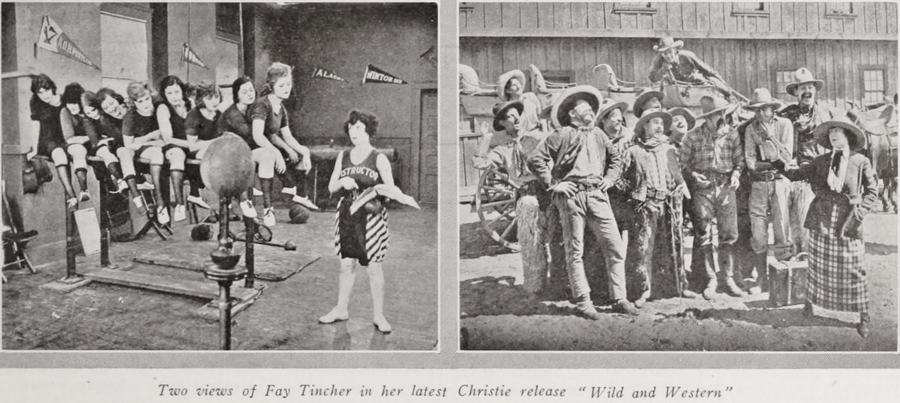
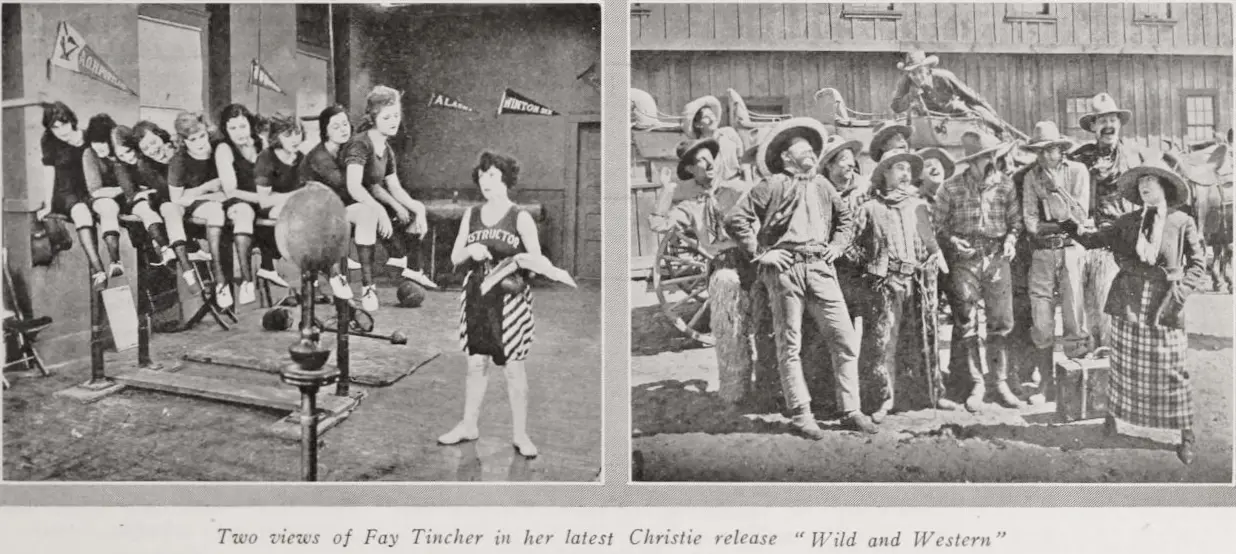
Rosie is a Y. W. C. A. gym instructor in the East. Coincident with her getting a little too rough with one of the girls, knocking her out and being fired from her job as athletic director, Rosie is advised of the fact that she has acquired a piece of real property in the form of the Rough Neck Rancho. There is nothing for her to do but go West, going Horace Greely one better by setting out for the Rough Neck Rancho with the idea of bringing it up right and proper with deft feminine touches. These touches turned out to be deft, but scarcely feminine, inasmuch as they were blows from Rosie's husky mitt. Naturally, a bunch of bewhiskered and devil-may-care cowboys resented the innovation of a woman manager, and when Rosie ordered the foreman and all the rest of them to shave their mustaches, it was a little too much for hard boiled Bill and his gang of leather-necked cowboys. Rosie imported a bunch of strikebreakers, some of her own girl pals, who were nicely settled in the ranch house. Bad Bill hit upon the brilliant idea of hiring a bunch of Indians to attack the ranch house, scare the wits out of the Eastern young ladies and otherwise maintain the morale of the men folks around Rough Neck Rancho. It was a bad day for the Indians and a worse day for the cowboys, as it turned out, for after Rosie and her cohort of Sure-Shot Susie's finished mopping off the Indians out of the barricades of windows, and after three or four Indians had bitten the dust after good old-fashioned melodramatic style, the redskins turned around and licked the tar out of all the cowboys for putting them up to such a hazardous undertaking. By this time one or two of the cowboys had fallen for the lure of the women folks and had sacrificed their flowing whiskers, their sole pride and joy, under the telling fire of Cupid's darts. Red Bill, the burly foreman, was finally vanquished by Rough Neck Rosie in a fist fight which was not exactly fair but thoroughly effective. Bill got the final wallop when he wasn't looking by one of Rosie's pals planted behind a carpet before which the fight took place. At the end of the second reel of desperate milling Rosie and her pals are victorious and the Rough Neck Rancho settles down to peace and quiet and every clean-shaven cowboy has a little milkmaid on his arm. Motion Picture News, November 1, 1919
Decades after its release, Wild and Western remains a vital piece of the cinematic puzzle. Its influence can be seen in countless modern works, solidifying Al Christie's status as a master of the craft in United States and beyond.