
DbcultAccessing Vault...
Director's Spotlight
Senior Film Conservator

Director's Spotlight: United States
A Deep Dive into the 1919 Vision of Al Ira Smith
The artistic breakthrough represented by The Girl Alaska in 1919 highlights the philosophical inquiries that Al Ira Smith embeds within the narrative. Framed by the hauntingly beautiful landscapes of the production, it leaves an indelible mark on the soul of the viewer.
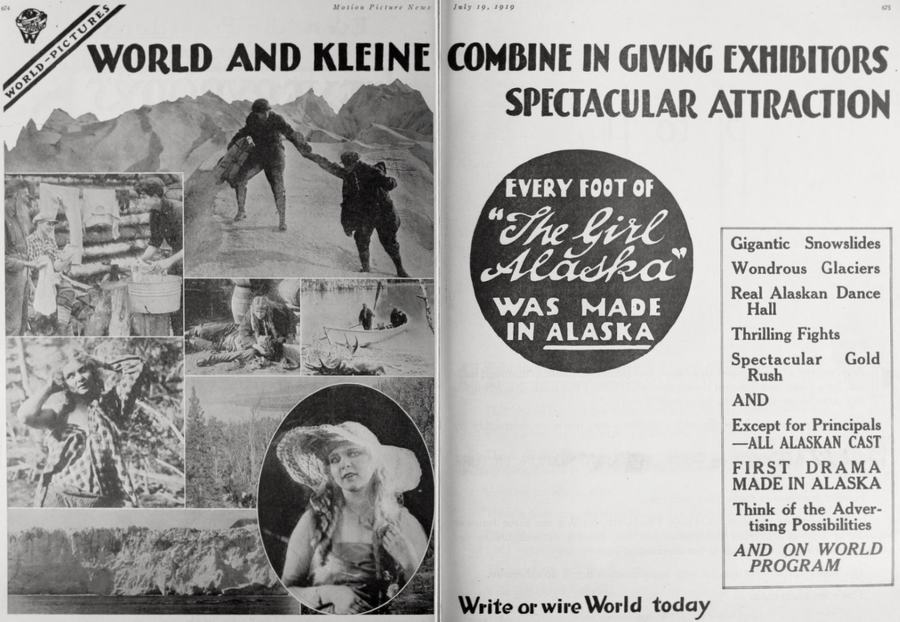
In The Girl Alaska, Al Ira Smith pushes the boundaries of conventional narrative. The film's unique approach to its subject matter has sparked endless debates and interpretations among cinephiles and critics alike.
| Cinematography | Noir-Inspired |
| Soundtrack | Minimalist |
| Editing | Disjunctive |
| Art Direction | Baroque |
Visualizing the convergence of Al Ira Smith's style and the core cult narrative.
Motherless Mollie McCrea, whose father is in the Yukon, disguises herself as a boy named "Alaska" and hides on a steamer bound for that territory. Discovered, she is made to wash the decks until Phil Hadley, a lad of her age, pays her way, and they go together as pals to look for gold. When Phil becomes sick as they reach the cabin of an old timer, Mollie nurses Phil to health. They work the old timer's mine which proves to be rich, and he dies after telling Mollie that he is her father. Phil plans to go back to his sweetheart, but takes ill again and is again nursed to health by Mollie. After suffering when he finds out that his sweetheart has wed another, Phil happily discovers Molly's true sex when she disrobes to bathe. A minister marries them, and they return to civilization, wealthy from her father's mine.
Decades after its release, The Girl Alaska remains a vital piece of the cinematic puzzle. Its influence can be seen in countless modern works, solidifying Al Ira Smith's status as a master of the craft in United States and beyond.