
DbcultAccessing Vault...
Deep Dive
Senior Film Conservator
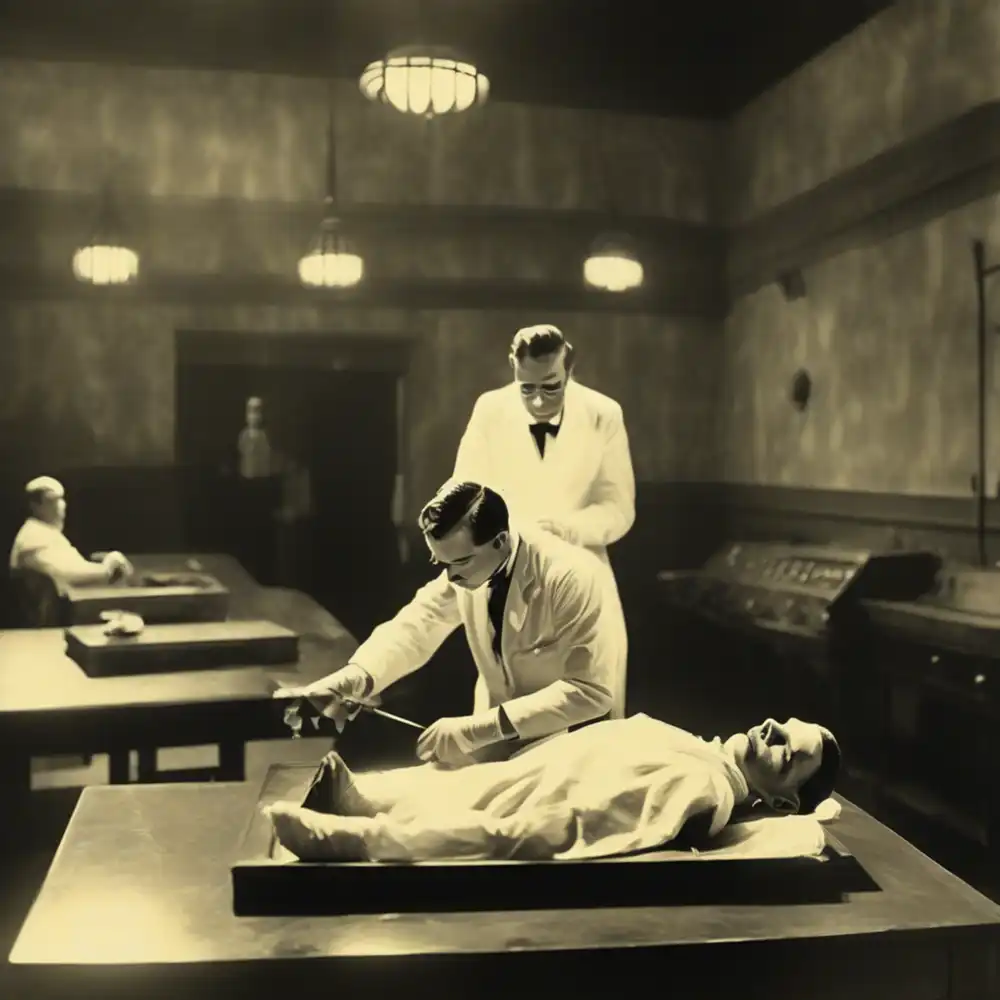
Modern horror fans often make the mistake of thinking body horror began with the latex-heavy splatter of the 1980s. They point to the exploding heads of Scanners or the melting flesh in The Fly. But the true dirt—the real biological rot—is buried much deeper, in the surgical theaters of the 1920s. This was the era of the 'Glandular Gothic,' a niche cycle of films obsessed with the surgical extension of youth, the horror of biological decay, and the hubris of the scalpel. It was a time when the world was reeling from the real-life experiments of Serge Voronoff and Eugen Steinach, men who promised that sewing animal glands into human scrotums could reverse the aging process. Cinema, ever the vulture, circled this medical panic with a ferocity that makes today’s transhumanist thrillers look like bedtime stories.
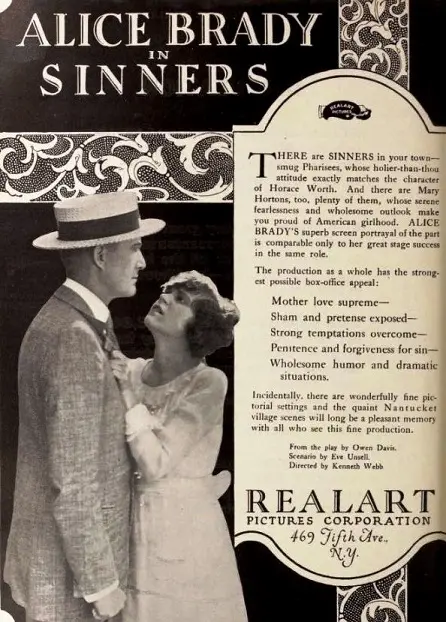
Take Hobart Henley’s Sinners in Silk (1924). It is often dismissed as a standard jazz-age melodrama, but that’s a lazy reading. The film follows Arthur Merrill, an aging roué played by Adolphe Menjou with a weary, parchment-thin dignity. Merrill is a man who can no longer keep up with the frantic, sweat-soaked hedonism of the flapper era. He sees the youth around him not as peers, but as a different species. His solution? A trip to Europe for 'rejuvenation surgery.' This isn't just a face-lift; it is a fundamental biological rewriting. When Merrill returns, his skin is taut, his step is light, and he begins a predatory flirtation with Penelope Stevens, a girl young enough to be his granddaughter.
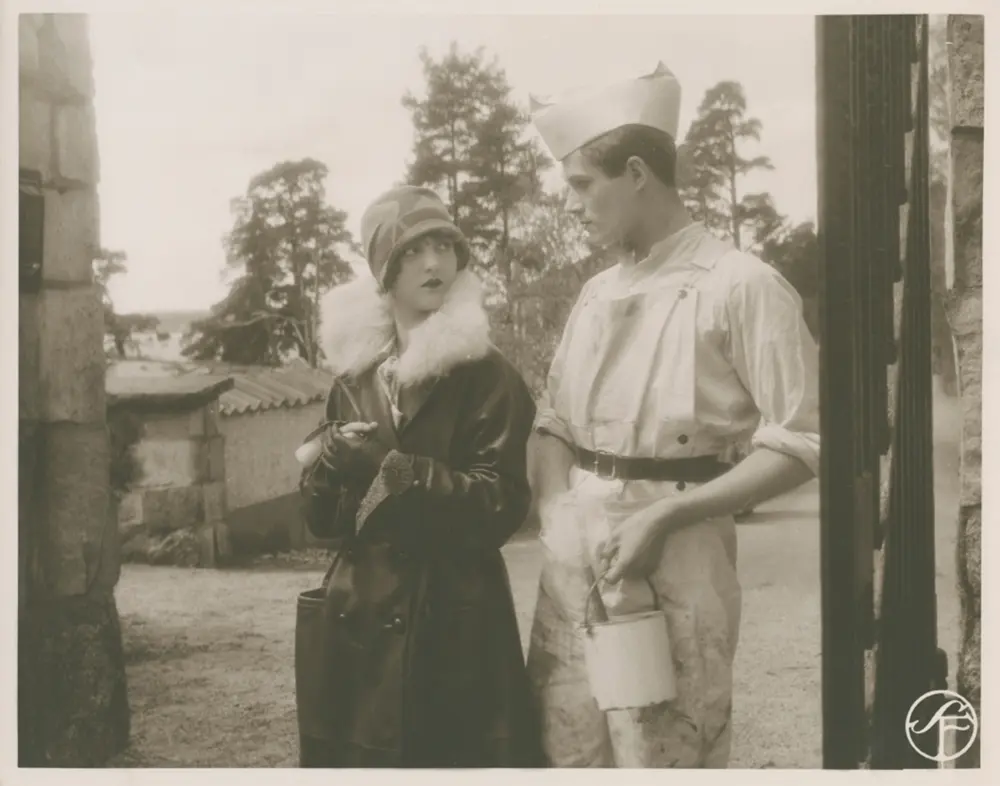
The horror here isn't in a monster lurking in a basement. The horror is in the frame itself. Henley uses sharp, high-contrast lighting during the party scenes that makes the 'rejuvenated' Merrill look less like a man and more like a waxwork figure that might melt if he stands too close to the fireplace. There is a specific, uncomfortable scene where Merrill tries to match the frantic dancing of the youth, and you can almost hear the phantom snapping of his surgically tightened ligaments. It’s a precursor to the plastic-surgery nightmares of the 21st century. Sinners in Silk is a tragedy about the death of the soul masquerading as a romance, and it remains one of the most cynical looks at the vanity of the human animal ever put to celluloid.
While Merrill was trying to cheat time, other films were focusing on the body as a site of inevitable, terrifying transformation. Maternity (1917) is a film that today’s sanitized history books often skip. It deals with a woman’s pathological fear of childbirth—a fear framed not as a lack of maternal instinct, but as a visceral horror of the body being hijacked. In an era where birth was frequently a death sentence, the film’s clinical gaze is brutal. The protagonist doesn't see a 'miracle'; she sees a parasite. This is the raw DNA of what would later become the 'alien pregnancy' subgenre.
The silent era didn't need CGI to show you the horror of the flesh; it used the audience’s own knowledge of the morgue and the operating table to do the heavy lifting.
The direction in Maternity is claustrophobic. The interiors feel small, the ceilings low. Every time the camera lingers on the protagonist’s face, we see the mounting panic of a person trapped inside a biological clock that is ticking toward an explosion. It is a far more honest, and therefore more terrifying, depiction of the female experience than the soft-focus 'social hygiene' films that were supposed to educate the masses. This is body horror at its most existential: the realization that your own anatomy is your greatest enemy.
Then we have the intersection of crime and physical identity. George D. Baker’s Heliotrope (1920) is a strange, jagged piece of work. It’s a story about a prison inmate who secures his release to save his daughter from a blackmail scheme. But look closer at how the film treats the protagonist’s physical presence. Prison hasn't just taken his time; it has altered his biology. He is a man who has been 're-formed' by the state, a human being who has become a social ghost. The film’s obsession with the 'clutches' of the unscrupulous mother and the 'blackmail scheme' is secondary to the visual language of physical decay.
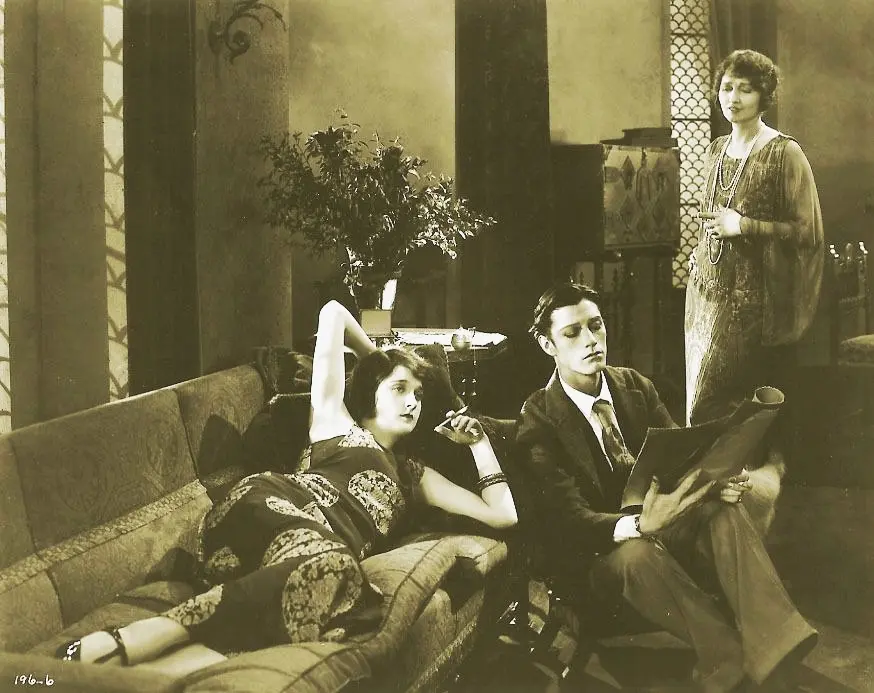
In one scene, the protagonist’s face is partially obscured by shadows, making him look like a half-finished sculpture. It echoes the later, more famous makeup of Lon Chaney, but without the theatricality. It’s a grounded, grimy look at how the environment can carve a new, unwanted identity into a man’s very skin. Heliotrope suggests that the body is just a ledger where our sins and our punishments are recorded in scars and wrinkles. It’s a bleak, uncompromising view that predates the nihilism of film noir by twenty years.
Across the Atlantic, German cinema was pushing the 'Glandular Gothic' into even stranger territory. Das Modell (1919) explores the obsession with physical perfection through the lens of art and anatomy. The silent era’s obsession with the 'perfect specimen' often veered into the territory of eugenics, and Das Modell doesn't shy away from the darker implications of the human form as an object to be curated, modified, and displayed. The model is not a person; she is a canvas. The film’s visual choices emphasize the stillness of the body, turning the living human into something approaching the 'synthetic souls' that would dominate later science fiction.
Compare this to Das Wunder der Madonna (1920). While Das Modell looks at the body through the cold eye of the artist, Das Wunder der Madonna looks at it through the lens of religious ecstasy and physical 'miracles.' Both films, however, share a fundamental belief that the flesh is a malleable substance that can be transformed by will, art, or divine intervention. It’s a short leap from the 'miracle' of the Madonna to the 'miracle' of the surgeon’s scalpel. These films are two sides of the same coin: one fears the transformation, while the other worships it.
Many of these films were marketed as 'social hygiene' or 'educational' features to bypass the censors of the day. But this was a transparent lie. The audience wasn't there for a lecture; they were there for the spectacle of the forbidden. They wanted to see the operating room. They wanted to see the aging roué’s skin tighten. They wanted to see the 'unseen enemies' of disease and decay. This hypocrisy is what makes silent-era medical thrillers so much more transgressive than modern horror. Today, we are honest about our bloodlust. In 1924, they had to pretend they were saving your soul while they showed you the destruction of your body.
Is Sinners in Silk a good movie? Not by conventional standards. It is melodramatic, paced like a funeral, and Menjou’s performance is often too subtle for its own good. But as a historical artifact of our biological anxiety, it is indispensable. It captures a moment when humanity first began to believe that the aging process was a disease that could be cured—a belief that has only grown more pathological in the age of Silicon Valley bio-hacking and injectable fillers.
We need to stop treating silent cinema as a museum piece. When you watch the frantic, desperate parties in these films, you aren't seeing 'vintage' entertainment. You are seeing a culture that was terrified of the mirror. The 'Glandular Gothic' reminds us that we have always been obsessed with our own meat. We have always been looking for a way to stay in the jazz party for just one more hour, even if it means letting a stranger with a knife rewrite our DNA. The silent era didn't invent body horror, but it gave it its first, most uncomfortable face-lift. We are still living in the shadow of that operating table, waiting for the anesthesia to wear off.