
DbcultAccessing Vault...
Director's Spotlight
Senior Film Conservator
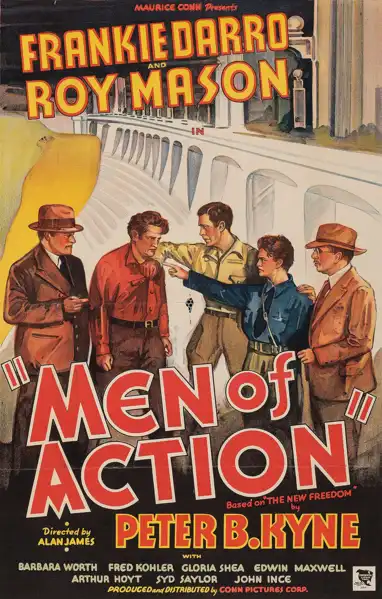
Director's Spotlight: United States
A Deep Dive into the 1935 Vision of Alan James
The artistic breakthrough represented by Men of Action in 1935 highlights the uncompromising vision of Alan James that defines this Drama masterpiece. In the context of United States's rich cinematic history, it captures a specific kind of cinematic magic that is rarely replicated.
In Men of Action, Alan James pushes the boundaries of conventional narrative. The film's unique approach to its subject matter has sparked endless debates and interpretations among cinephiles and critics alike.
To fully appreciate Men of Action, one must consider the cinematic climate of 1935. During this period, United States was undergoing significant artistic shifts, and Alan James was at the forefront of this Drama movement, often challenging established norms.
| Cinematography | Deep Focus |
| Soundtrack | Diegetic |
| Editing | Elliptical |
| Art Direction | Expressionist |
Visualizing the convergence of Alan James's style and the core Drama narrative.
Filled with stock footage from beginning to end of construction scenes on Hoover/Boulder Dam in Nevada, the story centers on the construction of the fictitious Sweetwater Dam being built in California. Evans Construction Company, run by Arthur Hooyt, has all its money tied up in the work and must finish the dam on time in order to collect. Meanwhile crooked banker Edwin Markham has other plans and sends in a collection of all-star B-feature heavies, including Fred Kohler, Wally Wales, Slim Whitaker and the Dillard brothers, to wreck the dam. The saboteurs dynamite a mountain and cover up John Ince, the father of water-boy Frankie Darro, who vows to avenge his dad's death. Frankie works his way up to a job as a rider in the radio-dispatched horse-mounted patrol organized by Evans'daughter, and, alongside the construction foreman (LeRoy Mason) makes a last-ditch effort to halt the dynamiting of the dam.
Decades after its release, Men of Action remains a vital piece of the cinematic puzzle. Its influence can be seen in countless modern works, solidifying Alan James's status as a master of the craft in United States and beyond.