
DbcultAccessing Vault...
Director's Spotlight
Senior Film Conservator
Director's Spotlight: United States
A Deep Dive into the 1915 Vision of Albert Capellani
As a cultural artifact of the 1915s, Camille provides the visionary mind of its creator, Albert Capellani. With its avant-garde structure and atmospheric tension, it redefined what audiences could expect from a cult experience.
In Camille, Albert Capellani pushes the boundaries of conventional narrative. The film's unique approach to its subject matter has sparked endless debates and interpretations among cinephiles and critics alike.
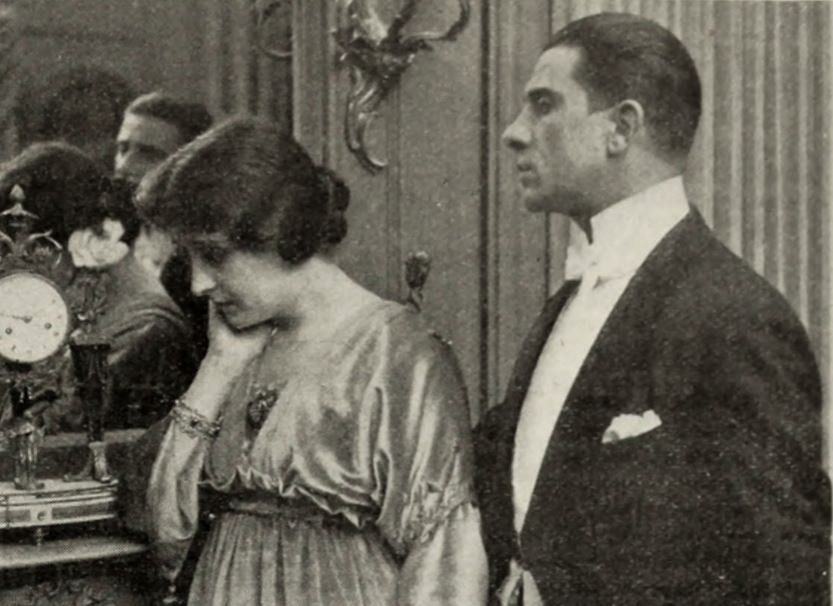
The visual language of Camille is defined by its use of shadows and framing, a hallmark of Albert Capellani's style. By utilizing a 1915-era palette, the film creates an immersive experience that perfectly complements its cult themes.
| Cinematography | Deep Focus |
| Soundtrack | Experimental |
| Editing | Elliptical |
| Art Direction | Expressionist |
Visualizing the convergence of Albert Capellani's style and the core cult narrative.
Marguerite Gautier, known as "Camille" on account of her fondness for camellias, is queen of the underworld. She has a wealthy lover in Count de Varville, whom, though he supplies her with plenty of money, she does not love in return. Her affections are set upon Armand, a young lawyer from the country. She suffers from her excesses, and the doctor warns her that she must change her mode of living, but she laughs at his advice. Armand's love for her renews her interest in life, and she goes with him and lives quietly in the country. But their happiness is short. Camille has had to sell her jewelry and horses in order to pay her debts, and, learning of this, Armand becomes suspicious. Armand's father, hearing of his son's attachment for Camille, demands that the woman should abandon Armand. For the sake of Armand's young sister, Cecile, Camille agrees to sacrifice herself and returns to her former life with Count de Varville. But Armand's love for Camille will not be suppressed. They meet again. He begs Camille to go away with him. She refuses. Armand accuses her of loving de Varville. The two men meet and quarrel. There is a duel, and Armand wounds de Varville. Armand learns that Camille always loved him and that her aim was to please the father by preserving Armand's family's good name. In the end Camille dies with a smile on her lips and expressing her love for Armand.
Decades after its release, Camille remains a vital piece of the cinematic puzzle. Its influence can be seen in countless modern works, solidifying Albert Capellani's status as a master of the craft in United States and beyond.