
DbcultAccessing Vault...
Director's Spotlight
Senior Film Conservator
Director's Spotlight: United States
A Deep Dive into the 1915 Vision of Albert Capellani
Deciphering the layers of The Face in the Moonlight (1915) reveals a monumental shift in cult filmmaking spearheaded by Albert Capellani. With its avant-garde structure and atmospheric tension, offering layers of thematic complexity that demand repeated viewing.
In The Face in the Moonlight, Albert Capellani pushes the boundaries of conventional narrative. The film's unique approach to its subject matter has sparked endless debates and interpretations among cinephiles and critics alike.
The visual language of The Face in the Moonlight is defined by its use of shadows and framing, a hallmark of Albert Capellani's style. By utilizing a 1915-era palette, the film creates an immersive experience that perfectly complements its cult themes.
| Cinematography | Static |
| Soundtrack | Diegetic |
| Editing | Elliptical |
| Art Direction | Expressionist |
Visualizing the convergence of Albert Capellani's style and the core cult narrative.
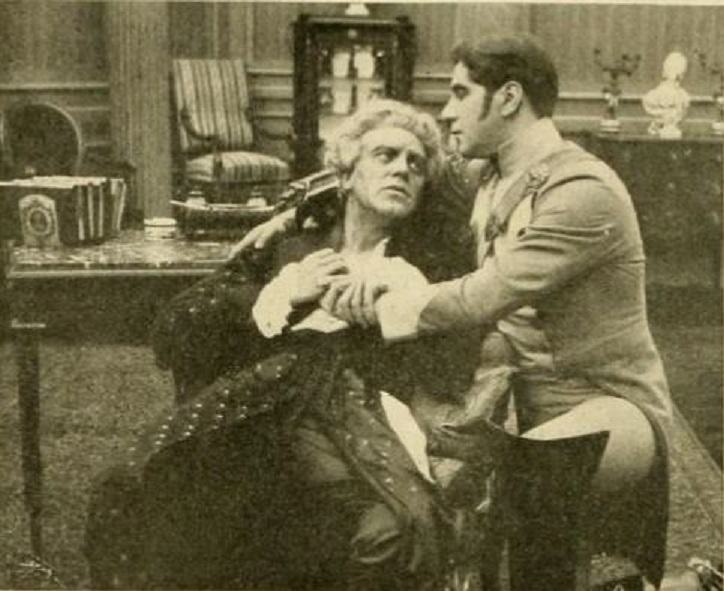
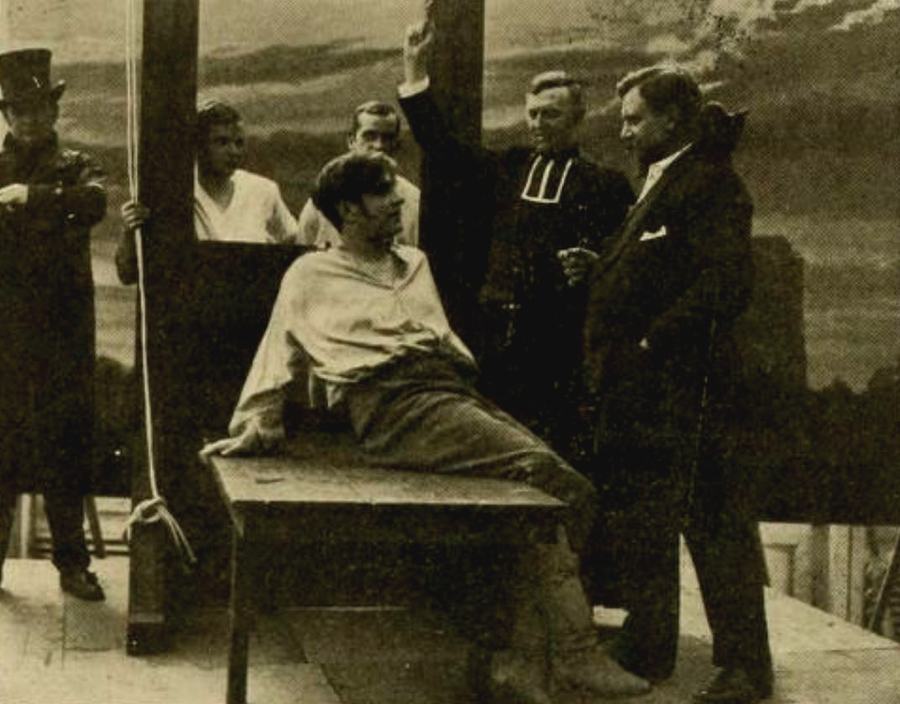
During the latter part of the reign of Louis XVIII, in France, Ambrose, an aristocrat, loves Jeanne Mailloche, a peasant girl, but is compelled to marry his cousin, Alice de Fontelles, to preserve their respective estates. Jeanne dies soon after, leaving a son, who is kidnapped and raised by a band of ruffians. Alice's son, receiving every advantage, is raised as an aristocrat. Twenty years later, at the time Napoleon was in exile, the young aristocrat, Victor by name, becomes a captain in the King's army. His half-brother, Rabat, son of Jeanne, has degenerated into a criminal, with a price on his head. Strangely enough, they look exactly alike, though neither knows of the whereabouts of the other. In fact, Rabat is ignorant of Victor's existence. The young Captain is told of Rabat's existence by his father when the latter is on his death bed. Victor is engaged to Lucille, the niece of Munier, who is Victor's father's secretary. Munier becomes associated with the conspirators, who are seeking to place Napoleon on the throne of France. In Munier's endeavor to steal the funds of the conspirators, he becomes associated with Rabat, the criminal. Victor is called to the army, and arranges with Lucile for their final adieu at the diligence office. Being unaware of the existence of Rabat. Lucile believes her lover guilty of the murder which she sees Rabat commit at the meeting place appointed by Victor. Rabat's face in the moonlight almost causes Lucile to abandon all faith in Victor. Victor is arrested for the murder, but before his execution, Lucile learns the truth concerning Rabat and forces her uncle, who has acknowledged his connection with the murder committed by Rabat, to intercede. This stays Victor's execution as a murderer, but as Napoleon has returned to power. Victor is arrested as a political prisoner, and ordered to be shot. Victor's release as the murderer has caused the arrest of Rabat for that offense. He is to be beheaded. Both Rabat and Victor's executions are scheduled for the same day. Lucile, knowing of her uncle's part in the actual murder, forces him to intercede with Napoleon, thus saving the life of Victor. Later, Victor meets Rabat, his half-brother, for the first time, and inspires him with the necessary confidence to face his death. Munier escapes from the country and with Napoleon's pardon for his political offenses, Victor and Lucile are happily married.
Decades after its release, The Face in the Moonlight remains a vital piece of the cinematic puzzle. Its influence can be seen in countless modern works, solidifying Albert Capellani's status as a master of the craft in United States and beyond.