
DbcultAccessing Vault...
Director's Spotlight
Senior Film Conservator
Director's Spotlight: United States
A Deep Dive into the 1921 Vision of Albert H. Kelley
Exploring the Comedy underpinnings of Home Stuff leads us to the stylistic boundaries pushed by Albert H. Kelley during the production. Through a lens of existential fatalism and Comedy tropes, it continues to spark endless debates among critics and cinephiles alike.
In Home Stuff, Albert H. Kelley pushes the boundaries of conventional narrative. The film's unique approach to its subject matter has sparked endless debates and interpretations among cinephiles and critics alike.
While deeply rooted in United States, Home Stuff has achieved a global reach, influencing directors from various backgrounds. Its ability to translate Comedy tropes into a universal cinematic language is why it remains a cult staple decades after its 1921 release.
| Cinematography | Noir-Inspired |
| Soundtrack | Synth-Heavy |
| Editing | Rhythmic |
| Art Direction | Naturalist |
Visualizing the convergence of Albert H. Kelley's style and the core Comedy narrative.
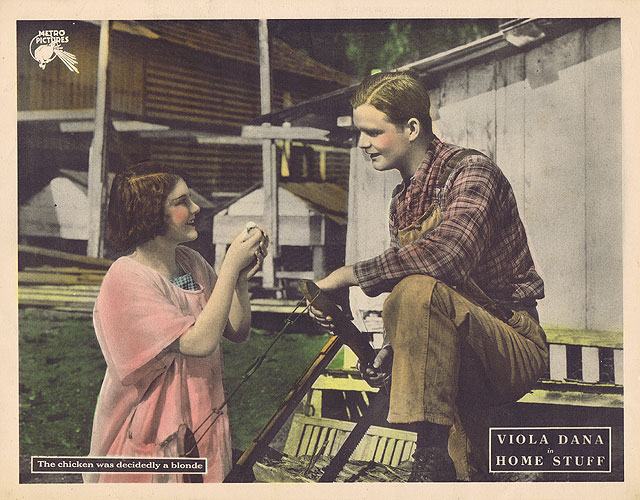
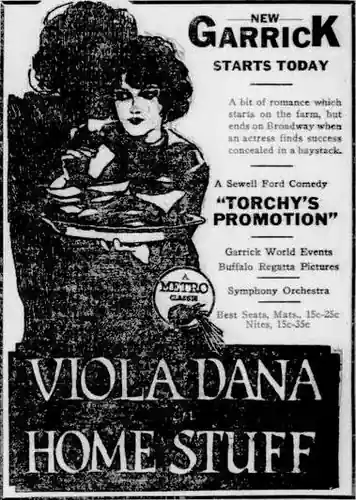
When Madge Joy loses her position with a cheap road show because her place is taken by a stage struck girl who can put up enough money to keep the troupe going, she misses the night train out of Buckeye Junction and crawls upon a load of hay and falls asleep. In the morning a handsome young farmer hitches his horses to the load, and Madge rolls off. She is rendered unconscious, and when she comes to she is in the Deep living room. "Ma" Deep takes to her at once, but the old farmer, a very religious man, looks at her sternly. Madge feels she had better keep still about being an actress. She says she is a runaway orphan, and becomes a member of the family. Robert Deep falls in love with her and tells her of his great secret. He has written a play in seventeen acts. Madge reads it and pronounces it the worst ever. She has already confided to him that she is an actress. Robert wants her to elope with him, but she puts him off. That night the girl who took her place with the show comes home. She is Susan Deep. Her father is furious when he finds out his daughter has been on the stage. Madge tells him that she is herself an actress, and that she will go away with Robert unless he makes up with his daughter. The farmer agrees, and Madge keeps her word. She goes to New York and becomes famous as a star. One day Robert comes to see her. He says he now has a play he knows is right. The two start to read it, but find each other more interesting.
Decades after its release, Home Stuff remains a vital piece of the cinematic puzzle. Its influence can be seen in countless modern works, solidifying Albert H. Kelley's status as a master of the craft in United States and beyond.