
DbcultAccessing Vault...
Director's Spotlight
Senior Film Conservator
Director's Spotlight: United States
A Deep Dive into the 1924 Vision of Albert Herman
The thematic gravity of Quit Kidding (1924) is rooted in the historical context that Albert Herman weaves into the Comedy fabric. Synthesizing the best elements of United States and international cinema, it highlights the importance of independent voices in United States.
In Quit Kidding, Albert Herman pushes the boundaries of conventional narrative. The film's unique approach to its subject matter has sparked endless debates and interpretations among cinephiles and critics alike.
The visual language of Quit Kidding is defined by its use of shadows and framing, a hallmark of Albert Herman's style. By utilizing a 1924-era palette, the film creates an immersive experience that perfectly complements its Comedy themes.
| Cinematography | High-Contrast |
| Soundtrack | Diegetic |
| Editing | Rhythmic |
| Art Direction | Naturalist |
Visualizing the convergence of Albert Herman's style and the core Comedy narrative.
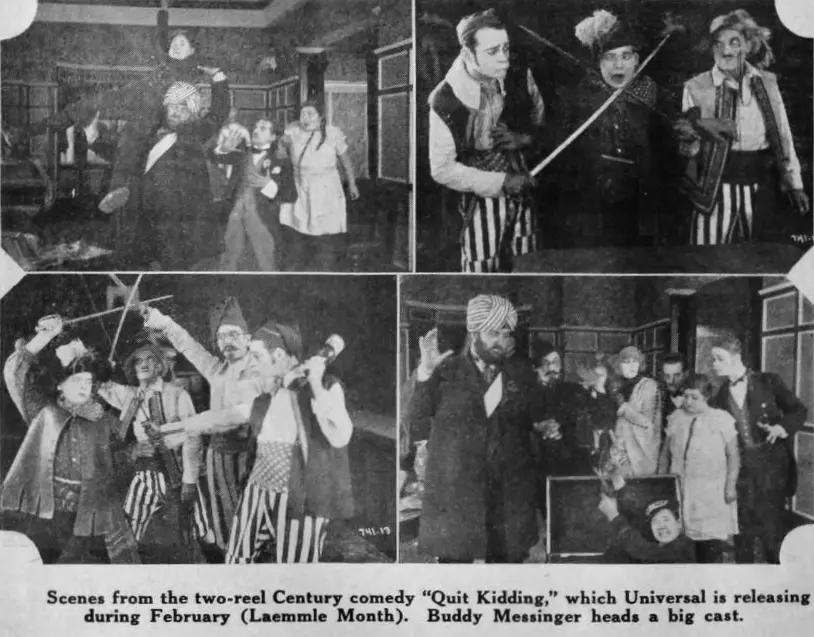
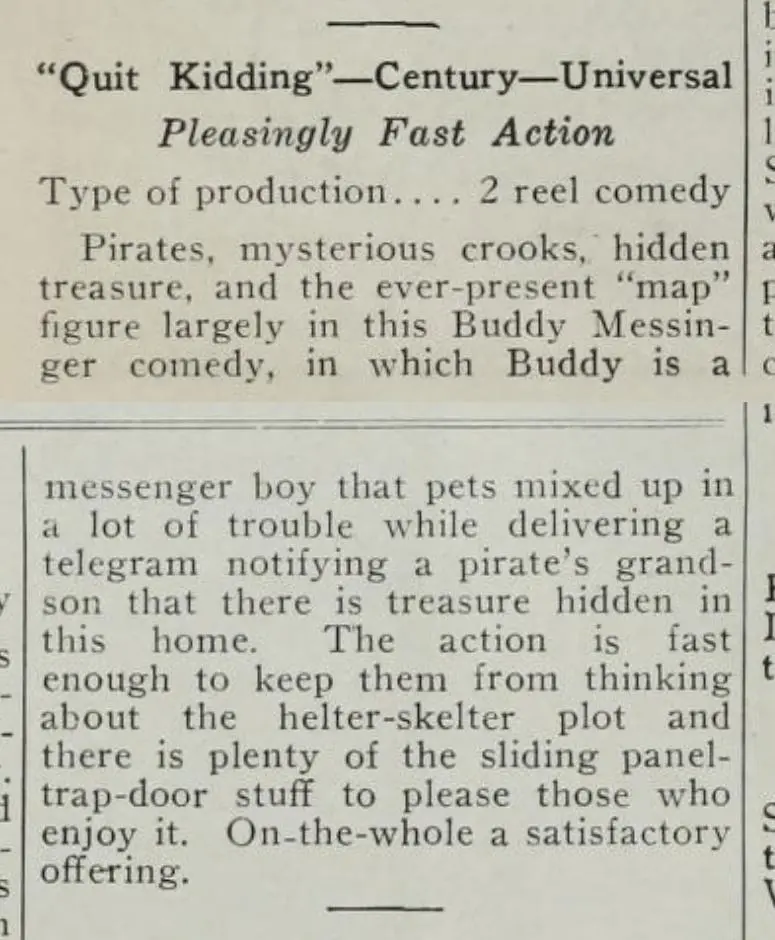
Buddy, a messenger boy, is sent to deliver a message to a famous Pirate's grandson. Buddy encounters two men of mystery on his errand. Unknown to him they exchange the message for one containing a warning that death will follow unless certain conditions are met by a certain time. On his arrival at the house things start to happen. The mysterious strangers appear, trap doors open and shut mysteriously, secret papers telling the whereabouts of a vast fortune concealed in the house are revealed and disappear through one spooky medium after another. Eventually Buddy rescues the papers and captures the intruders.
Decades after its release, Quit Kidding remains a vital piece of the cinematic puzzle. Its influence can be seen in countless modern works, solidifying Albert Herman's status as a master of the craft in United States and beyond.