
DbcultAccessing Vault...
Director's Spotlight
Senior Film Conservator
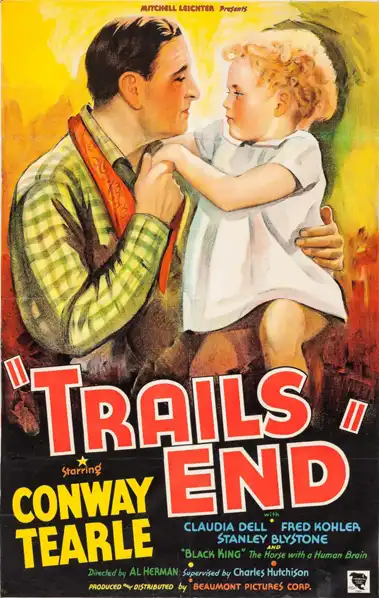
Director's Spotlight: United States
A Deep Dive into the 1935 Vision of Albert Herman
As we revisit the 1935 masterpiece Trails End, we are struck by the atmospheric immersion that Albert Herman achieves throughout Trails End. Exploring the nuances of the human condition with Western flair, it solidifies Albert Herman's reputation as a master of the craft.
In Trails End, Albert Herman pushes the boundaries of conventional narrative. The film's unique approach to its subject matter has sparked endless debates and interpretations among cinephiles and critics alike.
The visual language of Trails End is defined by its use of shadows and framing, a hallmark of Albert Herman's style. By utilizing a 1935-era palette, the film creates an immersive experience that perfectly complements its Western themes.
| Cinematography | High-Contrast |
| Soundtrack | Minimalist |
| Editing | Disjunctive |
| Art Direction | Baroque |
Visualizing the convergence of Albert Herman's style and the core Western narrative.
Jim Malloy, known far and wide as "Trigger" because of his fast draw and deadly shooting ability, is being released from prison after serving time on a framed-up charge, is met by his kid brother who brings him his horse Black King and his guns. The brother says he has joined an outlaw gang, but Jim whips him and sends him home to take care of their mother. Jim rides off and goes to the town where the man who framed him is and shoots him. He then joins a gang of bank robbers and is in town casing the job when the Bar X boys, who have the town terrorized, ride in and Jim shoots the foreman, but is shot in the back on his way out of the saloon. He is taken to the express office where he is treated by Janet, who runs the office since her husband was killed. Janet's daughter, Mary Jane, worships the slow-recovering Malloy, who is offered the job of sheriff to replace the one killed by the Bar X boys. This suits him as he will now be in charge of guarding the money he came to town to steal. But the love of a good woman, a small child and an ugly horse leads him to reformation, a project that also includes gunning down Wild Bill Holman.
Decades after its release, Trails End remains a vital piece of the cinematic puzzle. Its influence can be seen in countless modern works, solidifying Albert Herman's status as a master of the craft in United States and beyond.