
DbcultAccessing Vault...
Director's Spotlight
Senior Film Conservator
Director's Spotlight: United States
A Deep Dive into the 1919 Vision of Albert Parker
The evocative power of The Knickerbocker Buckaroo stems from the unique collaboration between the subversive storytelling techniques employed by Albert Parker in 1919. Synthesizing the best elements of United States and international cinema, it reminds us of the fragility and beauty of the 1919s.
In The Knickerbocker Buckaroo, Albert Parker pushes the boundaries of conventional narrative. The film's unique approach to its subject matter has sparked endless debates and interpretations among cinephiles and critics alike.
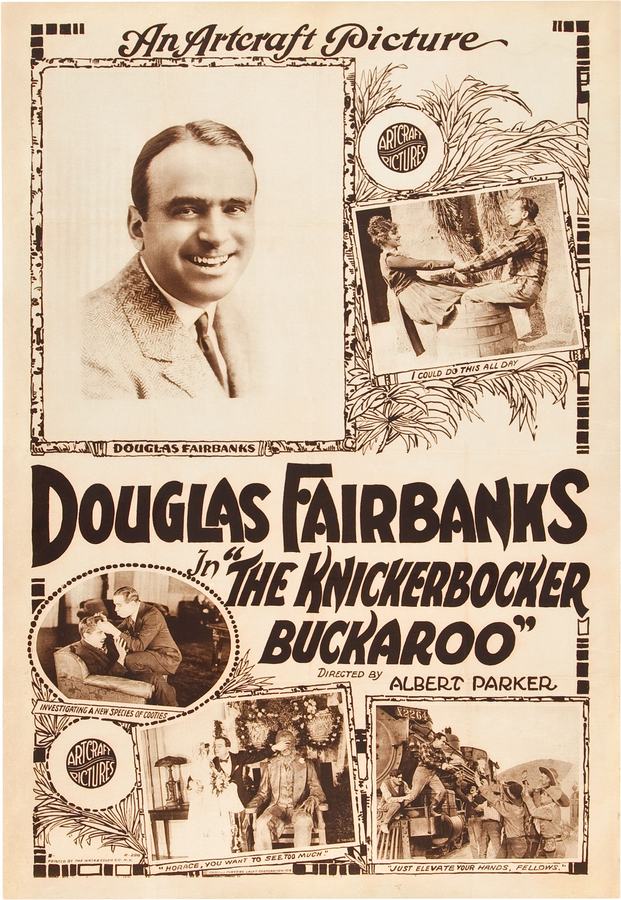
The visual language of The Knickerbocker Buckaroo is defined by its use of shadows and framing, a hallmark of Albert Parker's style. By utilizing a 1919-era palette, the film creates an immersive experience that perfectly complements its cult themes.
| Cinematography | Deep Focus |
| Soundtrack | Minimalist |
| Editing | Disjunctive |
| Art Direction | Baroque |
Visualizing the convergence of Albert Parker's style and the core cult narrative.
In a prologue, Douglas Fairbanks appears in a chef's outfit mixing a cake with action, mystery, adventure, romance and comedy, seasoned with pep and ginger. The finished cake is The Knickerbocker Buckaroo. The story begins as buoyant Teddy Drake, expelled from his exclusive Fifth Avenue club for playing practical jokes and leaping over furniture, decides to reform his selfish impulses. Anxious to do "something for somebody," he boards a train bound for the Southwest. After helping an old woman off the train, Teddy takes the wrong train and meets Manuel Lopez, a Mexican bandit, going to visit his sick mother. To hide Lopez from a crooked sheriff, and because Teddy left his shirt in the first train, Teddy exchanges clothes with him. At the border town of Sonora, the sheriff chases Teddy along the roofs until, seeing a girl in jail, Teddy lets himself be arrested. Learning that the girl, Rita Allison, has money hidden that the sheriff wants to steal, Teddy escapes. After Lopez saves him from a lynching, Teddy finds the money, holds off the sheriff's gang until a U.S. Marshal arrives, and then returns to New York with Rita, now his fiancée.
Decades after its release, The Knickerbocker Buckaroo remains a vital piece of the cinematic puzzle. Its influence can be seen in countless modern works, solidifying Albert Parker's status as a master of the craft in United States and beyond.