
DbcultAccessing Vault...
Cult Cinema
Senior Film Conservator
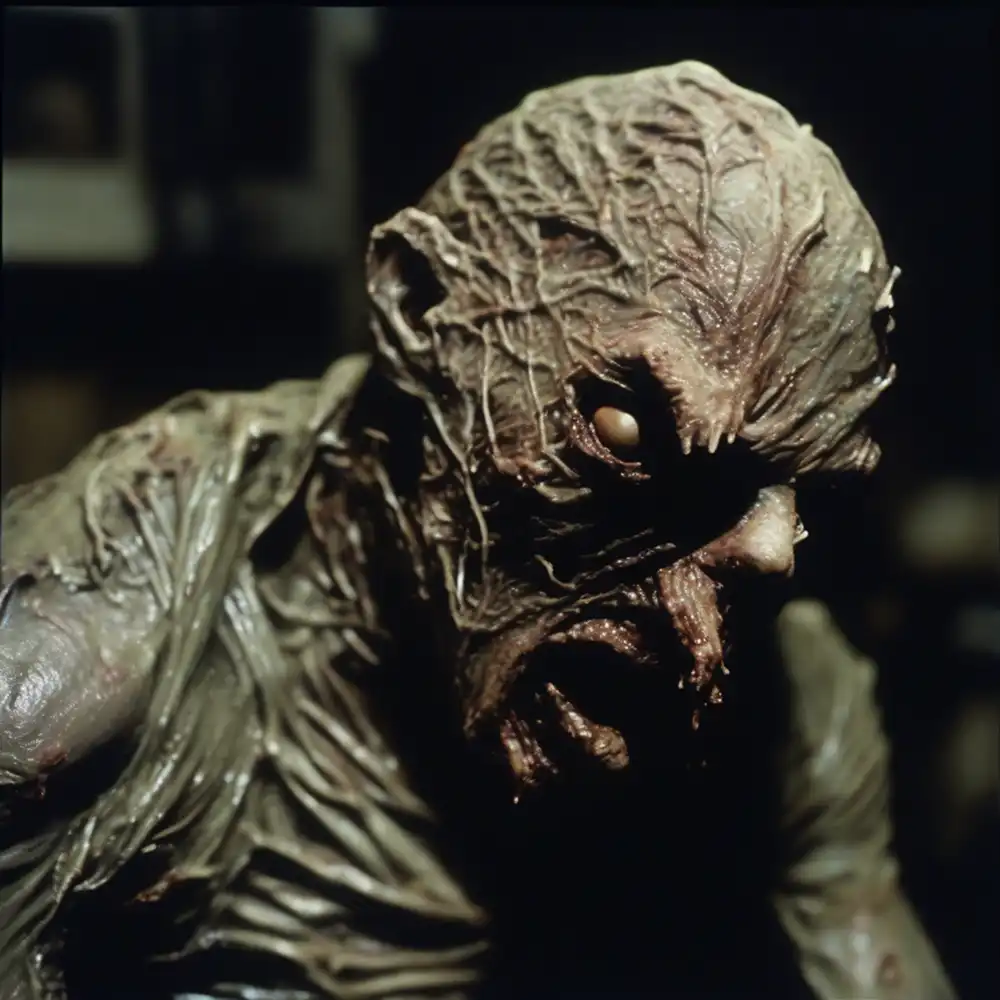
There’s a common fallacy among the uninitiated: that cult cinema's fascination with the physically grotesque, the disfigured, or the technologically altered body is purely about shock value. They miss the point. The most enduring images of cinematic imperfection – the rubbery prosthetics, the stop-motion jerks, the visibly crude animatronics – weren't just about gore. They were about a tactile, unsettling realism that Hollywood’s pursuit of seamless illusion rarely achieves. This wasn’t about tricking the eye; it was about assaulting the senses, forcing an uncomfortable acknowledgment of the body's fragility and its bizarre potential. The visible seams, I'd argue, were never a flaw. They were the key to its cult longevity, a testament to raw, unsettling artifice over polished, sterile fantasy.
No director exemplifies this 'gristle gospel' more profoundly than David Cronenberg, especially in his early work. Before digital effects smoothed out every wrinkle, Cronenberg forced us to confront the body as a mutable, vulnerable, often horrifying landscape. Take Rabid (1977). Marilyn Chambers’ character, Rose, develops a phallic-looking stinger in her armpit after experimental surgery. It’s a crude, rubbery prop, clearly not 'real,' yet its impact is devastating. The sheer audacity of its placement, the way it squelches and punctures, is made all the more visceral *because* you can almost see the latex. It's not trying to fool you; it's presenting you with an undeniable, deeply disturbing object lesson in biological perversion.
This wasn’t just a gimmick. It was a physical manifestation of his themes: the body as a battleground for disease, technology, and identity. In Videodrome (1983), the infamous chest slit where Max Renn inserts a VHS tape is another prime example. It’s a literal wound, a wet, fleshy aperture, achieved through remarkably simple yet effective practical effects. The visible artifice of the flesh parting, the squish of it, the way James Woods reacts not just to the pain but to the bizarre integration, makes it deeply unsettling. It's not a seamless visual trick; it's a visceral, unsettling idea made tangible, proving that the most unsettling horror often comes from the things we know aren't quite real, but feel sickeningly plausible.

The constraints of low-budget filmmaking in the 70s and 80s often birthed the most inventive and effective bodily horrors. Directors, lacking the millions for grand illusions, leaned into the tactile, the messy, the visibly constructed. Stuart Gordon's Re-Animator (1985) is a masterclass in this. The reanimated cat, twitching with visible wires, or Dr. Hill’s disembodied head, still gurgling commands, are not meant to be flawless. They are glorious, gruesome contraptions. The beauty is in their palpable *thing-ness*, their slimy, chunky reality. When Dr. Hill's decapitated head attempts to perform cunnilingus, the scene is simultaneously horrifying and absurd, its impact amplified by the tangible, slightly-too-stiff nature of the prop.
Similarly, Frank Henenlotter’s Basket Case (1982) gives us Belial, a deformed, angry twin who lives in a basket. Belial is a stop-motion puppet, clearly artificial, yet his jerky movements, his grotesque features, and the sheer audacity of the premise elevate him beyond mere monster. His imperfection is his character. We see the strings, we acknowledge the fabrication, and yet we accept his rage, his jealousy, his physical reality within the film’s twisted logic. This acceptance is where cult devotion begins: a willing suspension of disbelief not for seamless illusion, but for engaging with the sheer oddity of the vision.
It wasn't just horror. Science fiction also embraced this unsettling physicality. Paul Verhoeven's RoboCop (1987) is a prime example. The reveal of Alex Murphy’s mangled body after his brutal murder, before his transformation into a cyborg, is a gut-punch. The exposed brain, the missing limbs, the wires and tubes – it’s horrifying not just for what happened, but for the tangible, physical reality of his destruction. The crude, exposed cybernetics of RoboCop himself speak to a profound anxiety about man and machine. He's not sleek and futuristic; he's a clanking, half-human monstrosity, his metallic shell a constant reminder of the flesh it replaced. The visible screws, the rigid movements, these are not shortcomings; they are essential to his tragic character, emphasizing the loss of humanity inherent in his forced evolution.
John Carpenter’s The Thing (1982) pushes this to its absolute limit. Rob Bottin’s creature effects are still legendary, precisely because they are so tactile, so wet, so visibly a collection of practical elements. The creature's grotesque transformations – the head detaching and growing spider legs, the chest cavity opening to reveal gnashing teeth – are utterly convincing because they look like physical processes, squelching and tearing, not smooth digital renders. You feel the effort, the messy mechanics of the monstrosity. It's a ballet of latex, slime, and animatronics, each 'imperfect' twitch adding to the gut-churning reality of alien horror.
This brings us to a crucial point, one that I find many modern filmmakers, obsessed with photorealism, often miss: the obsession with perfect, seamless practical effects in modern horror often misses the point; the visible seams of 70s/80s prosthetics were their greatest strength, inviting a more visceral, uneasy engagement. When everything looks 'real' because it's a flawless digital construct, the impact often diminishes. There's a disconnect. We know it's not real, but the attempt to completely erase the artifice creates a kind of sterile perfection that distances us. Compare the raw, squelching body melds of Brian Yuzna's Society (1989) – an unparalleled spectacle of practical, body-warping effects – to almost any contemporary CGI monster. Society's 'shunting' scene, where bodies literally merge and distort into a fleshy, organic nightmare, is revolting precisely because you can almost feel the latex, the slime, the physical manipulation. It's gloriously, terrifyingly *handmade*.
Many contemporary directors, in their quest for 'realism' or digital perfection, have sanitized the true, unsettling power that comes from embracing the artificiality of cinematic bodily trauma. They chase a ghost of perfection that, ironically, often feels less real, less impactful than the rough, tangible horrors of yesteryear. The visceral reaction to a rubber creature, a clumsy animatronic, or a visibly sculpted prosthetic is different from the awe of a perfectly rendered digital effect. One demands a primal, gut-level response, inviting complicity with the illusion; the other often remains a spectacle, admired but not felt in the same unsettling way.
What does this say about cult cinema and its audiences? We are drawn to the imperfect, to the visibly constructed, because it speaks to a deeper truth about the nature of our own bodies and the world around us. It's a rejection of the pristine, the commercialized, the sanitized. It's a celebration of the raw effort, the sheer ingenuity, and the audacious vision required to bring such nightmares to tangible life, even if the illusion isn’t 100% flawless. From the slightly wobbly tentacle to the visibly seamed prosthetic, these physical imperfections ground the fantastical in a grimy, undeniable reality. They force us to engage, to lean in, to suspend our disbelief not because we are fooled, but because we are utterly, viscerally captivated by the audacious audacity of it all.
The future of cult cinema's body horror, I believe, lies not in striving for digital photo-perfection, but in rediscovering the tactile, the messy, the visibly handmade. It's in the gristle, the goo, the glorious, unsettling imperfection of a practical effect that we find our deepest, most enduring cinematic nightmares. These films don't just show us monsters; they show us how monsters are made, and in that honesty, there's an intimacy, a discomfort, that digital wizardry can rarely replicate. They are the true gospel of the grotesque, etched into celluloid with blood, sweat, and a whole lot of latex.