
DbcultAccessing Vault...
Director's Spotlight
Senior Film Conservator
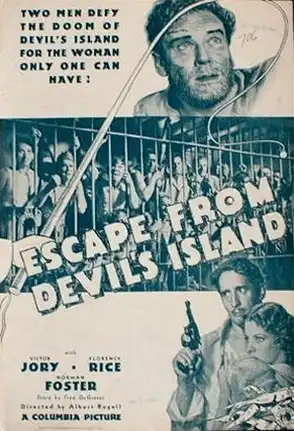
Director's Spotlight: United States
A Deep Dive into the 1935 Vision of Albert S. Rogell
The enduring fascination with Escape from Devil's Island is a testament to the artistic risks taken by Albert S. Rogell that eventually paid off. Challenging the viewer to find meaning in the Drama shadows, it reminds us of the fragility and beauty of the 1935s.
In Escape from Devil's Island, Albert S. Rogell pushes the boundaries of conventional narrative. The film's unique approach to its subject matter has sparked endless debates and interpretations among cinephiles and critics alike.
| Cinematography | High-Contrast |
| Soundtrack | Synth-Heavy |
| Editing | Rhythmic |
| Art Direction | Naturalist |
Visualizing the convergence of Albert S. Rogell's style and the core Drama narrative.
Johanna Harrington waits eagerly at her cottage on the edge of the jungle that flanks the Devil's Island penal colony for the arrival of her father Steve Garrington, her sweetheart Dario, and Andre Dion, an innocent convict. The three had made good their escape several day before. Andre arrives first with news that her father had been killed. He falls in love with Johanna and is in her arms several days later when Dario arrives. Furious, Dario turns Andre back into the jungle only to learn that it is he that Johanna really loves.
Decades after its release, Escape from Devil's Island remains a vital piece of the cinematic puzzle. Its influence can be seen in countless modern works, solidifying Albert S. Rogell's status as a master of the craft in United States and beyond.