
DbcultAccessing Vault...
Director's Spotlight
Senior Film Conservator
Director's Spotlight: United States
A Deep Dive into the 1924 Vision of Albert S. Rogell
As a cultural artifact of the 1924s, Galloping Gallagher provides the global recognition that Albert S. Rogell garnered after the release of Galloping Gallagher. Elevating the source material through Albert S. Rogell's unique vision, it solidifies Albert S. Rogell's reputation as a master of the craft.
In Galloping Gallagher, Albert S. Rogell pushes the boundaries of conventional narrative. The film's unique approach to its subject matter has sparked endless debates and interpretations among cinephiles and critics alike.
| Cinematography | Noir-Inspired |
| Soundtrack | Experimental |
| Editing | Elliptical |
| Art Direction | Expressionist |
Visualizing the convergence of Albert S. Rogell's style and the core Drama narrative.
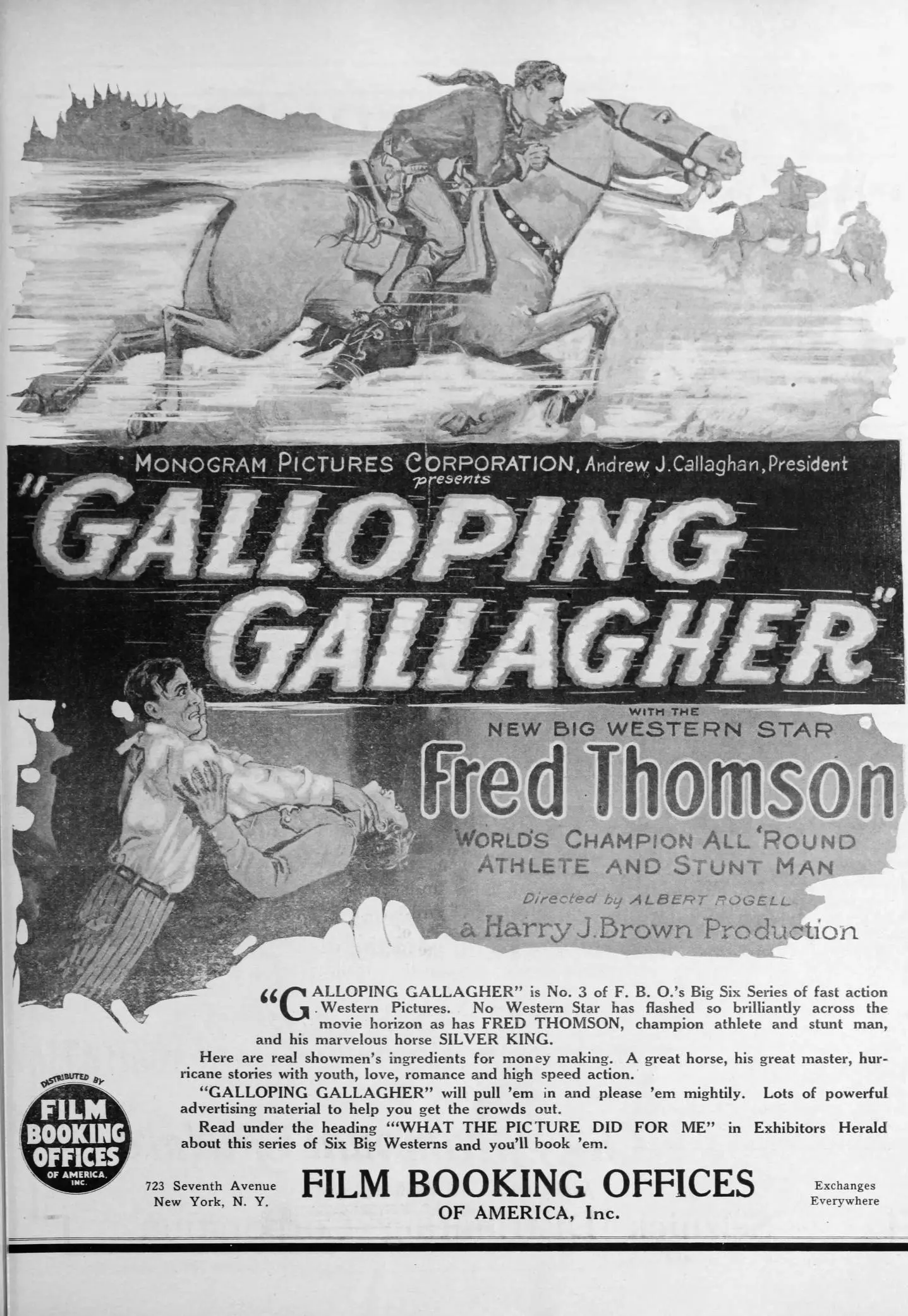
Adventurer Bill Gallagher comes into a town overrun by bandits, is elected sheriff by the townspeople, and succeeds in capturing the culprits with the aid of his horse, Silver King. He rescues Miss Grey, a lady minister, from bank president "Lily Finger" Burke, leader of the gang, formerly a barroom bouncer, and effects a romance with her.
Decades after its release, Galloping Gallagher remains a vital piece of the cinematic puzzle. Its influence can be seen in countless modern works, solidifying Albert S. Rogell's status as a master of the craft in United States and beyond.