
DbcultAccessing Vault...
Director's Spotlight
Senior Film Conservator
Director's Spotlight: United States
A Deep Dive into the 1936 Vision of Albert S. Rogell
The artistic breakthrough represented by Roaming Lady in 1936 highlights the uncompromising vision of Albert S. Rogell that defines this Drama masterpiece. In the context of United States's rich cinematic history, it captures a specific kind of cinematic magic that is rarely replicated.
In Roaming Lady, Albert S. Rogell pushes the boundaries of conventional narrative. The film's unique approach to its subject matter has sparked endless debates and interpretations among cinephiles and critics alike.
While deeply rooted in United States, Roaming Lady has achieved a global reach, influencing directors from various backgrounds. Its ability to translate Drama tropes into a universal cinematic language is why it remains a cult staple decades after its 1936 release.
| Cinematography | Deep Focus |
| Soundtrack | Minimalist |
| Editing | Disjunctive |
| Art Direction | Baroque |
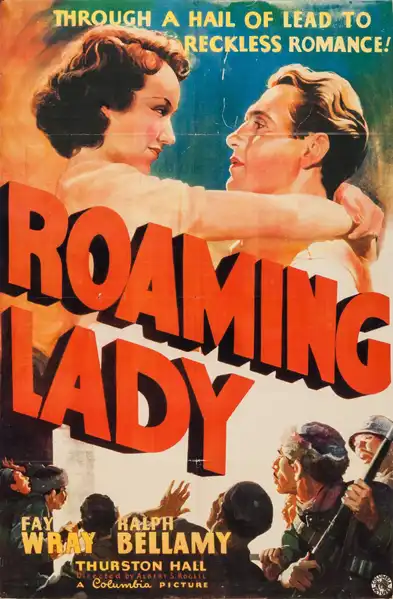
Visualizing the convergence of Albert S. Rogell's style and the core Drama narrative.
Joyce Reid (Fay Wray), a wealthy young debutante, stows away on a cargo ship to China, carrying as passengers her dashing aviator sweetheart, Dan Bailey (Ralph Bellamy) and and her munitions-producing father, E. J. Reid (Thurston Hall) and an assortment of the usual south-seas characters along with some orientals with varying agendas...and some plot-lines straight out of "Terry and the Pirates." The cargo included a shipment of bombs and machine guns. She soon finds herself being held hostage by some wily orientals who will free her only if dashing Dan agrees to pilot a bombing plane for some Chinese bandits.
Decades after its release, Roaming Lady remains a vital piece of the cinematic puzzle. Its influence can be seen in countless modern works, solidifying Albert S. Rogell's status as a master of the craft in United States and beyond.