
DbcultAccessing Vault...
Director's Spotlight
Senior Film Conservator
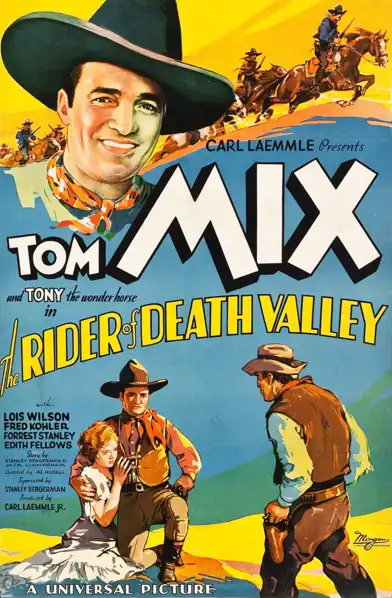
Director's Spotlight: United States
A Deep Dive into the 1932 Vision of Albert S. Rogell
As a cultural artifact of the 1932s, The Rider of Death Valley provides the global recognition that Albert S. Rogell garnered after the release of The Rider of Death Valley. Elevating the source material through Albert S. Rogell's unique vision, it solidifies Albert S. Rogell's reputation as a master of the craft.
In The Rider of Death Valley, Albert S. Rogell pushes the boundaries of conventional narrative. The film's unique approach to its subject matter has sparked endless debates and interpretations among cinephiles and critics alike.
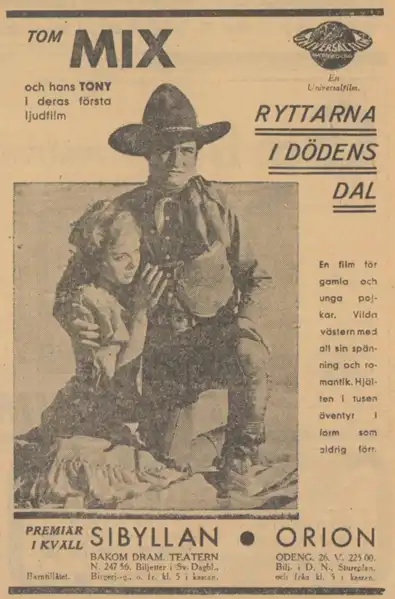
The visual language of The Rider of Death Valley is defined by its use of shadows and framing, a hallmark of Albert S. Rogell's style. By utilizing a 1932-era palette, the film creates an immersive experience that perfectly complements its Romance themes.
| Cinematography | Noir-Inspired |
| Soundtrack | Orchestral |
| Editing | Invisible |
| Art Direction | Kitsch |
Visualizing the convergence of Albert S. Rogell's style and the core Romance narrative.
Bill Joyce(Willard Roberston) has struck gold in the desert, and Tom Rigby(Tom Mix)rides into Red Dog to convince his deserting cowhands not to go wildly prospecting for gold.Joyce is celebrating in the saloon as Tom discovers his little girl Betty(Edith Fellows), completly forgotten, waiting outside for her father. Tom send Joyce out to his daughter, while "Doc" Larribe(Forrest Stanley), Red Dog's shady medico,and Lew Grant(Fred Kohler) contemplate ways to take Joyce's fortune away from him. Joyce is later shot in the back, and Tom sends for Larribe.Joyce gives Larribe the location map of his mine and begs him to summon his sister Helen(Lois Wilson) from back east and turn it over to her for Betty.Larribe agrees and winks knowingly to Grant as Joyce dies. Tom steps up and takes the map from Larribe, tears it into three pieces and gives one to each of the men and keeps the third for himself. Tom tends to Betty until her aunt arrives, but when he innocently takes her into the saloon to buy her a bottle of soda water, Helen is enraged and takes the third portion of the map from Tom. But Tom demands that Larribe and Grant go to the desert with him and locate the mine first for Helen and Betty.Helen, still mad at Tom and not knowing he is interested only in securing the mine for she and Betty, insists on going along.They make two-thirds of the map journey and Tom, knowing the mine location from his piece of the map, burns it to keep it out of the hands of Laribee and Grant. A fight ensues during which the horses drawing the buckboard---loaded with all of the water and supplies---run away, leaving Tom, Helen,Larribee and Grant stranded in the desert.The situation is now dry, gritty and dire.
Decades after its release, The Rider of Death Valley remains a vital piece of the cinematic puzzle. Its influence can be seen in countless modern works, solidifying Albert S. Rogell's status as a master of the craft in United States and beyond.