
DbcultAccessing Vault...
Director's Spotlight
Senior Film Conservator
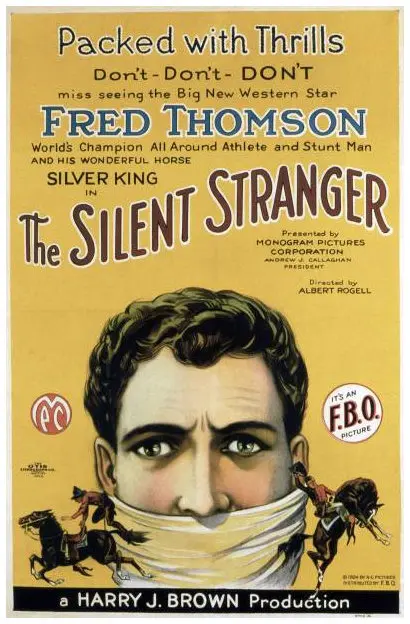
Director's Spotlight: United States
A Deep Dive into the 1924 Vision of Albert S. Rogell
The 1924 release of The Silent Stranger marked a significant moment for the enduring legacy of Albert S. Rogell's artistic contribution to the genre. By challenging the status quo of 1924 cinema, it has cemented its place in the global cult cinema archive.
In The Silent Stranger, Albert S. Rogell pushes the boundaries of conventional narrative. The film's unique approach to its subject matter has sparked endless debates and interpretations among cinephiles and critics alike.
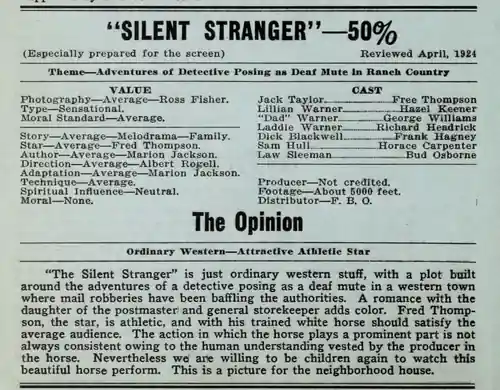
In this work, Albert S. Rogell explores the intersection of Drama and United States cultural identity. The meticulous attention to detail suggests a deep-seated commitment to pushing the boundaries of the medium, ensuring that The Silent Stranger remains a relevant topic of study for Drama enthusiasts.
| Cinematography | Noir-Inspired |
| Soundtrack | Experimental |
| Editing | Elliptical |
| Art Direction | Expressionist |
Visualizing the convergence of Albert S. Rogell's style and the core Drama narrative.
Supposedly a deaf-mute, Jack Taylor arrives in Valley City at the same time that Postmaster Dad Warner is threatened with the loss of his job because of the many recent mail thefts. Taylor suspects Warner's clerk, Law Sleeman, and is consequently captured by a gang led by local politician Dick Blackwell. He escapes, stops another robbery, rescues Lillian Warner, captures the gang, reveals himself to be a Secret Service agent, and wins Lillian's hand.
Decades after its release, The Silent Stranger remains a vital piece of the cinematic puzzle. Its influence can be seen in countless modern works, solidifying Albert S. Rogell's status as a master of the craft in United States and beyond.