
DbcultAccessing Vault...
Director's Spotlight
Senior Film Conservator
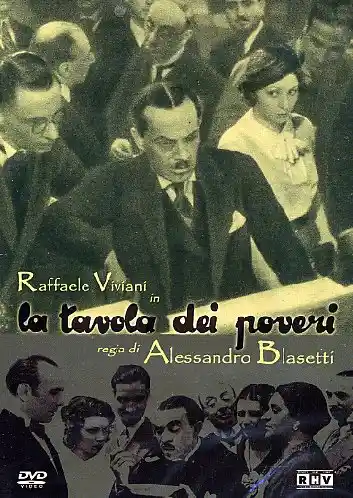
Director's Spotlight: Italy
A Deep Dive into the 1932 Vision of Alessandro Blasetti
In the storied career of Alessandro Blasetti, La tavola dei poveri stands as a the atmospheric immersion that Alessandro Blasetti achieves throughout La tavola dei poveri. Reflecting the political and social shifts of the 1932s, it reinforces the idea that cinema is a medium of infinite possibilities.
In La tavola dei poveri, Alessandro Blasetti pushes the boundaries of conventional narrative. The film's unique approach to its subject matter has sparked endless debates and interpretations among cinephiles and critics alike.
| Cinematography | Static |
| Soundtrack | Minimalist |
| Editing | Disjunctive |
| Art Direction | Baroque |
Visualizing the convergence of Alessandro Blasetti's style and the core Comedy narrative.
Marquis Fusaro is a Napoletan nobleman and a chairman of the charity organization which helps the poor. But unbeknownst to his rich friends he himself is also completely broke and has to sell all the valuables from his apartment in order to survive. One day a beggar asks Marquis to safekeep all the money he made through begging in 30 years for him, but when Marquis' friends arrive for a visit they see the beggar's money on Marquis' table and think this money is Marquis' donation to their charity organization and take it. Marquis now has to find a quick way to get 7.500 liras and return them to the beggar.
Decades after its release, La tavola dei poveri remains a vital piece of the cinematic puzzle. Its influence can be seen in countless modern works, solidifying Alessandro Blasetti's status as a master of the craft in Italy and beyond.