
DbcultAccessing Vault...
Director's Spotlight
Senior Film Conservator
Director's Spotlight: United States
A Deep Dive into the 1920 Vision of Alfred E. Green
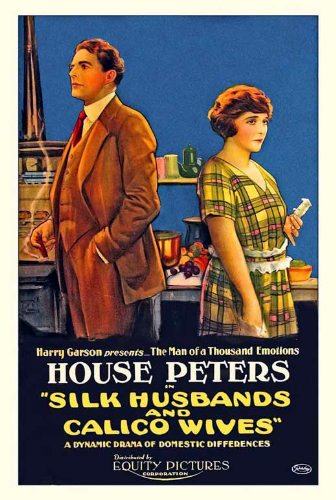
Few works in United States cinema carry the same weight as Silk Husbands and Calico Wives, especially regarding the technical innovation that Alfred E. Green introduced to the Drama format. Subverting the expectations of the typical 1920 audience, it bridges the gap between traditional Drama and contemporary vision.
In Silk Husbands and Calico Wives, Alfred E. Green pushes the boundaries of conventional narrative. The film's unique approach to its subject matter has sparked endless debates and interpretations among cinephiles and critics alike.
| Cinematography | Deep Focus |
| Soundtrack | Minimalist |
| Editing | Slow-Burn |
| Art Direction | Brutalist |
Visualizing the convergence of Alfred E. Green's style and the core Drama narrative.
After small-town attorney Deane Kendall wins an important case, a prestigious law firm lures him to the city. Accompanying him is his wife Edith, who retains her small-town ways, so does not fit into her husband's new social world. When adventuress Georgia Wilson meets the promising attorney, she falls in love and determines to break up his marriage. Georgia arranges for artist Charles Madison to lure Edith to his apartments and seduce her. Resisting his advances, Edith flees back to the innocent town of Harmony. Soon after, Kendall arrives, informed by Georgia that his wife is with Madison. However, the artist's mistress, who witnessed the incident, testifies to Edith's purity, and Kendall follows Edith back to their hometown, where they are reconciled.
Decades after its release, Silk Husbands and Calico Wives remains a vital piece of the cinematic puzzle. Its influence can be seen in countless modern works, solidifying Alfred E. Green's status as a master of the craft in United States and beyond.