
DbcultAccessing Vault...
Director's Spotlight
Senior Film Conservator

Director's Spotlight: United States
A Deep Dive into the 1923 Vision of Alfred J. Goulding
The enduring fascination with Carmen, Jr. is a testament to the artistic risks taken by Alfred J. Goulding that eventually paid off. Challenging the viewer to find meaning in the Short shadows, it reminds us of the fragility and beauty of the 1923s.
In Carmen, Jr., Alfred J. Goulding pushes the boundaries of conventional narrative. The film's unique approach to its subject matter has sparked endless debates and interpretations among cinephiles and critics alike.
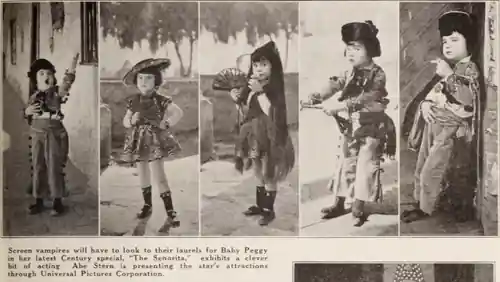
To fully appreciate Carmen, Jr., one must consider the cinematic climate of 1923. During this period, United States was undergoing significant artistic shifts, and Alfred J. Goulding was at the forefront of this Short movement, often challenging established norms.
| Cinematography | Deep Focus |
| Soundtrack | Orchestral |
| Editing | Invisible |
| Art Direction | Kitsch |
Visualizing the convergence of Alfred J. Goulding's style and the core Short narrative.
A spoof of Bizet's Carmen. Somewhere in Spain, a young girl gets the better of the neighborhood boys, then, dressed as a fashionable senorita, visits a club where a boy is demonstrating a tango. She joins him to the enjoyment of the spectators. In act 2, she's dressed as a matador and presents herself at the arena to General della Bambinodi Carradavadoves, a man who knows bulls. She fights one and finds that her sword isn't strong enough to stab him. In the excitement, the General falls from the stands, and he and the child must face the brute. Is there an escape?
Decades after its release, Carmen, Jr. remains a vital piece of the cinematic puzzle. Its influence can be seen in countless modern works, solidifying Alfred J. Goulding's status as a master of the craft in United States and beyond.