
DbcultAccessing Vault...
Director's Spotlight
Senior Film Conservator
Director's Spotlight: United States
A Deep Dive into the 1924 Vision of Alfred J. Goulding
As we revisit the 1924 masterpiece Jack and the Beanstalk, we are struck by the meticulous attention to detail that Alfred J. Goulding applied to every frame. Anchored by a narrative that is both personal and universal, it bridges the gap between traditional Short and contemporary vision.
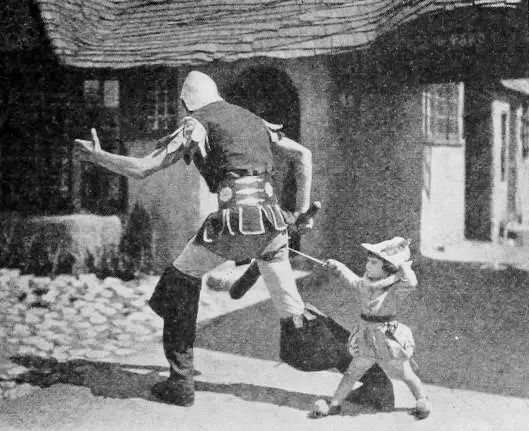
In Jack and the Beanstalk, Alfred J. Goulding pushes the boundaries of conventional narrative. The film's unique approach to its subject matter has sparked endless debates and interpretations among cinephiles and critics alike.
| Cinematography | Noir-Inspired |
| Soundtrack | Synth-Heavy |
| Editing | Rhythmic |
| Art Direction | Naturalist |
Visualizing the convergence of Alfred J. Goulding's style and the core Short narrative.
Little Jack is sent to the market by his mother to sell the old cow and while there turns it over to an unscrupulous person for a bag of beans. When Little Jack arrives home the mother, upon seeing what Jack has received for the old family cow, throws the beans into the back yard. The next morning a big tree, reaching into the skies, has grown where the beans were thrown. Little Jack climbs this tree and reaches the kingdom of the terrible giant. After a series of very dangerous adventures, Little Jack kills the giant.
Decades after its release, Jack and the Beanstalk remains a vital piece of the cinematic puzzle. Its influence can be seen in countless modern works, solidifying Alfred J. Goulding's status as a master of the craft in United States and beyond.