
Cult Cinema
The Unwilling Prophet: How Silent Cinema’s Accidental Outcasts Forged the Cult of the Individual
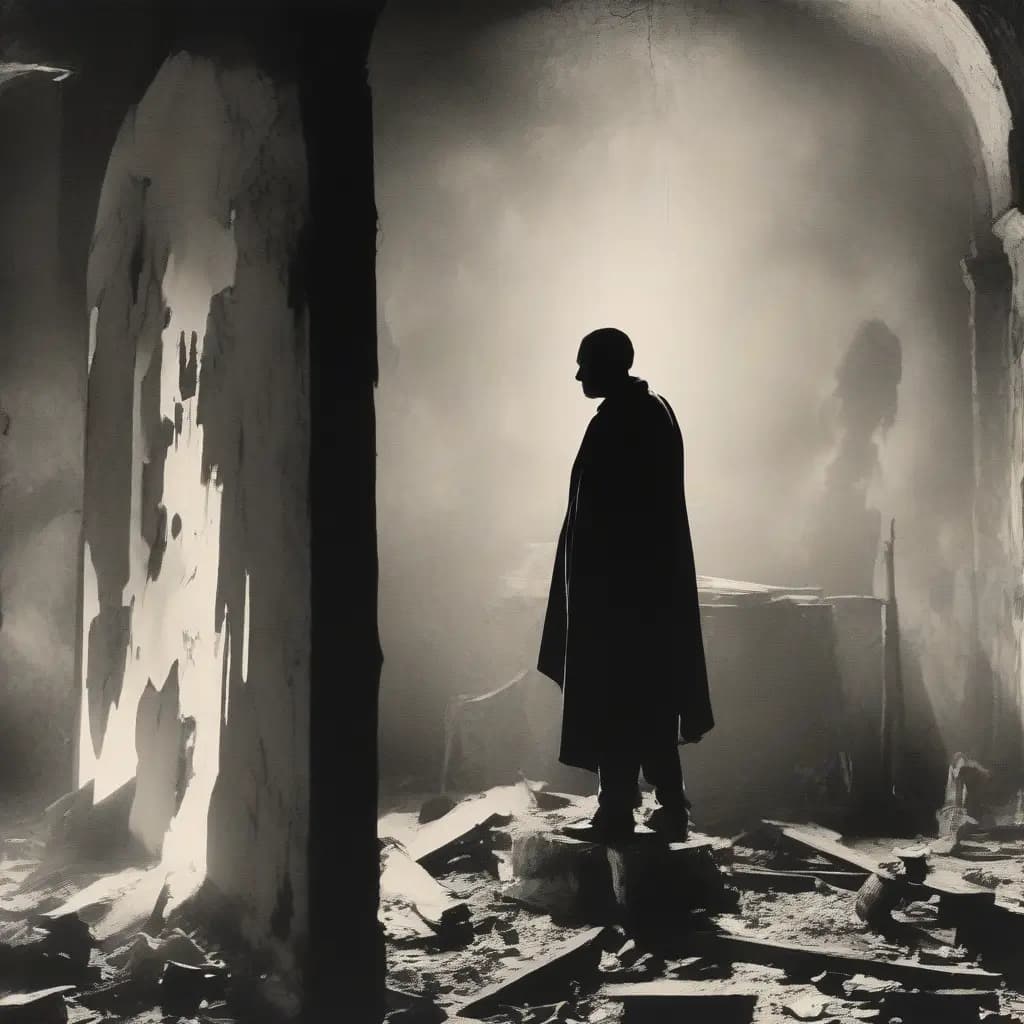
“Before the midnight screenings and fervent fan bases, the very DNA of cult cinema was being quietly woven in the silent era, not by deliberate provocateurs, but by characters thrust into isolation and defiance by the rigid morality of their times. This is the story of how these accidental outcasts b…”
Cult cinema, at its core, has always been a sanctuary for the misfit, the misunderstood, and the fiercely individual. It’s the realm where society’s discarded narratives find fervent devotion, where the strange and the sublime intertwine to create a communion of shared outsider status. We often trace its lineage to the transgressive explosions of the mid-20th century—the midnight movies, the exploitation flicks, the counter-culture manifestos—but to truly understand the beating heart of this phenomenon, we must journey further back. We must peel back the nitrate layers of the silent era, not to find pre-meditated rebellion, but to unearth a profound irony: the earliest architects of cult devotion were often not rebels by design, but accidental outcasts, characters forced into the margins by the unforgiving moral landscape of their time. It’s in their unwilling defiance, their poignant isolation, that the first flickering seeds of the cult of the individual were sown, laying a blueprint for every cinematic iconoclast to follow.

The Invisible Walls of Early Morality: A Society of Strictures
The early 20th century, particularly the pre-Code era, was a period of immense social upheaval disguised by a veneer of rigid moral codes. The nascent medium of cinema, while thrillingly modern, often found itself grappling with narratives that both reflected and reinforced these societal strictures. Films of the era frequently portrayed a world where deviation from the norm—be it through unconventional love, social class transgression, or sheer bad luck—led to swift and often brutal ostracization. This wasn't necessarily a deliberate attempt to create sympathetic rebels; rather, it was a reflection of a society grappling with its own anxieties, projecting them onto characters who dared to exist outside the prescribed lines. The very act of portraying such characters, even in a cautionary light, inadvertently created figures of profound human interest, whose struggles against an unyielding world resonated deeply with audiences quietly questioning those same norms. These were not the bombastic revolutionaries of later decades, but rather individuals whose quiet suffering or determined resilience against an oppressive system spoke volumes without a single intertitle proclaiming their heroism. Their isolation, their struggle for autonomy, became a mirror for anyone who felt themselves to be an outsider in a world demanding conformity.

Orphans, Waifs, and the Burden of Circumstance
Many of the silent era's most compelling 'outsiders' were not born into rebellion but thrust into it by the cruel hand of circumstance. Orphans, abandoned youths, and those trapped by poverty became unwitting symbols of defiance simply by striving for a better life. Consider films like Audrey, where the titular orphan, initially under the care of a wealthy guardian, is summarily handed over to an unscrupulous couple who usurp her inheritance and reduce her to a mere slavey. Audrey’s journey isn't one of grand social protest; it's a desperate, personal fight for dignity and survival. Her very existence, marginalized and exploited, makes her an outsider. The audience’s empathy for her plight, her quiet determination against overwhelming odds, transforms her into a proto-cult figure – someone whose struggle against an unjust system, however small and personal, resonates with a universal longing for freedom. Her resilience, without the benefit of a voice, spoke to the inherent strength of the individual spirit.

The tragedy of the silent outcast often lay not in their deliberate transgression, but in their mere existence outside the comfortable confines of privilege and societal acceptance. Their fight for a place in the world was, in itself, an act of subversion.
Similarly, The Rise of Jenny Cushing chronicles a resourceful young girl's struggle to escape the suffocating grip of slum life. Jenny is an outsider from birth, defined by her environment, yet her relentless ambition and refusal to be confined by her origins mark her as extraordinary. Her journey is a testament to individual agency, carving a path where none was seemingly allowed. And then there's Dixie in The Forgotten Woman, a waif from the Southern waterfronts, ensnared in a web of exploitation and forced marriage. Her constant yearning for escape, her repeated attempts to find a semblance of autonomy, paint a portrait of an individual battling a predetermined, brutal fate. These characters, through their sheer will to survive and transcend their circumstances, become accidental apostles of individualism, their silent suffering and triumphs speaking volumes to those who felt similarly trapped by life's arbitrary cruelties.
The Maverick Heart: Love, Defiance, and Self-Imposed Exile
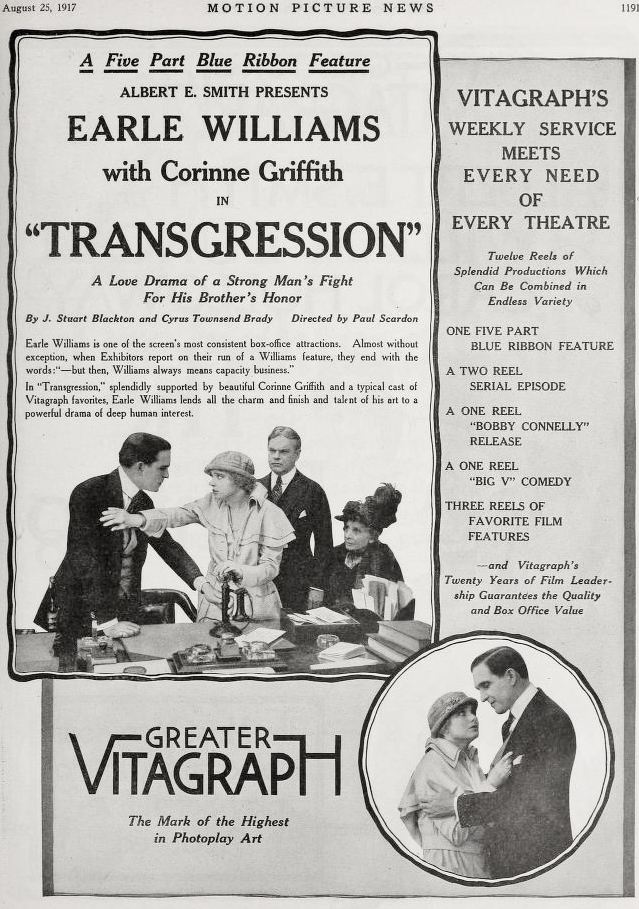
Beyond the victims of circumstance, the silent screen also introduced us to characters whose passions or choices, while not criminal, were deemed unacceptable by societal standards, forcing them into a form of self-imposed or externally-imposed exile. These individuals, driven by love, honor, or a simple refusal to conform, became outsiders not by accident of birth, but by the dictates of their own hearts. The Road Through the Dark provides a poignant example with Gabrielle Jardee, a daughter of a conservative Parisian family, whose love for an American, John Morgan, is met with parental disapproval. Her banishment to a small village isn't a life sentence, but it is a forceful removal from her world, an exile dictated by her family's rigid expectations. Her enduring love, maintained in isolation, becomes a quiet act of rebellion, a testament to the power of personal conviction over societal pressure.
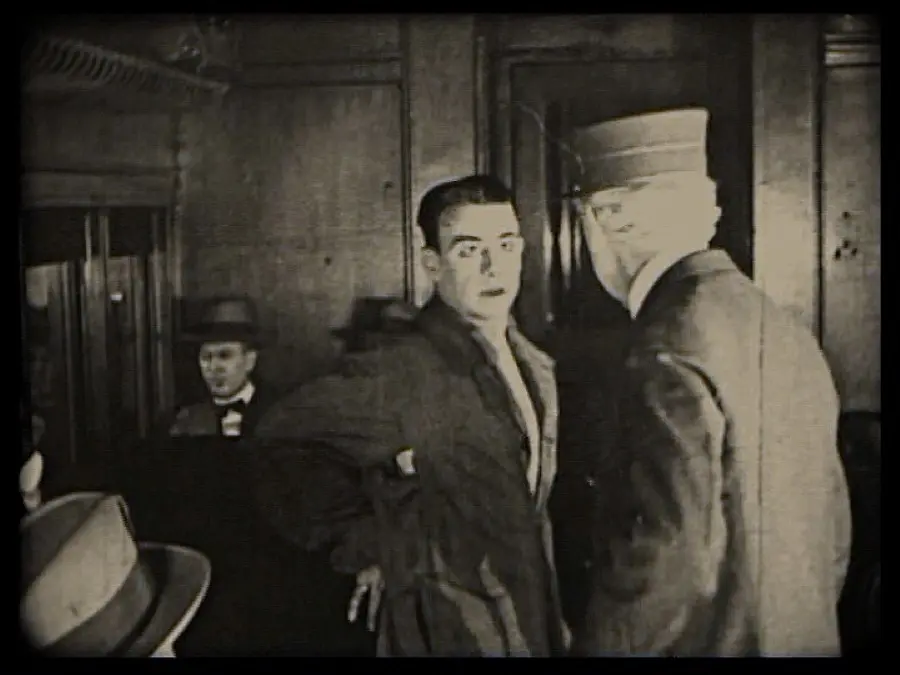
Then there’s the compelling narrative of Sången om den eldröda blomman (The Song of the Scarlet Flower), where Olof Koskela, the philandering son of a wealthy farmer, is forced away from home after an 'inconsistent gesture' disrupts his carefree existence. Olof's exile is a consequence of his own actions, a journey of hedonism that eventually leads to a reckoning. He becomes an outsider by his own design, yet his wandering, his confrontations with self, represent a different facet of individualism – the search for meaning beyond societal approval, even if it begins with self-inflicted wounds. His narrative speaks to the notion that true self-discovery often lies beyond the comfortable boundaries of home and reputation. These characters, whether through forbidden love or a journey of self-reckoning, embody a spirit of defiance that, even in its quietest forms, became deeply magnetic to audiences.
The Eccentric and the Uncanny: When Difference Becomes Devotion
Not all silent era outsiders were defined by their plight or their choices; some were simply born different, inherently set apart by their nature or societal perception. It is here that the true alchemy of cult cinema began to brew, transforming what was initially perceived as 'otherness' into a source of fascination and, eventually, devotion. Untamed Youth offers a fascinating dynamic with Marcheta, the visiting Gypsy. She is an inherent outsider to the small-town protagonist Robert Ardis, a man studying for the ministry, who is initially 'displeased by her pagan conduct.' Marcheta embodies a free spirit, a connection to nature and a way of life that stands in stark contrast to the rigid Christian morality of the community. Her perceived 'otherness' is not a flaw but a defining characteristic, and when she acts heroically, saving Robert’s younger brother, her individuality is validated. She becomes a figure of alluring difference, challenging preconceived notions and proving that value can exist outside conventional frameworks. Her untamed spirit, initially a source of discomfort, ultimately becomes her strength, and a source of admiration.
Even more profound is the portrayal of the 'outsider by nature' in films like Irrende Seelen (Irreparable Souls/The Idiot), an adaptation of Dostoevsky. Prince Myschkin, 'The Idiot,' is an outsider by virtue of his perceived naivete, his unconventional morality, and his inability to navigate the duplicitous social games of his peers. He is pure-hearted in a corrupt world, making him an anomaly, a social alien. His struggle to exist authentically in a society that cannot comprehend him resonates deeply. The audience is drawn not to his flaws, but to his unique perspective, his inherent goodness that sets him apart. This kind of character, whose very essence defies categorization, becomes a touchstone for those who feel similarly out of step with the world. Their eccentricity, far from being a barrier, becomes the very magnet for identification, for a sense of shared, peculiar humanity.
The silent era taught us that the most compelling narratives often emerge from the fringes, from those whose existence challenges the comfortable center. It’s in these moments of cinematic 'otherness' that the groundwork for cult devotion was truly laid.
Echoes in the Midnight Air: The Legacy of the Silent Outcast
The silent era's accidental outcasts, these unwilling prophets of individualism, laid a foundational stone that would be built upon for decades. Their struggles against societal rigidity, their quiet defiance, and their inherent otherness became the genetic blueprint for countless cult figures to come. Think of the dispossessed drifters of the Depression era, the alienated youths of the 1950s, the counter-culture icons of the 1960s and 70s, and even the digital age’s anti-heroes. Each, in their own way, owes a debt to these early cinematic precursors.
- The resilient orphan fighting for survival, like Audrey, foreshadows the scrappy, overlooked protagonists who rise against oppressive systems.
- The individual forging a new path against societal expectations, much like Jenny Cushing, finds echoes in every cinematic journey of self-discovery and empowerment.
- The passionate heart defying family and convention, as seen in Gabrielle Jardee, resonates with every forbidden romance and defiant declaration of love against the world.
- The self-exiled wanderer, like Olof Koskela, who finds truth in isolation, provides a template for the brooding anti-hero seeking redemption or understanding on the road.
- The free-spirited 'other,' embodied by Marcheta, is the ancestral figure for every unconventional character whose unique perspective ultimately saves or enlightens the conventional world.
- And the pure-hearted 'idiot,' Myschkin, who exposes societal hypocrisy simply by being himself, is the forefather of every cinematic innocent who inadvertently reveals the darkness of the world around them.
These silent era films, often dismissed as mere historical curiosities, are in fact vital archaeological sites for understanding the persistent allure of the outsider. They remind us that the magnetic pull of cult cinema isn't solely about shock value or transgressive acts; it’s fundamentally about identification with characters who, for whatever reason, stand apart. It’s about recognizing a piece of ourselves in their struggles, their quiet rebellions, and their unwavering individuality. The silent screen, with its emphasis on visual storytelling and raw emotion, was uniquely positioned to articulate the internal worlds of these characters, allowing audiences to project their own feelings of alienation and longing onto the flickering shadows. The lack of dialogue often amplified their isolation, making their eventual triumphs or tragedies all the more impactful, etching them into the collective cinematic subconscious.
The Enduring Whisper of Individuality
The legacy of these accidental outcasts is a profound one. They taught us that the most compelling stories often arise from the periphery, from individuals who refuse, or are unable, to fit neatly into the societal mosaic. Their narratives, stripped of sound, relied on powerful visual language and nuanced performances to convey deep emotional truths, etching their struggles into the very fabric of cinematic empathy. It’s a testament to their power that a century later, we still find ourselves drawn to these forgotten reels, recognizing in their characters the nascent stirrings of what would become the cult of the individual. They are the unwilling prophets, whose silent struggles against a rigid world inadvertently gifted us the blueprint for what it means to be truly unique, truly defiant, and truly adored by those who find solace in the cinematic embrace of the outsider. Their whispers of individualism, carried across the decades, continue to resonate, reminding us that the heart of cult cinema has always belonged to those who dare to stand alone, whether by choice or by fate.
Community
Comments
Log in to comment.
Loading comments…